

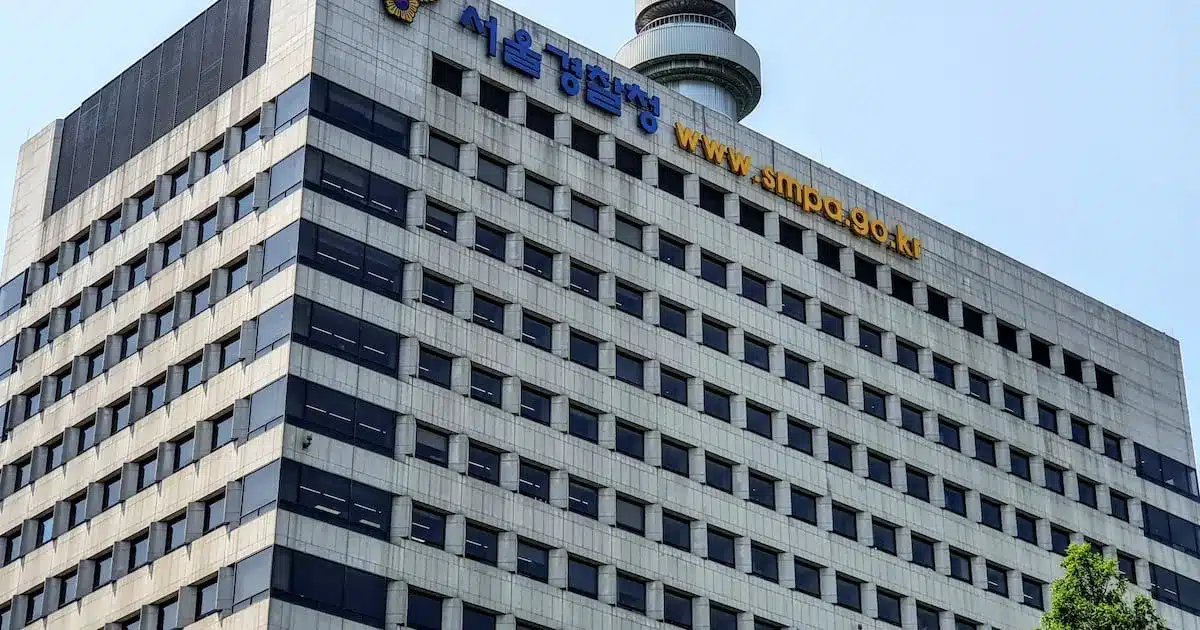
The Supreme Court of South Korea has ordered a retrial for a police officer accused of leaking investigation details related to footballer Hwang Ui-jo. The officer, identified as Jo Mo, was initially convicted of leaking confidential information about the probe into Hwang’s alleged illegal filming offenses. However, the Supreme Court overturned the lower court’s decision, citing a lack of direct evidence and remanding the case for further review.
Background of the Hwang Ui-jo Investigation
The case against footballer Hwang Ui-jo began in June 2023 when a woman claiming to be his former girlfriend posted details of their private life online, accusing him of non-consensual filming. Hwang denied the allegations, calling the shared photos and videos fabricated, and filed a complaint with the police against the woman. During the investigation into these claims, police reportedly uncovered evidence suggesting Hwang’s own involvement in illegal filming.
Specifically, Hwang was accused of filming two women without their consent on multiple occasions and recording video calls. In September of the previous year, he was sentenced to one year in prison, suspended for two years, for these offenses. This ongoing investigation into Hwang’s alleged misconduct formed the backdrop for the subsequent leak case.
The Leak Allegation Against Officer Jo
The alleged leak by Officer Jo occurred in January 2024, while the Seoul Metropolitan Police Agency’s cyber investigation unit was actively investigating Hwang’s case. Officer Jo, who belonged to a different team within the police force, was accused of leaking sensitive information about an impending search and seizure operation targeting Hwang or individuals associated with him.
According to investigative documents, Jo allegedly learned on January 24, 2024, that police were planning to execute a search and seizure at Hwang’s residence. He then reportedly contacted a lawyer, identified as Mr. A, with whom he had a personal relationship, via Telegram. Jo informed Mr. A that a search and seizure operation was imminent, targeting Hwang or individuals close to him. He later specified that the target was Hwang’s friend residing in Gangnam, Seoul.
The prosecution argued that Jo’s actions constituted a breach of duty, as he disclosed information about an upcoming search and seizure, which is legally considered confidential official information. The close relationship between Jo and Mr. A, reportedly stemming from their shared university background and shared travels, was a key point in the prosecution’s case.
Lower Court Rulings and the Supreme Court’s Decision
The first trial court found Officer Jo guilty and sentenced him to one year in prison. The court dismissed the defense’s argument that Jo and Mr. A did not communicate through regular phone calls, relying instead on internet-based communication like Telegram. The court found it difficult to accept that a police officer and a lawyer would maintain such a close relationship solely through internet calls without any conventional phone contact.
Furthermore, the first trial court pointed to Jo’s confirmation of the search and seizure execution plan the evening before the operation. The court stated that if Jo had indeed confirmed the plan, he could have easily taken a photo of the execution plan or provided detailed information about it. The court found it hard to accept that he would only leak vague information just before the operation.
However, the second trial court acquitted Officer Jo. This court accepted the argument that Jo frequently used Telegram for communication, even in his daily interactions with fellow police officers. The second trial court concluded the proceedings on the first appeal date without further evidence gathering, basing its decision on the circumstantial evidence presented.
Supreme Court’s Rationale for Retrial
The Supreme Court, in its decision, emphasized the complete absence of direct evidence proving the leak. The key individuals involved, including Officer Jo and the lawyer Mr. A, both denied that any such information was leaked or transmitted. The Supreme Court stated that if the first trial court intended to acknowledge the facts presented based solely on circumstantial evidence, it should have conducted further investigations and meticulously reviewed the evidence before reaching a judgment.
The Supreme Court’s ruling highlighted that direct evidence confirming the leak was entirely lacking. The court noted that the core individuals involved denied leaking or relaying the information. Therefore, the Supreme Court concluded that the initial conviction based on circumstantial evidence was insufficient and ordered the case to be sent back to the Seoul High Court for a retrial and reconsideration.
Conclusion
The Supreme Court’s decision to order a retrial underscores the importance of direct evidence in criminal proceedings. By remanding the case, the highest court seeks to ensure a thorough and fair re-examination of the evidence, particularly concerning the alleged leak of sensitive investigation details. This development means the legal proceedings surrounding Officer Jo’s alleged misconduct will continue, with a renewed focus on establishing concrete proof.
