

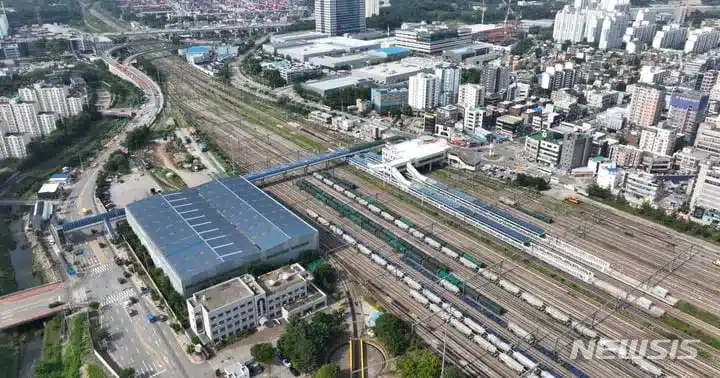
A Korail employee tragically lost their life on the morning of August 29th while performing critical tasks at Uiwang Station on the Gyeongbu Line in Gyeonggi Province. The incident occurred during a routine operation involving the connection and disconnection of freight train cars. South Korean authorities, including the Ministry of Land, Infrastructure and Transport (MOLIT) and the Ministry of Employment and Labor (MOEL), have launched a thorough investigation into the accident to determine its cause and to ensure safety protocols were strictly followed.
Fatal Incident at Uiwang Station
The accident took place around 7:20 AM within the Uiwang Station premises. The victim, identified as Mr. A, a 50-year-old Korail employee, was reportedly crushed by a freight train car while engaged in directing its movement. Sources indicate that Mr. A was working as a ‘shunter’ (iphwanwon), a role that involves guiding rolling stock, and was communicating with the locomotive driver via radio. The investigation will focus on whether adequate safety measures were in place and if the number of personnel assigned to the task was sufficient.
Investigators are exploring the possibility that the locomotive crew may not have been fully aware of Mr. A’s exact position due to insufficient personnel on duty. This is a critical line of inquiry, as established safety regulations mandate specific staffing levels for such operations to prevent accidents.
Safety Regulations and Past Incidents
Korail’s labor and management reached an agreement in June 2015 stipulating that at least two shunters must be deployed for operations involving six or more freight cars. This agreement was a response to previous safety concerns. Following a fatal incident in November 2022 at Obong Station in Uiwang City, where one Korail employee died and another was injured during shunting operations, the labor union successfully lobbied for an increase in the required number of shunters to three for certain tasks.
However, reports suggest that the implementation of the ‘three-person’ rule has been inconsistent. It is believed to have been applied primarily to sites with complex operations, while locations like Uiwang Station, which handle fewer trains, often continued to operate with only two shunters. At the time of the recent fatal accident, it is understood that Mr. A and one other shunter were on duty.
The union believes that only two shunters, including Mr. A, were working at the time of the incident. This situation raises serious questions about the adherence to and enforcement of safety regulations designed to protect workers in potentially hazardous railway environments.
Pattern of Workplace Accidents at Korail
This tragic event is not an isolated incident but highlights a recurring pattern of serious accidents occurring at Korail worksites, resulting in injuries and fatalities among workers. These incidents underscore the persistent challenges in ensuring workplace safety within the railway industry.
- August 2024, Guro Station, Seoul: Two Korail employees were killed and one injured when a maintenance vehicle ran over them during inspection work.
- February 2023, Geundeok Station, Gangwon Province: A contract worker died after being struck by a train while performing maintenance tasks.
- August 2023, Gyeongbu Line, Gyeongbuk Province: Two contract workers were killed and five injured when a Mugunghwa train overran a group of seven track workers.
These repeated occurrences have led to significant concern among workers, unions, and safety advocates regarding the effectiveness of current safety management systems and the commitment to preventing future tragedies.
Official Response and Future Measures
In response to the latest fatality, Korail has stated its commitment to cooperating fully with the ongoing investigation by relevant authorities. The company also pledged to implement urgent safety measures and develop comprehensive plans to prevent recurrence. The Ministry of Land, Infrastructure and Transport has indicated that it will formulate enhanced safety reinforcement measures once the exact cause of the accident is determined.
The Ministry of Employment and Labor is also actively involved, focusing on verifying the number of workers present during the operation and scrutinizing the adherence to safety procedures during the shunting process. The investigation aims not only to assign responsibility but also to identify systemic weaknesses that may have contributed to the accident, paving the way for more robust safety protocols across the Korail network.
Conclusion
The death of the Korail worker at Uiwang Station is a somber reminder of the inherent risks involved in railway operations and the critical importance of stringent safety standards. As investigations proceed, the focus will be on uncovering the precise circumstances that led to this tragedy and implementing effective measures to prevent similar incidents from shattering more lives and families in the future. The commitment from Korail and government bodies to strengthen safety protocols is a crucial step, but consistent oversight and diligent application of these measures will be key to restoring confidence and ensuring the well-being of all railway workers.
