

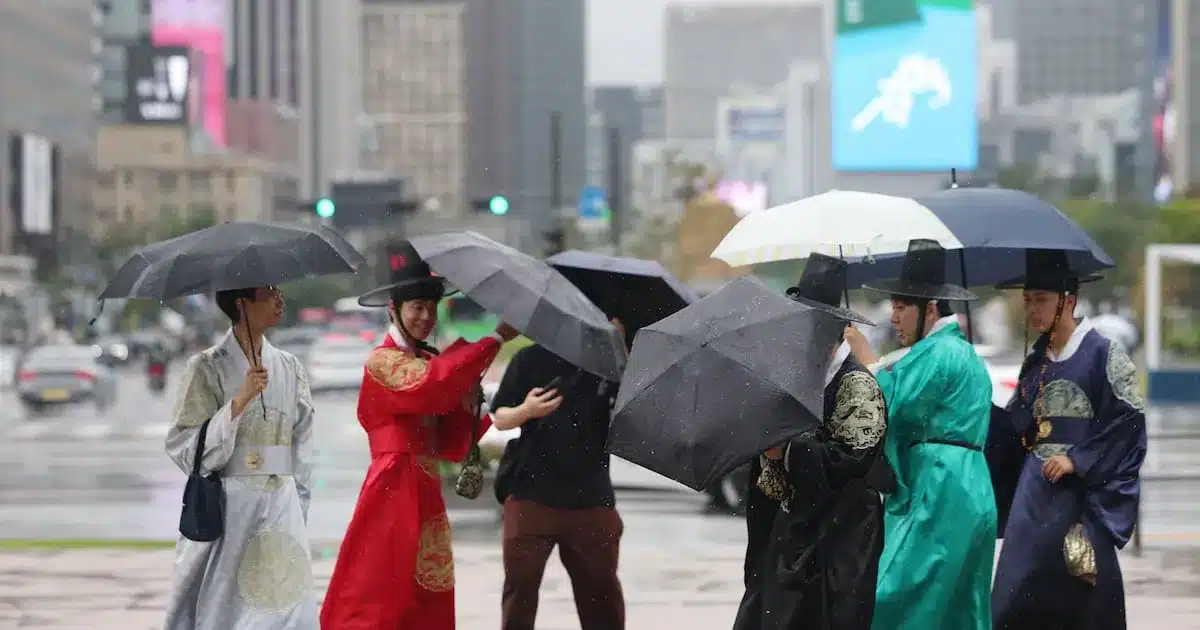
Residents across South Korea can anticipate widespread rain and showers on Friday, August 28th, as the nation braces for continued intense heat. The Korea Meteorological Administration (KMA) has forecast that the precipitation, which began early Friday in coastal areas of Gangwon Province, southern regions, and Jeju Island, will expand inland throughout the morning. Areas expected to receive significant rainfall include the southern inland of Gangwon Province, the Chungcheong region, Jeonbuk Province, and the Gyeongbuk region.
Detailed Rainfall Forecasts and Safety Advisories
The KMA has provided specific rainfall estimates for various regions. The southern coast of Gangwon Province, the southern coast of Jeonnam Province, the Gyeongnam region, and the Gyeongbuk region are projected to receive between 30 to 80 millimeters of rain. The Chungcheong region, Jeonbuk Province, Gwangju, and Jeonnam Province (excluding the southern coast) are expected to see 10 to 70 millimeters. Jeju Island’s precipitation is estimated at 5 to 40 millimeters, with mountainous areas potentially exceeding 60 millimeters.
Showers are also anticipated in the Seoul metropolitan area and the northern inland of Gangwon Province between the morning and evening. These areas, including Seoul, Incheon, Gyeonggi Province, and northern inland Gangwon, could experience 5 to 50 millimeters of rain.
Given the forecast for heavy rain and thunderstorms, accompanied by potential hail, the KMA is urging the public to exercise caution and take preventative measures against accidents. The combination of intense rainfall and thunderstorms poses a risk, making safety preparedness crucial for residents in affected areas.
Persistent Heatwave and Health Precautions
Despite the incoming rain, the oppressive heatwave is expected to continue nationwide. Heatwave advisories remain in effect for many parts of the country, with apparent temperatures likely to reach as high as 33 to 35 degrees Celsius in some southern areas. This persistent high heat underscores the importance of taking precautions against heat-related illnesses, such as heatstroke and heat exhaustion.
Morning low temperatures are predicted to range from 21 to 26 degrees Celsius, while daytime high temperatures will generally fall between 25 and 32 degrees Celsius. Even with the rain, the underlying high temperatures mean that the perceived heat will remain significant. Residents are strongly advised to stay hydrated, seek cool environments, and limit strenuous outdoor activities during the hottest parts of the day.
Understanding Apparent Temperature
Apparent temperature, often referred to as the “feels like” temperature, takes into account not only the actual air temperature but also factors like humidity and wind. In tropical and subtropical regions, high humidity can make the air feel much hotter than the thermometer reading, as it hinders the body’s natural cooling process through sweat evaporation. The KMA’s forecast of apparent temperatures reaching up to 35 degrees Celsius highlights the severe impact of the current weather conditions on human comfort and health.
Marine and Coastal Conditions
For those near the coast, wave heights in the East, West, and South Seas are expected to be between 0.5 to 1.5 meters. Further offshore, approximately 200 kilometers from the coastline, wave predictions are as follows: the East Sea anticipates waves of 0.5 to 2.0 meters, while the West and South Seas could see waves ranging from 0.5 to 3.5 meters. Mariners and coastal residents should stay informed about any updated advisories regarding sea conditions.
Looking Ahead: Weather Patterns
The current weather pattern is characterized by a combination of a stationary front and high atmospheric moisture content, leading to the widespread precipitation. The heatwave is attributed to a high-pressure system that traps warm air over the Korean Peninsula. While the rain may offer temporary relief in some areas, the underlying meteorological conditions suggest that the heat and humidity are likely to persist for some time.
Meteorologists are closely monitoring the situation for any shifts in the weather patterns. The interaction between the approaching rain clouds and the lingering high-pressure system will determine the exact intensity and duration of both the rainfall and the heat. Public health officials continue to emphasize the importance of heeding all weather advisories and taking necessary precautions to ensure safety and well-being during this challenging period of mixed weather events.
In conclusion, Friday’s forecast presents a dual challenge for South Korea: managing the risks associated with heavy showers and thunderstorms while simultaneously coping with a persistent and intense heatwave. Staying informed through official weather channels and adhering to safety guidelines will be paramount for all residents.
