

Several significant public projects, including the highly anticipated Daegu-Gyeongbuk high-speed railway, have successfully passed preliminary feasibility studies, paving the way for their potential advancement. The Korean government’s Economic Planning Board announced that five new initiatives have cleared this crucial hurdle, while four additional projects have been selected for future feasibility assessments. This rigorous evaluation process, known as ‘Yeta’ (Feasibility Study), is designed to scrutinize the economic viability and policy alignment of large-scale national projects before significant public funds are committed.
Key Projects Approved in Feasibility Study
The five projects that have officially passed the Yeta assessment are set to receive further consideration for implementation. These include:
- Daegu-Gyeongbuk High-Speed Railway Construction Project: This ambitious undertaking aims to connect the Daegu and Gyeongbuk regions with a modern high-speed rail network, promising to enhance transportation efficiency and stimulate regional economic development. The Ministry of Land, Infrastructure and Transport is overseeing this project.
- Busan National University Hospital Global Hub Medical Center Construction Project: This initiative focuses on establishing a world-class medical center at Busan National University Hospital, designed to serve as a hub for global healthcare and medical research. The Ministry of Health and Welfare is involved in this development.
- Kwangmyung Satellite 3 and 4 Development Project: This project involves the development of advanced satellite technology, specifically Kwangmyung Satellites 3 and 4, which are expected to bolster national capabilities in Earth observation and related fields. The Ministry of Land, Infrastructure and Transport is also the lead agency for this technological endeavor.
- Support for First-Time Young Adult Insurance Premiums: Aimed at easing the financial burden on young adults, this policy will provide support for insurance premiums, encouraging greater financial security and access to essential services for the younger generation. This initiative falls under the purview of the Ministry of Health and Welfare.
The successful completion of the Yeta study for these projects signifies a positive step towards their realization, indicating that they have met the initial criteria for economic justification and policy relevance.
Projects Selected for Future Feasibility Assessment
In addition to the projects that have cleared the Yeta, four other initiatives have been designated to undergo the feasibility study process. These projects will be subject to the same rigorous evaluation in the near future:
- Byulnae Line (Line 8) Extension High-Speed Railway Construction Project: This extension aims to expand the existing Byulnae Line, enhancing connectivity and potentially integrating with broader high-speed rail networks. The Ministry of Land, Infrastructure and Transport is involved.
- Ulsan Munsu Water Sports Complex Road Improvement Project: This project focuses on upgrading road infrastructure around the Ulsan Munsu Water Sports Complex, likely to improve accessibility and support for the venue. The Ministry of Land, Infrastructure and Transport is overseeing this infrastructure improvement.
- Jeonbuk-Gwon Mountain Hospital Construction Project: This initiative plans for the construction of a hospital in the Jeonbuk region, aiming to improve healthcare access and services in the mountainous areas. The Ministry of Employment and Labor is involved.
- Low-Carbon Agricultural Technology Program: This program seeks to promote and develop agricultural technologies that reduce carbon emissions, contributing to environmental sustainability in the farming sector. The Ministry of Agriculture, Food and Rural Affairs is leading this environmental initiative.
These projects will undergo thorough analysis to determine their feasibility before any substantial government investment is considered.
National Land and Territory Development Plan Integration
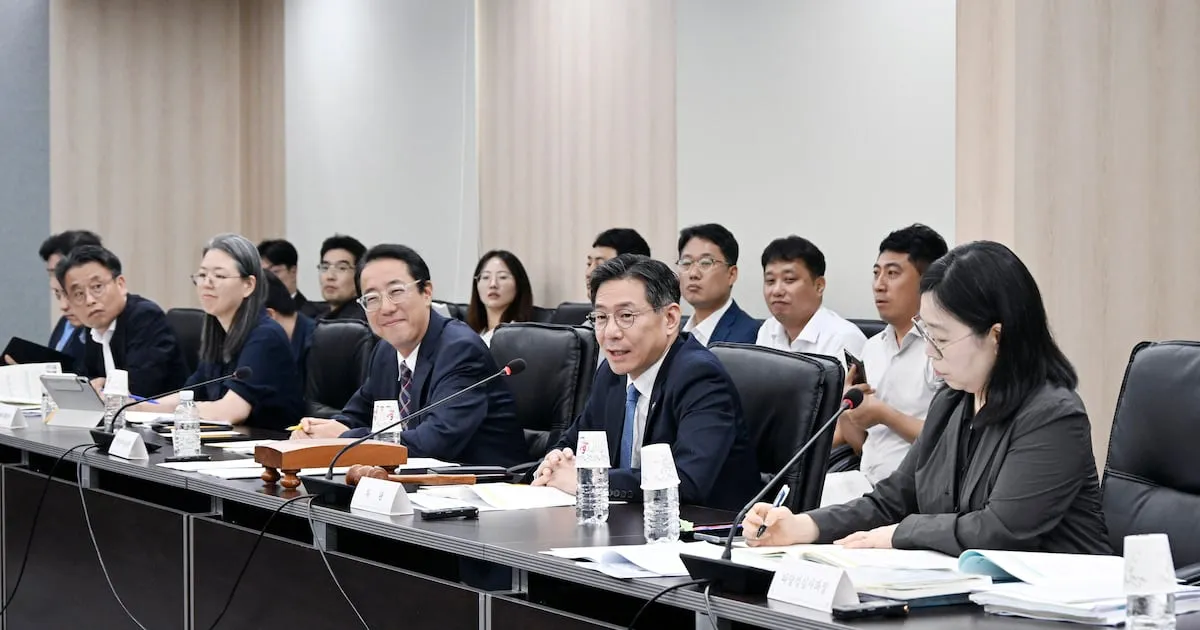
During the same meeting of the 7th Fiscal Investment Review Committee, chaired by Joo Hyung-hwan, the head of the Ministry of Strategy and Finance’s Planning and Coordination Office, the results of the interim feasibility study for the 6th National Land and Territory Development Plan were also confirmed. This interim study is a critical step in selecting projects to be included in the five-year national development blueprint.
Projects that successfully pass the Yeta for the National Land and Territory Development Plan are expected to be incorporated into the 6th National Land and Territory Development Plan, which is scheduled for announcement by the Ministry of Land, Infrastructure and Transport in the latter half of this year. This inclusion will ensure that these projects are prioritized and implemented in a phased manner, aligning with the nation’s long-term development strategies.
The Yeta process is a cornerstone of responsible public finance management in South Korea, ensuring that taxpayer money is invested in projects that offer clear economic benefits and align with national policy objectives. The successful passage of these five projects, and the selection of four others for further review, highlights a commitment to advancing critical infrastructure and public services across the country.
