

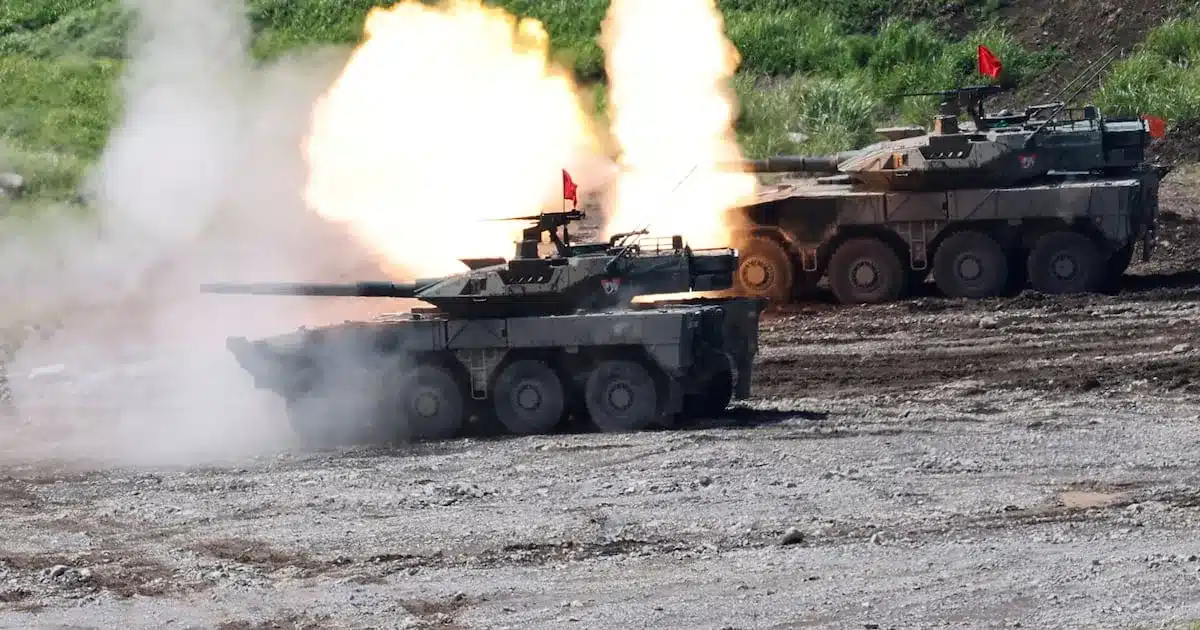
North Korea has strongly condemned Japan’s decision to allocate a record-breaking defense budget, potentially reaching 10 trillion yen (approximately $87 billion USD) by 2027. Pyongyang views this significant increase as a dangerous escalation towards military expansion and a direct threat to regional stability, asserting that it will be met with resolute opposition.
Japan’s Defense Spending Surge
The Japanese Ministry of Defense announced plans to include approximately 8.9 trillion yen (about $78 billion USD) in its budget for the upcoming fiscal year. This figure represents a substantial increase and is part of a broader, multi-year plan that could see total defense spending exceed 10 trillion yen. The proposed budget also includes funding for 150 new ‘requirements’ projects, indicating a significant expansion of military capabilities and initiatives. This projected spending marks the largest defense budget in Japan’s post-war history.
Pyongyang’s Strong Rebuttal
North Korea’s state media, specifically referencing an editorial published in the Rodong Sinmun, characterized Japan’s defense budget increase as a move that only serves to heighten its status as an “”enemy of security”””. The commentary, disseminated by the Korean Central News Agency (KCNA), argued that Japan’s actions are not merely defensive but are indicative of aggressive military ambitions. Pyongyang warned that the international community would not stand idly by while Japan pursues such military modernization.
Accusations of “”Invasion War”” Preparations
The KCNA editorial accused Japan of using the pretexts of “”defense”” and “”self-defense”” to mask its true intentions. North Korea contends that the substantial increase in military expenditure is a clear sign of preparation for an “”invasion war”””. The commentary stated, “”There is no doubt that the great increase in military spending will lead to the strengthening of the military without limits for the completion of invasion war preparations.”” This rhetoric highlights Pyongyang’s deep-seated distrust of Japan’s military posture and its historical grievances.
Critique of National Resource Allocation
Furthermore, North Korea criticized Japan’s allocation of national resources, suggesting that the substantial funds earmarked for defense are not aligned with the stated goal of building a “”peace-loving nation”””. The editorial asserted that it is “”too self-evident”” that the objective behind taxing its citizens so heavily is not the construction of a peaceful country. Pyongyang views Japan’s military buildup as a reckless endeavor that risks provoking new conflicts, both regionally and globally.
Historical Context and Regional Concerns
Japan’s post-World War II constitution renounced war and the threat or use of force as means of settling international disputes. However, in recent years, there has been a gradual reinterpretation and expansion of the Self-Defense Forces’ capabilities and roles. This includes increasing defense spending, acquiring new offensive capabilities, and revising security legislation. These shifts have been justified by Japan as necessary responses to evolving regional security challenges, including North Korea’s missile and nuclear programs, and China’s growing military assertiveness.
North Korea, which itself possesses nuclear weapons and has conducted numerous ballistic missile tests, often frames Japan’s military modernization as a direct threat stemming from its imperial past. Pyongyang frequently invokes historical narratives of Japanese aggression to bolster its own security arguments and to rally domestic support. The current exchange underscores the persistent tensions and mutual suspicion that characterize the relationship between North Korea and Japan, as well as the broader geopolitical dynamics in Northeast Asia.
International Implications
The significant increase in Japan’s defense budget is likely to be closely watched by other regional powers, including China and South Korea, as well as the United States, Japan’s key security ally. While Japan maintains that its increased spending is purely defensive and aimed at maintaining regional stability, North Korea’s strong reaction highlights the differing interpretations of security needs and intentions in the region. The potential for miscalculation and escalation remains a significant concern, given the complex security environment and the history of unresolved disputes.
Conclusion
North Korea’s vehement opposition to Japan’s record defense budget underscores the deep-seated animosity and strategic mistrust between the two nations. Pyongyang’s characterization of the spending as preparation for an “”invasion war”” reflects its security concerns and its interpretation of Japan’s evolving military posture. As Japan continues to bolster its defense capabilities, the rhetoric and actions from both sides suggest that regional security challenges are likely to remain a focal point of international attention in the foreseeable future.
