

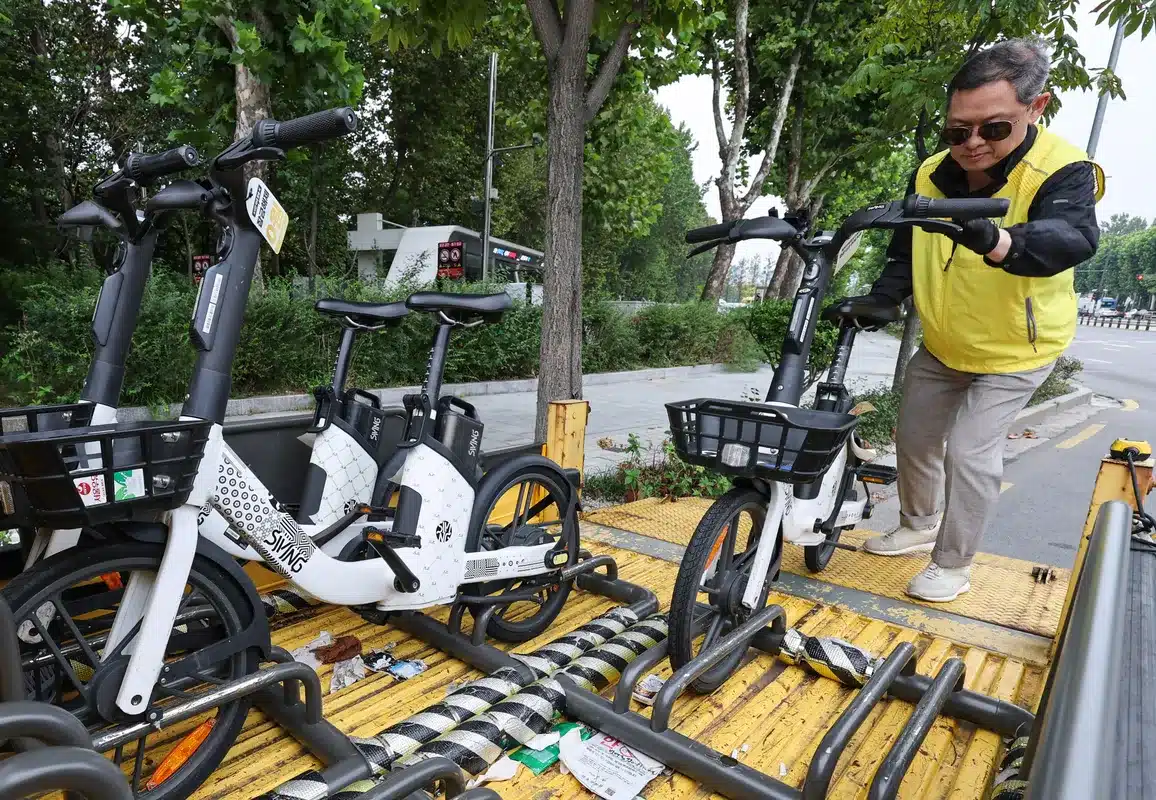
Shared electric scooters are increasingly becoming a nuisance in Seoul, South Korea, with dozens frequently found abandoned on sidewalks, obstructing pedestrian pathways and causing frustration among residents. This growing problem has prompted city officials to consider new regulations, including the ability to fine scooter rental companies for improperly parked vehicles.
Sidewalks Become Impromptu Scooter Parking Lots
On a recent morning in Seoul’s Seocho District, approximately 40 shared electric scooters were found parked haphazardly on a pedestrian walkway near an exit of Yangjae Citizen’s Forest. This forced pedestrians to navigate around the devices, often in a zig-zag pattern. Residents expressed their exasperation with the situation.
One resident, identified as Ms. Kim (34), who was walking with her child in a stroller, commented, “Electric scooters are heavier than kickboards, making them difficult to move aside. How are people with strollers supposed to get by?” Another commuter, Mr. Han (59), shared a similar experience: “I’ve had to sweat trying to clear electric scooters that were parked right at the entrance of a parking lot.” There have even been reports of pedestrians injuring themselves after colliding with these scooters while distracted by their phones.
City workers eventually arrived to clear the scooters, loading them onto a truck. A city official, Jeong Seon-du (60), noted the physical toll of the job, stating, “I’ve had days where I had to remove up to five electric scooters, each weighing over 20 kilograms.” He added, “Residents report them as inconvenient, but we can’t just leave them there. We’re essentially using public funds to do the work that the companies should be responsible for.” This situation highlights a growing conflict between the convenience of shared mobility services and the need for accessible public spaces.
Explosive Growth of Shared E-scooters
The surge in shared electric scooters has led to increased disputes over sidewalk parking. According to Seoul city data, the number of shared electric scooters in the city has dramatically increased. In 2021, there were approximately 1,600 shared e-scooters; by the previous month, this number had ballooned to 52,605 – a 33-fold increase in just five years. In contrast, shared kickboards (electric scooters with a standing platform) saw a decrease during the same period, dropping by about 60% from 38,373 to 15,350 units.
Seoul implemented regulations for shared kickboards in 2021 following a surge in public complaints about them obstructing walkways. These regulations allowed the city to charge rental companies towing and storage fees. However, a similar fee structure is not yet in place for shared electric scooters.
A Seoul city official explained that shared electric scooters were initially excluded from regulations because their numbers were relatively low in 2021. “At the time, the number of shared electric scooters was small, so they weren’t considered for regulation,” the official stated.
Seocho District Takes Initiative
Recognizing the escalating problem, Seocho District began using public funds in April to remove improperly parked shared electric scooters, becoming the first of Seoul’s 25 districts to do so. A district official cited the overwhelming number of complaints, stating, “Complaints related to shared electric scooters exceeded 5,300 last year, making it impossible to wait for regulatory changes.” Over four months, the district removed over 180 scooters, incurring approximately 13 million won (about $9,500 USD) in removal and storage costs.
Seoul Proposes New Regulations for E-scooters
To address this regulatory gap, the Seoul Metropolitan Government is moving to amend its ordinances. A revised bill concerning the towing of vehicles that violate parking and stopping regulations is planned for submission to the Seoul City Council in November. If passed, the ordinance would allow the city to tow and charge rental companies for electric scooters parked illegally on sidewalks, in front of subway station exits, bus stops, and pedestrian crossings.
Under the proposed amendment, towing fees would be set at 40,000 won (approximately $29 USD) per vehicle. Additionally, storage fees of 1,400 won (about $1 USD) per hour would be levied if the companies do not retrieve their scooters promptly. The city notified major shared electric scooter operators, including Kakao, Swing, and Sootruck, of the proposed regulatory changes on November 10th. Reports indicate that the companies have requested a grace period to implement system upgrades necessary for compliance.
Alongside regulatory changes, Seoul is exploring ways to increase designated parking areas for electric scooters. One possibility being considered is integrating shared electric scooter parking zones into the city’s public bicycle rental hubs, such as those for the popular “Ttareungi” service.
Other Municipalities Follow Suit
Other local governments are also beginning to regulate shared electric scooters. Pyeongtaek City in Gyeonggi Province amended its related ordinance in March, including shared electric scooters under its towing regulations. Since last month, the city has implemented designated parking zones around Pyeongtaek Station, Songtan Station, and Tonghak-ro. If residents report scooters parked outside these zones, the city will notify the operating company to remove them. If the scooters are not cleared within one hour, the city will tow them and charge a 20,000 won (approximately $14.50 USD) fine.
Suwon City, also in Gyeonggi Province, revised its ordinance in April to include electric scooters in its towing regulations. If a scooter is not removed within an hour, the city will tow it and impose a 30,000 won (approximately $22 USD) fine.
In Miryang City, South Gyeongsang Province, complaints have been managed through a KakaoTalk open chatroom since March. Citizens can report improperly parked scooters by uploading photos, prompting the city to contact the operating company for removal.
Professor Kim Jin-yu of Kyunggi University’s Urban Transportation Engineering department emphasized the need for balance. “Shared electric scooters can be an efficient mode of transportation, complementing buses and subways,” he stated. “However, regulations and citizen’s rights to use public spaces must be balanced to avoid hindering the industry itself.”
