

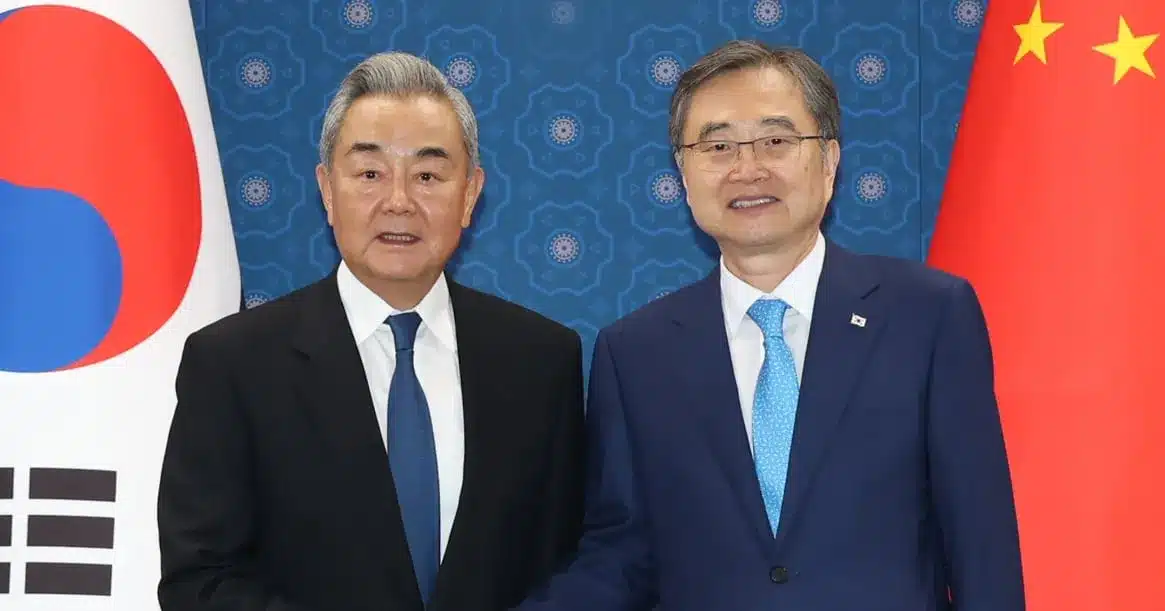
Chinese Foreign Minister Wang Yi has called for the United States to reconsider its long-standing policy of containment towards North Korea, suggesting a shift in approach could pave the way for renewed high-level dialogue between Washington and Pyongyang. The remarks came as reports emerged of potential U.S. consideration for a summit between President Donald Trump and North Korean leader Kim Jong Un, possibly on the sidelines of the upcoming Asia-Pacific Economic Cooperation (APEC) summit in November.
U.S.-North Korea Summit Prospects
The Wall Street Journal reported on October 18th (local time) that the Trump administration was exploring the possibility of a U.S.-North Korea summit. Such a meeting could potentially take place during the APEC summit scheduled to be held in Xiamen, Fujian Province, China, in November. This potential diplomatic outreach follows recent overtures from South Korea, which has been actively seeking to de-escalate tensions on the Korean Peninsula.
During a meeting in Seoul on October 19th, South Korean Foreign Minister Cho Tae-yul held discussions with his Chinese counterpart, Wang Yi. The two officials addressed the current situation on the Korean Peninsula and the issue of North Korea’s nuclear program. Wang Yi, while in Seoul, emphasized China’s commitment to playing a constructive role in promoting peace, development, and stability on the Korean Peninsula.
South Korean President Moon Jae-in had previously proposed direct talks between the parties involved to end the Korean War during a speech on Liberation Day. The South Korean government has been working on a plan to bring North Korea to the dialogue table, with potential U.S.-North Korea talks in September in the United States being a key consideration.
China’s Stance and Regional Diplomacy
Wang Yi reiterated China’s consistent position, stating, “China will continue to play a constructive role for peace, development, and stability on the Korean Peninsula.” However, regarding the prospect of a U.S.-North Korea summit, he maintained that a change in U.S. policy towards North Korea, specifically its policy of containment, was necessary. This suggests that while China supports dialogue, it believes the U.S. must alter its fundamental approach to North Korea for significant progress to be made.
Wang Yi’s visit to Seoul was significant, marking his first solo visit to meet with the South Korean Foreign Minister since September 2021. He had previously visited South Korea in October of the previous year as part of a delegation for the Gyeongju APEC summit. The discussions between Wang and Cho reportedly included the issue of China’s structural installations within the Panmunjom Security Area (PMZ), a demilitarized zone between North and South Korea.
Border Zone Installations and Bilateral Cooperation
China had relocated a major steel structure outside the PMZ following President Trump’s state visit to China in January. However, a second structure remains within the PMZ, and discussions between China and South Korea are ongoing regarding its status. This issue highlights the complex, on-the-ground realities that accompany broader diplomatic efforts.
During his meeting with the press, Wang Yi stressed the benefits of cooperation with China, the world’s largest market, for South Korea’s economic development. He invoked the Chinese proverb, “A person living near the water tower gets the moonlight first” (近水楼台 先得月), to illustrate that enhanced cooperation between China and South Korea would be advantageous for South Korea’s progress.
Upcoming Engagements
Wang Yi was also scheduled to meet with President Moon Jae-in at the Blue House on October 20th. Additionally, he was expected to meet with the Director of National Security at the Blue House. It is anticipated that Wang Yi will extend an invitation to President Moon to attend the APEC summit in Xiamen in November.
The diplomatic engagements underscore the ongoing efforts by regional powers to foster dialogue and stability. China’s call for a policy shift from the U.S. on North Korea, coupled with South Korea’s persistent peace initiatives, indicates a complex but potentially evolving landscape for Korean Peninsula denuclearization and peace talks. The success of any future summit would likely hinge on the willingness of all parties, particularly the U.S. and North Korea, to engage constructively and address underlying security concerns.
