

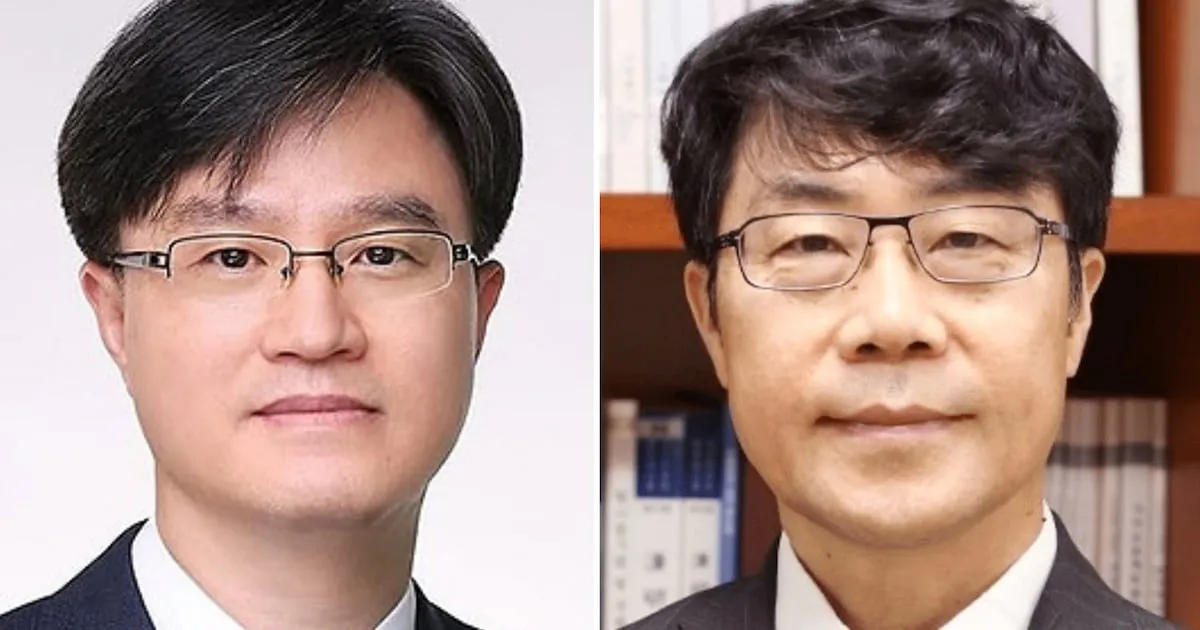
In a notable departure from established practice, Chief Justice Cho Hee-dae has reportedly nominated two new Supreme Court justices, Son Bong-gi and Kim Sung-soo, without the customary prior consultation with the presidential office. This move breaks with the long-standing tradition where the Chief Justice and the Blue House (the presidential office) would confer before the Chief Justice formally proposed candidates to the President.
Supreme Court Justice Nomination Process
Under South Korean law, the appointment of Supreme Court justices requires the nomination by the Chief Justice, followed by the National Assembly’s approval, and finally, the President’s formal appointment. Historically, the process has involved a collaborative approach. The Chief Justice would typically engage in discussions with the Blue House to reach a consensus on potential candidates. Following this informal agreement, the Chief Justice would then personally present the chosen nominees to the President for the official appointment procedure.
However, the recent nominations for the two vacant Supreme Court positions appear to have bypassed this traditional consultation. Reports indicate that the nominations were communicated directly, suggesting a deviation from the established protocol of seeking prior agreement with the presidential office. This shift in procedure is significant, particularly given the upcoming vacancies and the need to fill the position previously held by former Justice Noh Tae-ak, whose term is set to expire in September.
Nominee Biographies and Backgrounds
Son Bong-gi: Nominee for Former Justice Noh Tae-ak’s Position
Son Bong-gi, aged 60, has been nominated to fill the vacancy left by former Justice Noh Tae-ak. A graduate of Korea University’s School of Law, Son Bong-gi hails from Busan. His judicial career includes significant roles such as a research judge at the Supreme Court and a professorship at the Judicial Research and Training Institute. He has also served as the chief judge of the Daegu District Court.
Son Bong-gi’s extensive experience within the judiciary, including his time as a presiding judge, demonstrates a deep understanding of legal proceedings and judicial administration. His nomination suggests a focus on experienced legal professionals with a proven track record within the court system.
Kim Sung-soo: Nominee for the Second Vacancy
Kim Sung-soo, 57, is the nominee for the second vacant Supreme Court justice position. Born in Hampyeong, Jeonnam, he is an alumnus of Hanyang University’s School of Law and Jeongeup Inseong High School in Gwangju. His legal career commenced in 1998 as a judge at the Gwangju District Court.
Over the years, Kim Sung-soo has held a variety of significant positions. These include roles such as a judge at the Haenam Branch of the Gwangju District Court, a judge at the Seoul High Court, and a judicial review officer at the Court Administration Office. He has also served as a deputy chief judge at the Jeju District Court, a senior deputy chief judge at the Cheongju District Court, and a senior professor at the Judicial Research and Training Institute. His diverse experience across different levels and branches of the judiciary highlights his comprehensive legal background.
Implications of the New Nomination Style
The decision by Chief Justice Cho Hee-dae to proceed with nominations without the traditional pre-consultation with the presidential office marks a potential shift in the dynamics of judicial appointments. While the legal framework allows the Chief Justice to nominate candidates, the established practice of consultation has served as a mechanism for ensuring broader consensus and smoother confirmation processes.
This departure could be interpreted in various ways. It might signal a desire for greater judicial independence in the nomination process, or it could reflect a strategic decision to streamline appointments. Regardless of the underlying reasons, the move is likely to be closely watched, especially as it pertains to the composition of the nation’s highest court. The National Assembly’s upcoming review and the President’s final decision will be critical in determining the future of these appointments and their potential impact on the judiciary.
Conclusion
The nomination of Son Bong-gi and Kim Sung-soo as Supreme Court justices by Chief Justice Cho Hee-dae represents a significant development in South Korea’s judicial landscape. The deviation from the customary consultation process with the presidential office underscores a potential change in the established norms of judicial appointments. Both nominees bring extensive experience and diverse backgrounds to the table, promising to contribute to the Supreme Court’s deliberations. The subsequent steps in the confirmation process, involving the National Assembly and the President, will be keenly observed as the nation awaits the finalization of these crucial appointments.
