

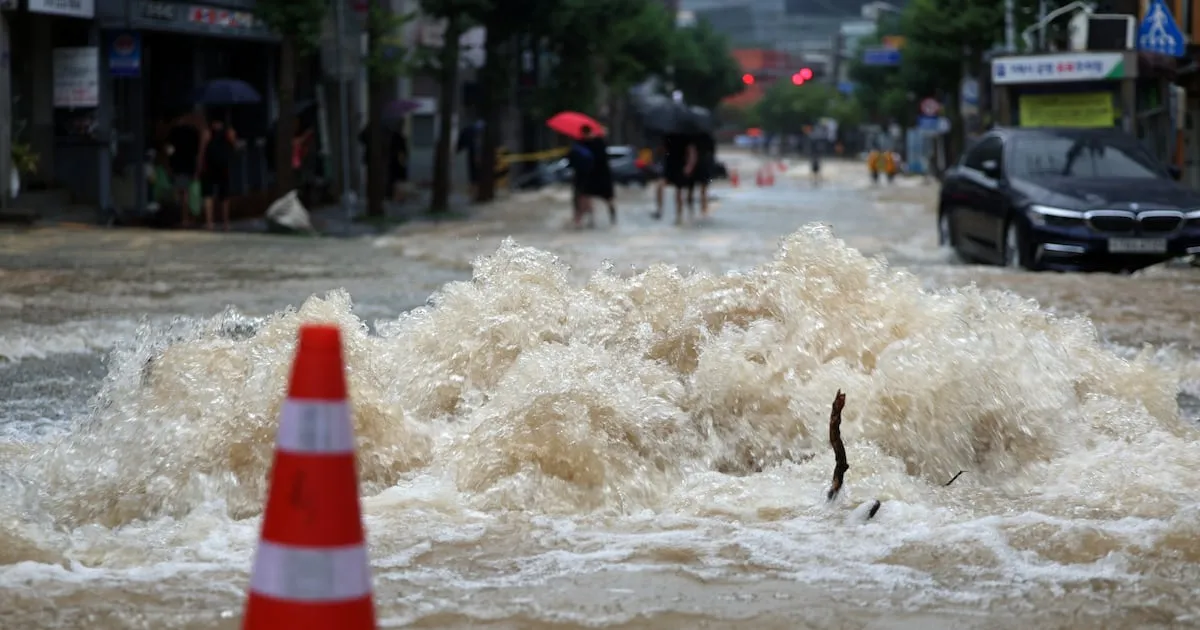
Heavy rainfall, described as a “downpour of monstrous proportions,” has prompted over 2,500 reports of evacuations and displaced hundreds of residents across southern South Korea. As of 6 a.m. on the 18th, the Central Disaster and Safety Countermeasures Headquarters reported a total of 2,574 evacuation-related incidents. These included 2,010 instances requiring safety measures, 402 related to emergency or drainage support, and 162 for rescue operations.
Torrential Rains Cause Fatalities and Injuries
The severe weather has resulted in one fatality and four injuries. Tragically, a landslide caused by the intense rain struck an apartment building in Geoje, Gyeongnam Province, around 4:42 a.m. the previous day. The incident led to the death of one resident and injured two others. Fortunately, no new casualties were reported following the initial tally from the day before.
Widespread Displacement and Ongoing Evacuations
Across Busan, Gyeongnam, and Jeju provinces, a total of 564 individuals from 318 households were forced to evacuate their homes due to the flooding and landslides. While many have since returned, 248 people from 147 households remain displaced and unable to return home as of the latest reports. The heavy rains are expected to continue along the southern coastlines of Gyeongnam and Jeonnam provinces through the morning of the 18th.
Record Rainfall Amounts Measured
The cumulative rainfall since the 15th has been substantial in the affected regions. As of 5 a.m. on the 18th, specific measurements included:
- Geoje: 56.1 mm
- Tongyeong: 766.9 mm
- Busan (Gadeokdo): 518 mm
- Jeju (Seongsan): 477 mm
- Sacheon: 430.5 mm
- Goseong, Gyeongnam: 429.5 mm
Damage Control and Hazard Warnings
While flood warnings have been lifted for all areas, 306 locations, including those along the Nakdong River, remain under control due to the ongoing risks. Emergency services continue to monitor these areas closely to prevent further damage and ensure public safety. The government has mobilized resources to assist those affected by the severe weather, focusing on temporary shelter, essential supplies, and damage assessment.
Impact on Infrastructure and Communities
The relentless downpour has overwhelmed drainage systems and caused significant damage to roads and property. The landslides, exacerbated by saturated soil, pose a continuous threat to communities situated on or near slopes. Local authorities are working to clear debris, restore essential services, and assess the full extent of the damage. The economic impact is also a growing concern, with agricultural areas and coastal infrastructure particularly vulnerable to such extreme weather events.
Government Response and Preparedness
The Central Disaster and Safety Countermeasures Headquarters has been coordinating the national response, working in tandem with provincial and local governments. Efforts are focused on immediate relief for displaced residents, including providing temporary housing and financial assistance. Long-term recovery plans will address infrastructure repair and reinforcement to mitigate the impact of future heavy rainfall events. The incident highlights the increasing frequency and intensity of extreme weather patterns, prompting discussions about enhancing disaster preparedness and climate change adaptation strategies.
Looking Ahead: Continued Monitoring and Support
As the rain subsides in some areas, the focus shifts to recovery and support for affected communities. Officials are urging residents in vulnerable areas to remain vigilant and follow safety guidelines. The government has pledged continued support for rebuilding efforts and assisting families who have lost homes or livelihoods due to the severe weather. The resilience of the affected communities is being tested, but coordinated efforts aim to restore normalcy and build back stronger in the face of these challenges.
