

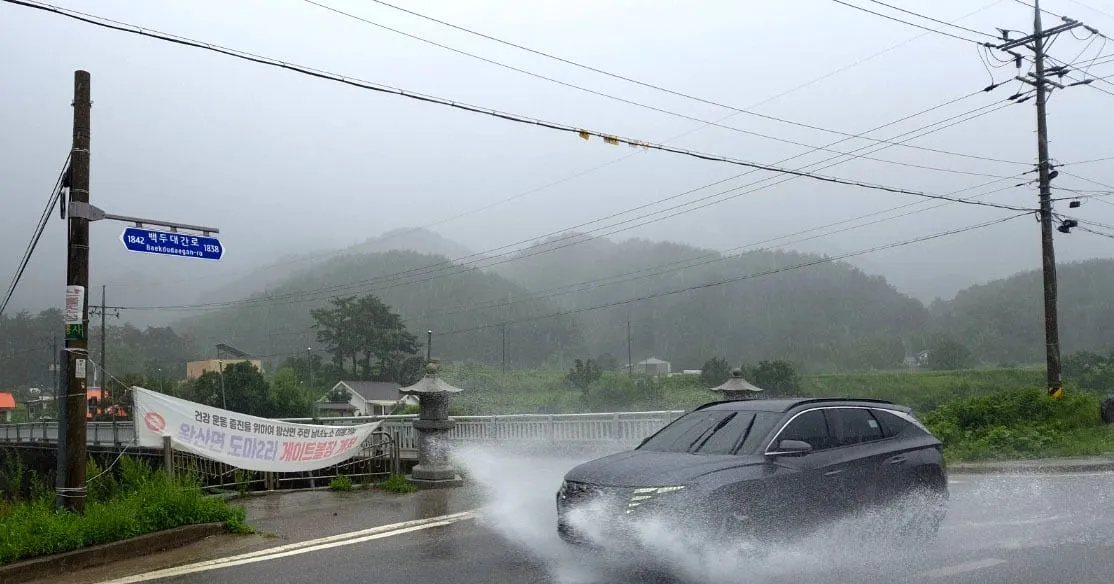
South Korea is bracing for significant rainfall, with the southern coastal regions and the Jirisan National Park area anticipated to receive upwards of 250 millimeters (approximately 10 inches) of rain. The downpour is expected to intensify during the Liberation Day holiday weekend, prompting warnings of potential flash floods and other hazards. Some areas could experience extremely heavy rain, with rates exceeding 70 millimeters per hour.
Holiday Weekend Weather Forecast
The precipitation is linked to a weakened tropical depression, formerly Typhoon Dolpin, which is approaching South Korea from the southwest. The rain began affecting Jeju Island and the western coast on August 15th and is forecast to spread to the southern regions by the afternoon of the same day. By the evening, it is expected to cover most of the southern provinces.
The rainfall is projected to become widespread across most of the country from the early morning of August 16th. While the central regions will see the rain gradually subside from the early morning of August 17th, most areas, with the exception of Jeju, are expected to be clear by the afternoon of the 17th.
Projected Rainfall Totals
From August 15th to the 17th, the heaviest rainfall is forecast for the southern coast of South Gyeongsang Province and the Jirisan area, with expected totals ranging from 100 to 200 millimeters. Many locations within this zone could see accumulations exceeding 250 millimeters.
Other regions are also expected to experience substantial rainfall:
- Jeonnam (South Jeolla Province), Busan, Ulsan, and the southern parts of Gyeongnam (South Gyeongsang Province): 50 to 150 millimeters.
- Daegu, Gyeongbuk (North Gyeongsang Province), and Jeju Island: 50 to 100 millimeters.
- Jeju’s mountainous areas could also receive over 200 millimeters.
Risk of Extreme Downpours and Associated Dangers
A particular concern is the potential for “extreme downpours” between the early morning and late morning of August 16th. Areas including southern Jeonnam, southern Gyeongnam, and the Jirisan vicinity could experience hourly rainfall rates of 30 to 50 millimeters, with some spots potentially hit by over 70 millimeters per hour. This intense, concentrated rainfall poses significant risks.
The rapid accumulation of rain in a short period can lead to:
- Sudden flooding of streams and rivers.
- Basement flooding in urban areas.
- Landslides, especially in hilly or mountainous terrain.
- Damage to agricultural land and crops.
The timing of these heavy rains, occurring during the early morning and late morning hours, presents a challenge for emergency response and preparedness. Authorities are urging residents in affected areas to take necessary precautions in advance.
Strong Winds and High Seas Accompany Rainfall
In addition to the heavy rain, southern regions are also expected to experience strong winds. From the afternoon of August 16th, gusts along the southern coast could exceed 70 kilometers per hour. Furthermore, the southern and eastern seas may see wave heights reaching up to 4 meters, posing risks to maritime activities and coastal areas.
Preparedness and Advisory
Given the forecast, meteorological authorities are advising citizens to stay informed about weather updates and to implement safety measures. This includes securing outdoor property, checking drainage systems, and being prepared to evacuate if necessary, particularly in low-lying or landslide-prone areas. The combination of heavy rain, strong winds, and high waves necessitates a heightened state of alert throughout the holiday period.
Conclusion
The Liberation Day holiday weekend in South Korea will be marked by widespread heavy rainfall, particularly in the southern coastal areas and mountainous regions like Jirisan. The potential for extreme hourly downpours, coupled with strong winds and high seas, calls for significant public caution and preparedness to mitigate potential damage and ensure safety.
