

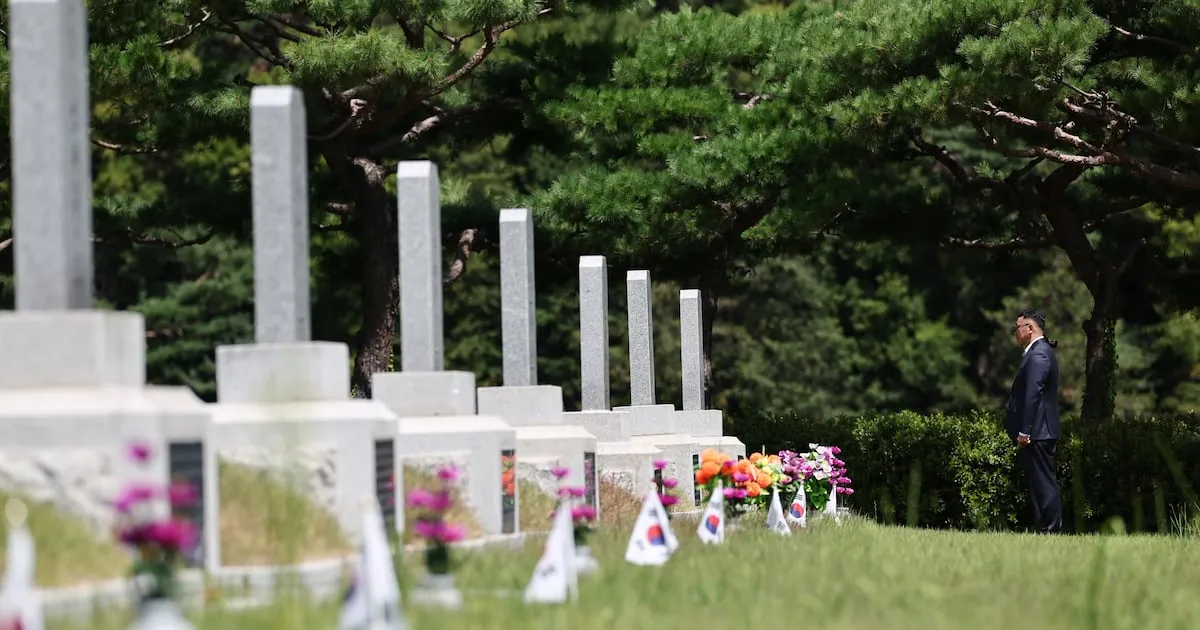
Eighty-one years after Korea’s liberation, a significant number of individuals recognized for their contributions to the independence movement remain without their rightful heirs to receive posthumous honors. As of August 15th, the Ministry of Patriots and Veterans Affairs reported that 7,622 independence activists, despite having their merits officially acknowledged with awards such as national foundation medals, presidential citations, and national foundation commendations, have not had their descendants located to accept these honors.
The Scale of Unclaimed Merits
The figures reveal a widespread issue across the nation, with Gyeonggi Province having the highest number of unclaimed merits at 547 individuals. Other provinces with substantial numbers include Chungnam with 456, Jeonbuk with 412, Gyeongbuk with 371, Gangwon with 347, Jeonnam with 278, Gyeongnam with 246, Seoul with 214, Chungbuk with 183, and Jeju with 27.
Further analysis shows that after excluding 3,026 individuals from northern regions and 1,479 whose primary residences could not be confirmed, a considerable portion of the remaining unclaimed merits, over 40%, belong to individuals with documented ties to southern regions. This situation presents a complex challenge in identifying and connecting with the descendants of these national heroes.
Challenges in Locating Descendants
Several factors contribute to the difficulty in finding heirs for these distinguished individuals. Many independence activists operated under assumed identities to evade Japanese colonial authorities. Others made the ultimate sacrifice at a young age, leaving behind no direct descendants. In numerous cases, the details of their patriotic activities were not adequately passed down through family lines over the decades.
The passage of over 80 years has compounded these challenges. Records have become harder to access, and family connections have become more distant or lost over time. Verifying lineage and historical contributions has become an increasingly arduous task.
Case Studies Illustrating the Difficulty
Specific examples highlight the enduring nature of this problem. Kim Su-min, a commander of a righteous army that resisted Japanese rule in the Jangdan region of Gyeonggi Province (modern-day Paju and Yeoncheon), was recognized with a national foundation medal in 1962. However, 64 years later, his descendants have still not been found, leaving the medal unclaimed.
Similarly, Ahn Gyeong-suk, another commander who gathered funds for righteous armies in Yangju and Pocheon, Gyeonggi Province, and was martyred, was posthumously recognized with a national foundation medal this year, marking the 118th anniversary of her birth. Despite this recognition, her descendants remain unfound, and even the location of her remains is yet to be confirmed.
Government Efforts and Future Directions
In response to this ongoing issue, the Ministry of Patriots and Veterans Affairs initiated a project in 2007 to locate descendants of overseas independence activists. Since 2018, the ministry has been operating a dedicated “Independence Merits Descendant Verification Committee.” This committee comprises experts in history, genealogy, and law, tasked with the systematic verification of descendants.
However, experts suggest that current efforts may not be sufficient to address the scale of the problem. Hwang Min-ho, a history professor at Soongsil University, advocates for more robust and focused investigations. He proposes the establishment of dedicated teams with special support to conduct thorough investigations into the backlog of over 7,000 unclaimed merits.
Professor Hwang suggests that temporary special task forces (TFs) could be formed, perhaps at independence memorial halls. These TFs, working in conjunction with the Ministry of Patriots and Veterans Affairs and organizations like the 광복회 (Association of National Patriots), could undertake more intensive research to identify and connect with the descendants of these unsung heroes.
The Importance of Honoring the Past
The ongoing effort to locate descendants is not merely about awarding medals; it is about acknowledging the sacrifices made for national liberation and ensuring that the legacy of these individuals is passed down to future generations. It represents a commitment to remembering the struggles and triumphs of those who fought for Korea’s freedom.
The challenges in tracing these descendants underscore the profound impact of historical events and the passage of time. It also highlights the need for continued dedication and innovative approaches to ensure that no act of bravery for the nation goes unrecognized and unhonored by the generations that benefit from their sacrifices.
