

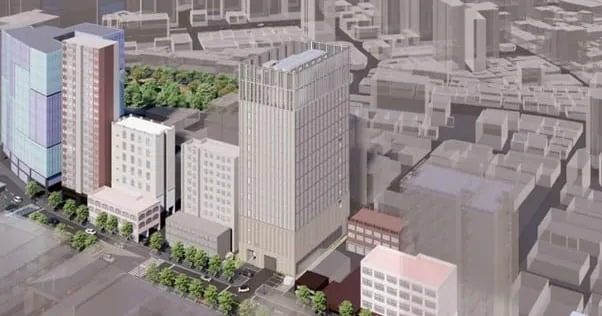
Yeongdeungpo District in Seoul is proposing regulatory changes to prevent the construction of data centers within residential zones. This initiative stems from growing concerns among residents and district officials regarding the strain these facilities place on local infrastructure and the living environment. Data centers, while crucial for the burgeoning artificial intelligence (AI) industry, are known for their high energy consumption and significant cooling requirements, leading to potential issues with power supply and environmental impact.
Addressing Infrastructure Strain and Environmental Concerns
The district government plans to submit a proposal to the Seoul Metropolitan Government advocating for stricter regulations. Key among these is making architectural review mandatory for data center construction and explicitly prohibiting their establishment in residential areas. This decision was unanimously agreed upon during the 203rd regular meeting of the Seoul District Mayors’ Council on December 12th.
Currently, Yeongdeungpo District has eight data centers in various stages of development. One is completed, two are under construction, and another is slated for future construction. An additional four have submitted applications for building permits or undergone review. District officials are concerned that approving further applications could overwhelm the existing power infrastructure, which is already strained. They fear this could impact not only general construction projects but also vital redevelopment and reconstruction initiatives within the district.
A significant challenge identified by Yeongdeungpo District is the lack of a legal framework at the local level to effectively block such developments. Under current laws, data centers are classified as ‘broadcasting and telecommunications facilities.’ This classification allows them to be built in most areas except for Zone 1 general residential districts. Consequently, there are no existing provisions that permit a district to reject a data center’s construction based on local power supply conditions or resident objections.
Proposed Regulatory Enhancements
To address these legal gaps, Yeongdeungpo District is requesting that the Seoul Metropolitan Government revise the operational guidelines for the Seoul City Architectural Review Committee. The aim is to include data centers within the scope of local review, granting the district more authority over their approval. Furthermore, the district seeks amendments to Seoul City ordinances to extend construction restrictions to Zone 2 and Zone 3 general residential areas, not just Zone 1.
Looking ahead, Yeongdeungpo District intends to lobby for revisions to the Building Act. This broader legislative change would empower districts to refuse data center construction even in areas designated as quasi-residential, quasi-industrial, or commercial zones. Such a move would provide a more comprehensive framework for managing the placement of these large-scale facilities.
District Mayor’s Statement on Resident Concerns
Choi Won-jin, the Mayor of Yeongdeungpo District, emphasized the high level of concern among residents regarding data centers being built in densely populated residential areas. He stated, “Considering the climate crisis and issues related to electricity and water supply, it is desirable that relevant laws and ordinances are urgently amended so that the district can determine the approval of construction at the district level.”
The push by Yeongdeungpo District highlights a growing tension between the demand for digital infrastructure to support industries like AI and the need to preserve the quality of life and environmental stability in urban residential areas. As technology advances and the need for data processing capacity increases, cities worldwide are grappling with how to balance these competing interests through effective urban planning and regulation.
The Role of Data Centers in the Digital Economy
Data centers are the backbone of the modern digital economy. They house the servers, storage systems, and networking equipment that power everything from cloud computing services and online streaming to financial transactions and artificial intelligence research. The demand for data center capacity has surged in recent years, driven by the exponential growth of data generation and the increasing reliance on digital services.
AI, in particular, requires immense computational power, making data centers essential for training complex machine learning models and running AI applications. This has led to a global race to build more data centers, often resulting in significant investments in new facilities. However, the environmental footprint of these centers, including their energy consumption and water usage for cooling, has become a major point of concern for policymakers and environmental groups.
Challenges in Urban Planning and Zoning
Zoning regulations, originally designed for a different era of urban development, often struggle to keep pace with the evolving needs of the digital age. The classification of data centers as telecommunications facilities, while technically accurate, may not fully capture their substantial physical and environmental impact. This mismatch can create loopholes that allow facilities with significant industrial characteristics to be sited in areas not designed to accommodate them.
The situation in Yeongdeungpo District is not unique. Many urban areas face similar challenges as they try to attract technological investment while protecting residential neighborhoods from potential negative externalities such as increased traffic, noise pollution, and strain on utilities. Finding a balance requires proactive planning, flexible regulatory frameworks, and robust community engagement.
Future Outlook and Policy Recommendations
The proposed measures by Yeongdeungpo District represent a step towards more localized control over the development of critical digital infrastructure. By advocating for mandatory architectural reviews and expanded zoning restrictions, the district aims to ensure that future data center developments align with the community’s needs and environmental goals.
Moving forward, other municipalities facing similar issues might consider:
- Reviewing and updating zoning classifications to better reflect the operational characteristics and impacts of modern infrastructure like data centers.
- Implementing stricter environmental standards for data centers, focusing on energy efficiency, renewable energy sourcing, and water conservation.
- Enhancing public consultation processes to ensure that resident concerns are adequately addressed during the planning and approval stages.
- Exploring co-location opportunities or designated industrial zones for data centers to minimize impact on residential areas.
<
