

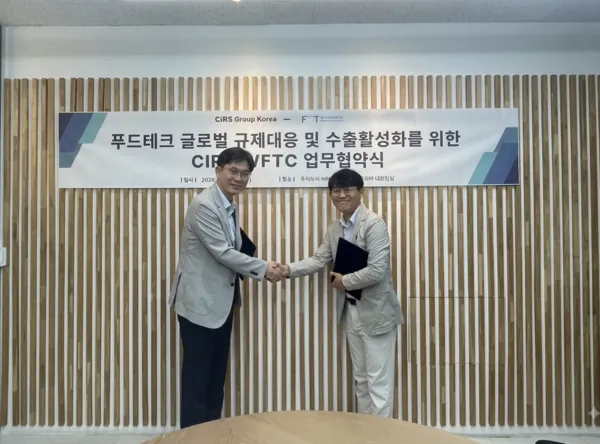
The WFT Research Center, under the World Food Tech Cooperation Association (WFTC), has entered into a Memorandum of Understanding (MOU) with CIRS Group Korea. This collaboration aims to bolster the foundation of food technology safety standards and support the global market expansion of alternative protein sources. The agreement was announced on the 12th.
Strengthening FoodTech Safety and Global Reach
This partnership strategically combines CIRS Korea’s expertise in navigating national regulations for food and chemical substances with the WFT Research Center’s extensive domestic food technology industry network. The primary objective is to assist companies in overcoming regulatory hurdles and safety concerns encountered during their international market entry processes.
Key areas of cooperation include:
- Establishing robust safety technology infrastructure for the food tech sector.
- Facilitating the global expansion and export of alternative protein ingredients, such as cell-cultured meat, plant-based proteins, and insect-based proteins.
- Providing consulting and educational services on global regulatory compliance and safety technologies for food tech businesses.
- Organizing international academic conferences to foster knowledge exchange and collaboration.
The initiative is expected to significantly reduce the burden on companies seeking safety approvals and certifications for their alternative protein products in overseas markets. By streamlining these processes, the partnership aims to provide a more systematic framework for supporting the global ambitions of domestic food technology firms.
Pilot Programs and Future Initiatives
As a first step, the organizations plan to launch a pilot consulting program within the year. This program will be tailored for companies involved in cell-cultured meat products and other alternative protein businesses, focusing on customized support for overseas certification and export strategies.
Looking ahead, the WFT Research Center and CIRS Korea intend to establish a formal cooperative body and gradually implement more detailed collaborative projects. This phased approach will ensure a sustainable and effective support system for the evolving food technology landscape.
Expert Perspectives on the Partnership
Im Hang-sik, CEO of CIRS Korea, emphasized the critical role of regulatory compliance in international market penetration for food tech companies. “Navigating global regulations is a core factor determining a food tech company’s success in overseas markets,” he stated. “Leveraging the CIRS Group’s global infrastructure and regulatory consulting proficiency, we are committed to actively supporting domestic food tech companies to successfully establish themselves in international markets.”
Lee Sang-jun, Director of the WFT Research Center, highlighted the importance of proactively building a strong safety technology foundation in the rapidly evolving food tech sector. “For the long-term sustainability of the industry, it is crucial to establish a robust safety technology base from the outset,” Lee explained. “We will build a practical support system to ensure that new-technology foods, including cell-cultured, plant-based, and insect-based alternative proteins, can stably enter overseas markets.”
The Growing Alternative Protein Market
The global alternative protein market is experiencing significant growth, driven by increasing consumer awareness of health, environmental sustainability, and ethical concerns surrounding traditional animal agriculture. Alternative proteins encompass a wide range of products designed to mimic or replace conventional meat, dairy, and egg products.
These include:
- Plant-based proteins: Derived from sources like soy, peas, wheat, and other vegetables, these are the most established category in the alternative protein market.
- Cell-cultured (or cultivated) proteins: Produced by growing animal cells in a controlled environment, eliminating the need to raise and slaughter animals. This technology is still in its early stages of commercialization but holds significant promise.
- Insect-based proteins: Utilizing edible insects as a protein source, this category is gaining traction due to its high nutritional value and low environmental footprint.
- Fermentation-derived proteins: Employing microorganisms like fungi and bacteria to produce proteins, often through precision fermentation techniques.
Despite the market’s potential, companies venturing into this space face considerable challenges, particularly concerning regulatory frameworks and consumer acceptance. Different countries have varying definitions, safety assessments, and labeling requirements for these novel food products. Ensuring compliance with these diverse regulations is a complex and costly undertaking.
The Role of Regulatory Expertise
CIRS Group, with its global network and deep understanding of international regulatory landscapes, is well-positioned to assist businesses in this area. Their services typically involve:
- Regulatory Intelligence: Monitoring and analyzing evolving regulations in key target markets.
- Dossier Preparation: Compiling the necessary technical and safety data for regulatory submissions.
- Risk Assessment: Conducting scientific assessments to evaluate potential risks associated with new food ingredients and products.
- Pre-market Approvals: Guiding companies through the process of obtaining necessary approvals before products can be sold.
- Post-market Compliance: Ensuring ongoing adherence to regulatory requirements after market entry.
By partnering with the WFT Research Center, CIRS Korea can tailor its global expertise to the specific needs of the Korean food technology industry, fostering a more streamlined path for innovation and internationalization.
Conclusion
The collaboration between the WFT Research Center and CIRS Group Korea marks a significant step forward in supporting the growth and global competitiveness of the Korean food technology sector, particularly in the burgeoning alternative protein market. By addressing critical challenges related to safety standards and regulatory compliance, this partnership aims to unlock new export opportunities and solidify the position of Korean food tech innovations on the world stage.
