

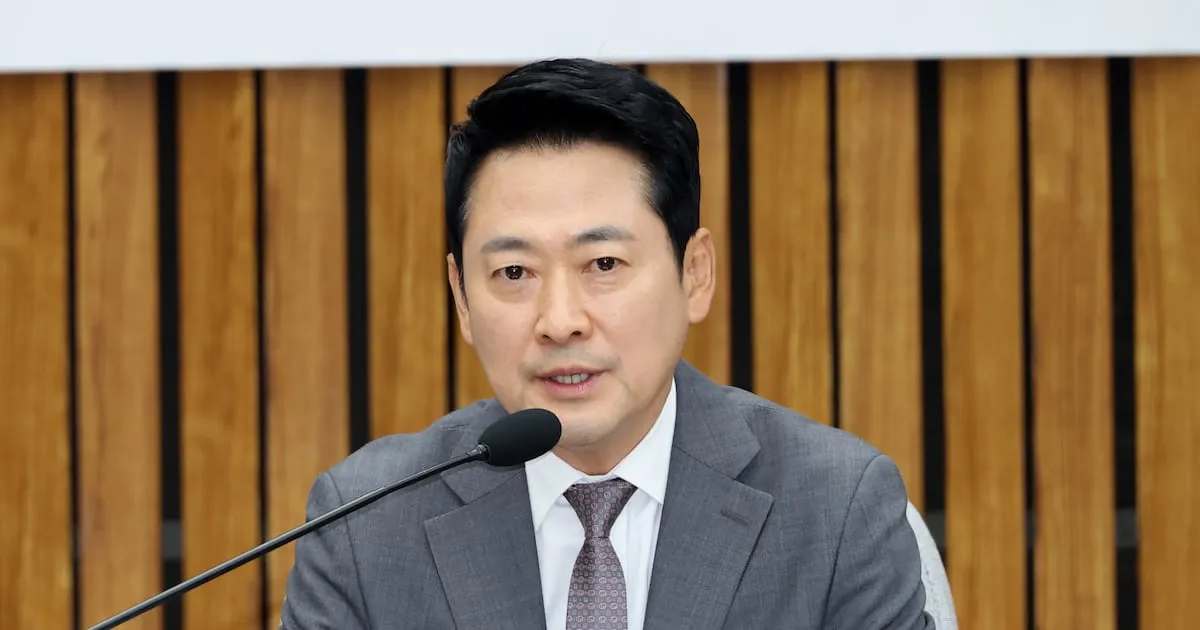
Jang Dong-hyeok, the leader of the Gukminuihim Party, has strongly criticized the National Election Commission (NEC) for rejecting his party’s election appeal related to the June 3rd Seoul mayoral election. Jang announced his intention to pursue legal action, including an election lawsuit, and hold the NEC accountable for its decision.
Gukminuihim Party’s Appeal Dismissed by NEC
On June 12th, Jang Dong-hyeok stated via Facebook that the NEC had dismissed all election appeals filed by the Gukminuihim Party. He expressed strong disapproval, asserting that the NEC must be held responsible for its ruling. The NEC cited insufficient grounds for the appeals, explaining that while violations of election regulations were found concerning ballot box storage and vote counting, these actions were not deemed to have influenced the election’s outcome.
Jang Dong-hyeok Criticizes NEC’s Rationale
Jang Dong-hyeok sharply rebuked the NEC’s reasoning, characterizing it as a situation where “cheating occurred, but since the results didn’t change, it’s considered acceptable.” He argued that the NEC arbitrarily concluded that the alleged irregularities did not impact the election results, despite the party’s appeal being specifically filed to investigate the extent of such influence. Jang described this stance as akin to “a child’s excuse,” further emphasizing his belief that a special investigation and an election lawsuit are unavoidable.
The Gukminuihim Party’s appeal was based on the premise that certain procedural irregularities during the election process could have potentially altered the final vote count. The party sought a thorough examination to determine the actual impact of these alleged discrepancies on the election’s integrity. However, the NEC’s decision to dismiss the appeal suggests a differing interpretation of the evidence presented, focusing on the lack of a demonstrable causal link between the identified violations and the final election outcome.
Understanding Election Appeals and NEC’s Role
Election appeals are a critical mechanism within democratic systems, allowing political parties and candidates to challenge results they believe were compromised by irregularities. The National Election Commission, as an independent body, is tasked with overseeing elections, ensuring fairness, and adjudicating disputes. Its decisions are typically based on established electoral laws and precedents, aiming to balance the need for electoral integrity with the finality of election results.
In this case, the NEC’s justification for dismissing the appeal hinged on the principle that proven violations must have a direct and significant impact on the outcome to warrant overturning or modifying the results. This is a common standard in election law, as minor procedural errors or isolated incidents, while undesirable, may not always rise to the level of disenfranchising voters or altering the will of the electorate.
Jang Dong-hyeok Vows Continued Fight
Undeterred by the NEC’s decision, Jang Dong-hyeok declared his commitment to continuing the struggle until all truths are revealed and the votes of the citizens are rightfully recognized. He vowed to fight alongside young people and citizens until the very end. This strong stance indicates the Gukminuihim Party’s resolve to pursue further legal avenues and public pressure to address their concerns regarding the election’s fairness.
The party leader’s rhetoric suggests a broader concern about electoral transparency and accountability. By framing the NEC’s decision as an “excuse,” Jang implies a lack of genuine effort to investigate and rectify potential flaws in the electoral process. The call for a “special investigation” points towards a desire for a more in-depth, perhaps external, review of the election procedures and outcomes.
Implications for Future Elections
The Gukminuihim Party’s pursuit of an election lawsuit and their public criticism of the NEC could have significant implications for future electoral processes. It highlights the ongoing tension between election authorities’ interpretations of electoral law and the expectations of political parties regarding transparency and thoroughness. Such disputes can shape public trust in electoral institutions and influence the development of election regulations.
The party’s commitment to fighting “alongside young people and citizens” suggests an effort to mobilize public support and frame the issue as one of broader democratic concern. This approach aims to elevate the dispute beyond a mere partisan disagreement and position it as a matter of fundamental rights and civic engagement. The outcome of this legal battle and the public discourse surrounding it will likely be closely watched by political observers and the electorate alike.
The Path Forward: Election Lawsuit and Public Scrutiny
Jang Dong-hyeok’s declaration of intent to file an election lawsuit signifies a determination to challenge the NEC’s decision through formal legal channels. An election lawsuit typically involves presenting evidence and arguments to a court, seeking a judicial review of the election process and results. The success of such a lawsuit would depend on the strength of the evidence presented and the court’s interpretation of electoral law.
The party’s strategy appears to involve a dual approach: leveraging legal mechanisms while simultaneously engaging in public advocacy. This combination aims to exert pressure on the NEC and other relevant authorities, while also informing and rallying public opinion. The ongoing struggle, as described by Jang, underscores the importance of vigilance in safeguarding democratic processes and ensuring that every vote is accounted for and protected.
Ultimately, the Gukminuihim Party’s actions reflect a deep-seated concern about the integrity of the electoral system. Their leader’s firm resolve to pursue legal recourse and continue the fight indicates a belief that the issues raised are substantial enough to warrant a prolonged and determined effort, aiming to restore confidence in the fairness and accuracy of elections.
