

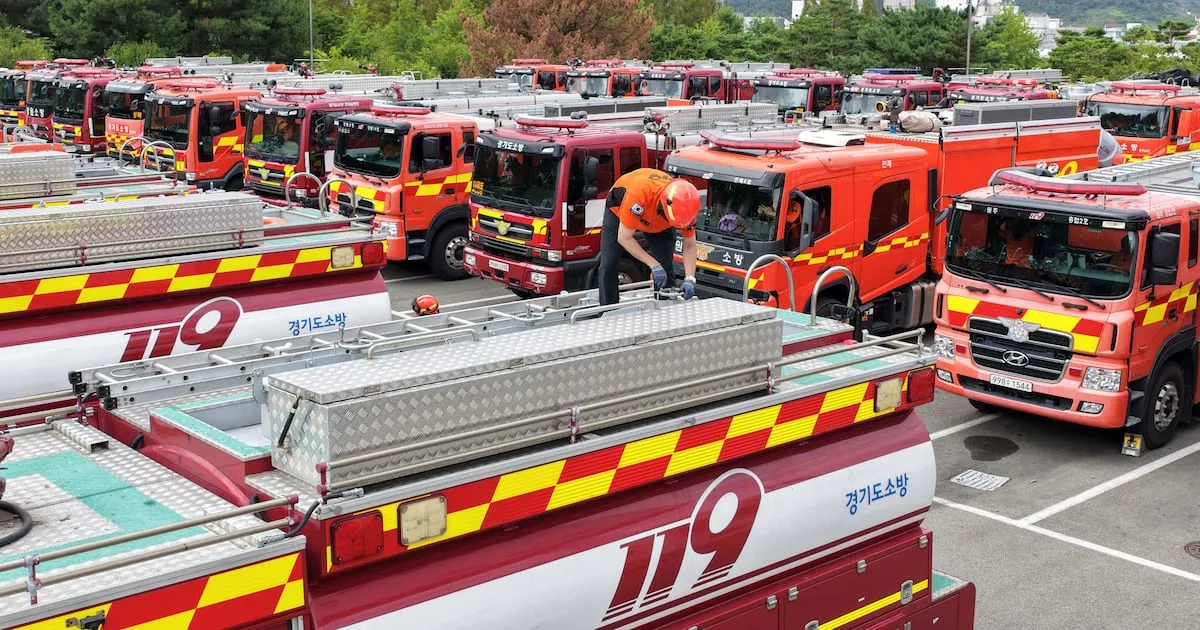
In response to an intensifying drought, approximately 200 fire department water tankers have been mobilized to Gyeongnam Province, South Korea, to provide essential water for agricultural and daily use. The national deployment, initiated by a government order, brings significant resources to a region grappling with severe water shortages.
National Mobilization for Drought Relief
The operation commenced following the issuance of a national fire department mobilization order on the evening of the 11th. This directive dispatched 200 water tankers and 400 personnel from 16 fire departments across the nation to Gyeongnam. These units arrived at designated staging areas within the province by 9 AM on the 12th and were slated to begin emergency water supply operations through the afternoon of the 13th.
Vehicles and personnel departed from various regions, including Gangwon and North Gyeongsang provinces, en route to Gyeongnam. The distribution of these vital resources was meticulously planned, with specific allocations for affected areas within the province. The scale of the deployment underscores the severity of the drought conditions and the critical need for external support.
Resource Allocation by Region
The 200 water tankers were strategically distributed among 14 cities and counties within Gyeongnam Province, prioritizing areas most impacted by the drought. Key allocations included:
- Miryang: Received the largest contingent with 40 tankers, reflecting the critical state of water scarcity in the region.
- Jinju, Sacheon, Gimhae: Each allocated 20 tankers to address significant agricultural and residential water needs.
- Yangsan: Received 18 tankers.
- Namhae, Hadong: Each assigned 14 tankers.
- Geoje, Uiryeong, Geochang, Changwon: Each received 10 tankers.
- Changnyeong: Allocated 6 tankers.
- Tongyeong, Haman: Each assigned 4 tankers.
The primary vehicles deployed are medium-sized water tankers, each capable of carrying between 6,000 to 10,000 liters of water. These tankers are tasked with shuttling water from intake points to designated distribution areas within the affected cities and counties, fulfilling requests from the Gyeongnam Provincial Government and local authorities.
Understanding the Drought’s Impact
Gyeongnam Province has been experiencing prolonged dry spells, leading to a progressively worsening shortage of water for agricultural purposes. The situation is exacerbated by the depletion of agricultural water reservoirs, a critical resource for the region’s farming communities.
According to the Agricultural Drought Management System (ADMS), the average water level in agricultural reservoirs across the province stood at a mere 33.3% as of the 12th. This figure is significantly lower than the typical 71.3% recorded for this period in previous years, representing only 46.7% of the historical average. This drastic reduction highlights the unprecedented nature of the current drought.
Drought Severity Levels
The drought’s impact is widespread, with 17 out of Gyeongnam’s 18 cities and counties currently under some level of water shortage alert, with the exception of Hamyang. The severity is categorized into four levels based on reservoir water levels compared to the annual average:
- Concern: Below 70%
- Advisory: Below 60%
- Warning: Below 50%
- Severe: Below 40%
Areas such as Miryang, Geoje, Haman, and Uiryeong are currently classified under the ‘Severe’ drought stage. Miryang, in particular, is experiencing critically low reservoir levels, with the average at just 25.66% – a stark contrast to its historical average of 74.65%, representing only 34.37% of normal levels. Specific reservoirs like Baekan and Ungdong are at alarmingly low levels of 1.3% and 3.5%, respectively.
The National Mobilization Order
The decision to issue a national mobilization order was made by the Gyeongnam Provincial Fire Agency. Recognizing that the province’s internal firefighting resources alone were insufficient to address the escalating drought crisis, they formally requested assistance from the National Fire Agency. This request triggered the mobilization of resources from across the country.
A national fire department mobilization order is a critical measure implemented when a disaster poses a significant threat or has already occurred, and the affected region’s own emergency response capabilities are deemed inadequate. It allows for the coordinated deployment of national firefighting assets to support local efforts.
This marks the second time a national mobilization order has been issued due to drought conditions. The previous instance occurred in August of the previous year, when the city of Gangneung faced severe water shortages.
Conclusion
The deployment of 200 water tankers and associated personnel to Gyeongnam Province represents a significant national response to a critical environmental challenge. As the drought persists, these resources are vital for maintaining essential water supplies for both agriculture and daily life, aiming to mitigate the severe impacts on the region’s communities and economy.
