

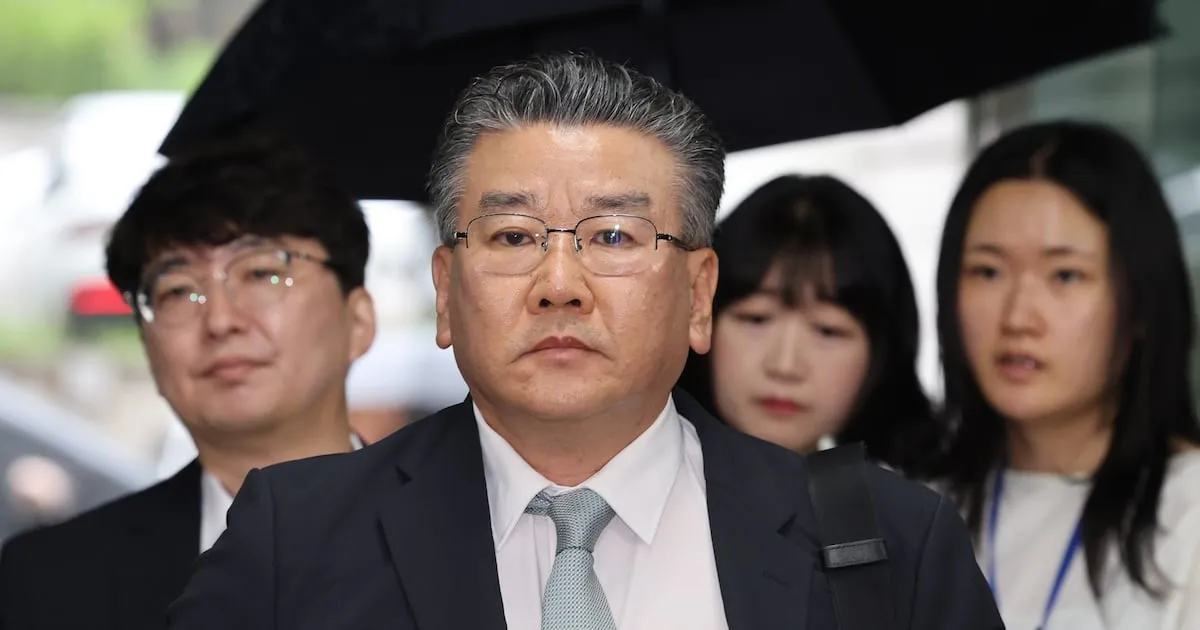
The detention of Yoo Byeong-ho, a former Audit Committee member, has been upheld after a court rejected his request to review the legality of his arrest. Yoo had sought a judicial re-examination, arguing that the charges against him—specifically, allegations of conducting a “cover-up audit” concerning the relocation of the presidential office and the transfer of the presidential security service during the Yoon Suk-yeol administration—were unfounded. The Seoul Central District Court’s Criminal Appeals Division 5-2 made the decision on the day of the hearing.
Court Denies Appeal to Overturn Detention
In a ruling delivered after reviewing Yoo Byeong-ho’s appeal for the suspension of his detention, the court stated, “There are no grounds for the appeal.” Consequently, Yoo’s detention will continue. Under South Korean law, a detained individual has the right to request a judicial review of the legality of their arrest, a process known as a “detention review hearing.” This latest court decision means Yoo’s appeal in this regard has been dismissed.
Background of the Allegations
Yoo Byeong-ho was serving as the Secretary-General of the Audit Committee during the Yoon Suk-yeol administration. The accusations against him center on his alleged involvement in improperly influencing audit outcomes. Specifically, it is alleged that he received undue favors, such as abuse of power and obstruction of business, to either expedite or conceal audit results related to the presidential office and the presidential security service.
The relocation of the presidential office and the presidential security service occurred after Yoon Suk-yeol won the presidential election. The presidential office was moved from its traditional location in Cheong Wa Dae to the Ministry of National Defense building in Yongsan, while the presidential security service was relocated to the former building of the Ministry of Foreign Affairs and Trade, also in Yongsan.
Controversy Surrounding the Relocation Project
The relocation project itself was fraught with controversy, particularly concerning the selection of construction companies and the disbursement of funds for the construction. These issues led to public scrutiny, prompting the civic group People’s Solidarity for Sustainable Society to file a complaint with the Board of Audit and Inspection (BAI), initiating the audit process.
The BAI’s investigation, referred to as the “second comprehensive special audit,” led to the request for Yoo Byeong-ho’s arrest warrant on the 14th of the previous month. The court initially granted the warrant on the 20th of the same month, citing concerns about the destruction of evidence.
Yoo Byeong-ho’s Defense and Legal Process
Yoo Byeong-ho’s legal team has maintained his innocence, arguing that the audit was conducted fairly and that any alleged influence was either non-existent or within the bounds of his official duties. They contend that the charges are politically motivated and aim to tarnish his reputation and that of the administration he served.
The core of the prosecution’s case reportedly involves evidence suggesting that Yoo received specific benefits in exchange for manipulating audit findings related to the relocation project. This includes allegations of preferential treatment in the selection of contractors and the approval of construction costs. The prosecution argues that these actions constituted a deliberate effort to shield certain individuals or entities from accountability.
The detention review hearing is a critical juncture in the legal process, allowing the court to assess whether the initial grounds for arrest remain valid. The court’s decision to deny Yoo’s request signifies that, at this stage, the judiciary finds sufficient cause to continue his detention pending further investigation or trial.
Implications of the Court’s Decision
The upholding of Yoo Byeong-ho’s detention has significant implications. It suggests that the court views the allegations of a “cover-up audit” with seriousness and believes there is a need for continued investigation without the suspect’s interference. This decision could embolden prosecutors to pursue the case more aggressively.
For Yoo Byeong-ho, this means a prolonged period of detention, potentially impacting his ability to prepare a defense. His legal team is expected to continue exploring all available legal avenues to challenge the detention and the underlying charges.
The case highlights the intense scrutiny faced by government officials, particularly concerning audits and investigations into major public projects. The relocation of the presidential office and related facilities was a high-profile undertaking, and any suggestion of impropriety in its execution or oversight is likely to attract significant attention from both the public and the legal system.
Future Proceedings
With the detention review appeal denied, the focus now shifts to the next stages of the legal proceedings. Prosecutors are expected to continue their investigation, potentially gathering more evidence and interviewing additional witnesses. The defense will likely work on building its case to counter the prosecution’s allegations.
The outcome of this case could have broader implications for accountability in public administration and the independence of audit institutions. The public will be watching closely as the legal process unfolds, seeking clarity on the allegations and ensuring that justice is served.
