

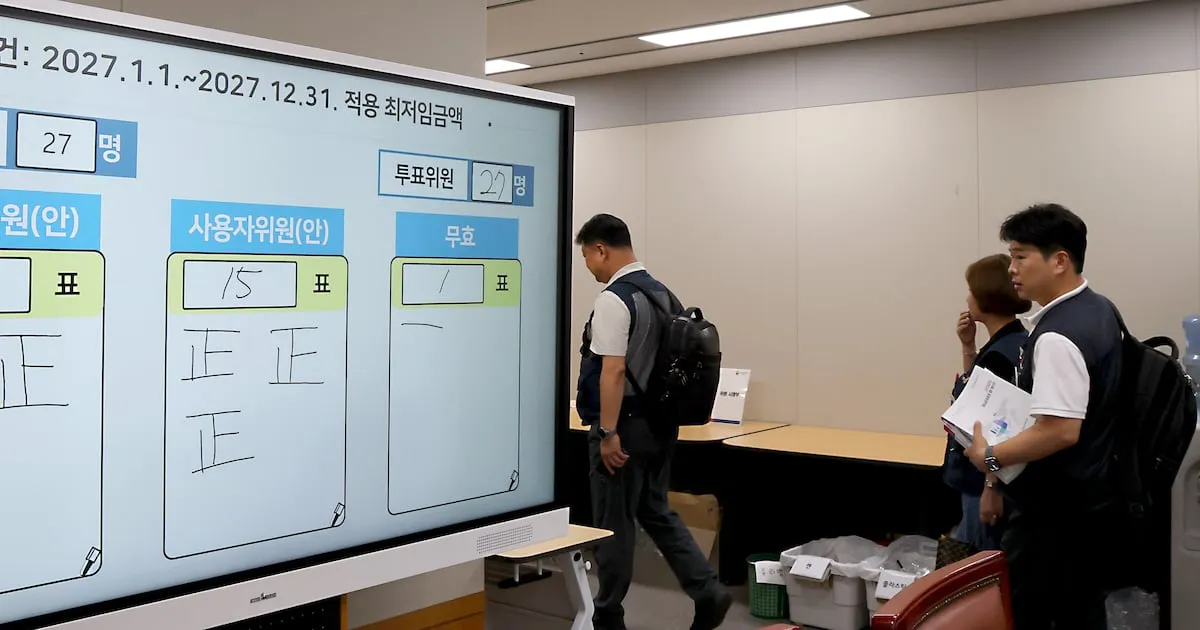
South Korea’s Ministry of Employment and Labor has officially set the minimum wage for 2025 at 10,070 South Korean Won per hour, approximately $8.30 USD. This represents an increase of 380 Won (3.7%) from the current year’s rate of 9,650 Won. The new hourly wage, when calculated based on a standard 209-hour work month, amounts to a monthly salary of 2,236,300 Won (approximately $1,830 USD). This minimum wage will apply uniformly across all business establishments without distinction of industry.
Key Details of the 2025 Minimum Wage
The decision, announced on July 5th, marks a significant step in South Korea’s ongoing efforts to adjust labor compensation in line with economic conditions. The Ministry’s announcement confirmed the hourly rate after a period of deliberation and consultation with various stakeholders, including labor unions and employer associations.
Scope of Application
The newly established minimum wage is designed for broad application, covering the vast majority of workers across different sectors. However, certain categories of workers are excluded from this standard rate. Specifically, individuals employed under special employment types and platform workers, such as gig economy laborers, will not be subject to this particular minimum wage. Separate regulations or agreements may apply to these groups.
Monthly Wage Calculation
For a standard full-time employee working 209 hours per month, the 2025 minimum wage translates to:
- Hourly Rate: 10,070 Won
- Monthly Salary: 2,236,300 Won
This monthly figure provides a clearer picture for workers and employers regarding monthly earnings expectations under the new minimum wage law.
Labor and Employer Reactions and Objections
The process leading to the final announcement was not without contention. Both labor and employer groups lodged objections against the proposed minimum wage increase. This dual objection is a notable occurrence, happening for the first time in four years since 2022, indicating a divergence in opinions regarding the appropriate wage level.
Labor Union Concerns
The Korean Confederation of Trade Unions (KCTU), a major labor federation, expressed its dissatisfaction, particularly concerning the exclusion of special employment and platform workers from the minimum wage coverage. The union argued that these workers, who are increasingly common in the modern economy, should also be afforded the protection of a minimum wage standard.
Employer Association Objections
Similarly, the Korea Federation of Small and Medium Business (KBIZ), representing small and medium-sized enterprises, also filed an objection. Their primary concern was the perceived excessive nature of the wage hike, arguing that the 3.7% increase could place an undue financial burden on businesses, especially smaller ones already operating on tight margins.
Ministry’s Response to Objections
Despite the objections raised by both labor and employer groups, the Ministry of Employment and Labor decided not to accept these appeals. A representative from the Ministry stated that the objections were reviewed comprehensively, taking into account the legal framework, the substance of the claims, and the deliberation process.
The Ministry’s official stance, as communicated by a Ministry official, indicated that the submitted objections did not meet the criteria for acceptance. “The objections raised were not accepted after a comprehensive review of the provisions of the Minimum Wage Act, the content of the claims, and the deliberation process,” the official explained. This decision underscores the Ministry’s final authority in setting the minimum wage, balancing various economic and social factors.
Context and Historical Perspective
The minimum wage system in South Korea is a critical policy tool aimed at ensuring a basic standard of living for workers and reducing income inequality. The annual adjustment process involves extensive discussions between the Minimum Wage Commission, which comprises representatives from labor, employers, and the public interest.
The commission typically deliberates throughout the spring and early summer before submitting its recommendation to the Ministry of Employment and Labor. The Ministry then makes a preliminary announcement, allowing a period for objections before finalizing the rate. This structured process aims to foster consensus, though disagreements are common.
The 3.7% increase for 2025 is moderate compared to some previous years, reflecting a cautious approach by the government amidst global economic uncertainties. The decision to maintain the uniform application across industries, while excluding specific worker categories, highlights the ongoing challenge of adapting labor regulations to the evolving nature of work.
Future Implications
The finalized minimum wage for 2025 is expected to impact various aspects of the South Korean economy. For workers, it signifies a modest increase in their earning potential, potentially boosting consumption. For businesses, particularly small and medium-sized enterprises, the adjustment necessitates careful financial planning to accommodate the higher labor costs.
The debate over the minimum wage, especially concerning its scope and the rate of increase, is likely to continue. As the gig economy and non-traditional employment forms grow, the question of extending minimum wage protections to all workers will remain a key issue in future labor policy discussions. The government’s approach in 2025 suggests a continued emphasis on gradual adjustments while navigating the complexities of a diverse labor market.
Ultimately, the 2025 minimum wage reflects a compromise, albeit one that did not satisfy all parties involved. It sets the floor for wages across most sectors, aiming to balance the need for worker protection with the economic realities faced by businesses in South Korea.
