

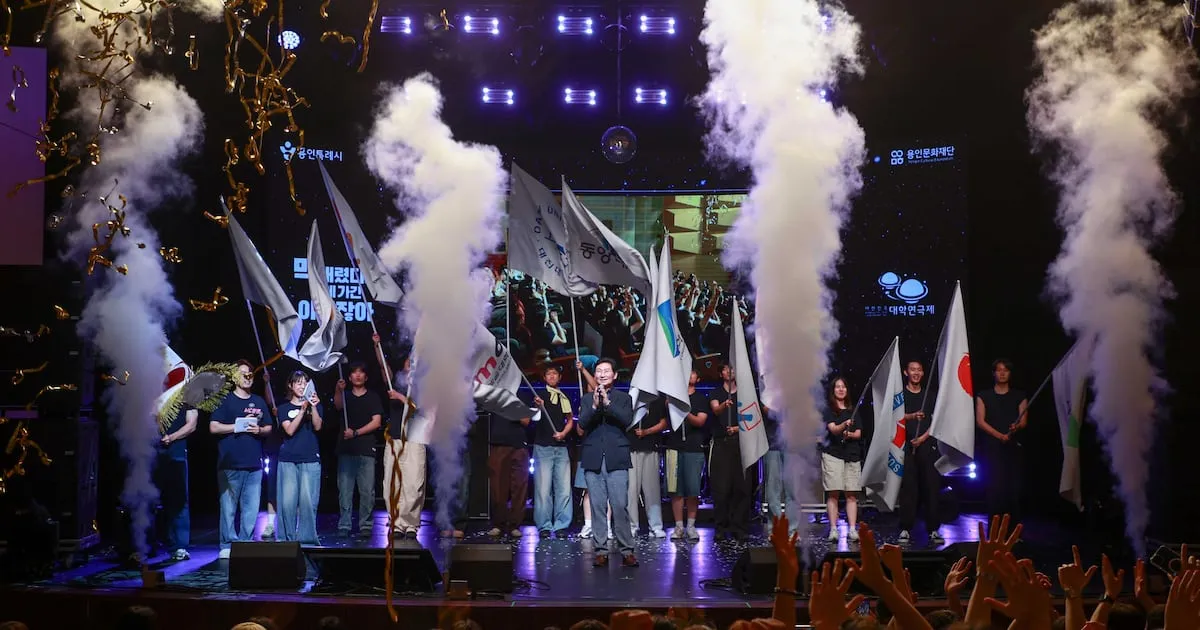
The curtains have closed on the 24-day National University Theater Festival, which brought together aspiring actors and theater enthusiasts from across South Korea in Yongin. The closing ceremony for the ‘3rd Republic of Korea University Theater Festival’ was held on October 2nd at the Keun-eoulmadang of the Yongin Lifelong Learning Center.
A Celebration of Youthful Theatrical Passion
The festival, spanning over three weeks, showcased the dedication, imagination, and creativity of university students deeply passionate about theater. Yongin Mayor Lee Sang-il, addressing the approximately 400 attendees including student performers, theater professionals, and citizens, emphasized the profound impact of the performances. “The stages you have prepared over more than 20 days demonstrated your passion for acting, your imagination, and your inventiveness. Each and every stage was a universe in itself,” Mayor Lee stated. He further highlighted the unique emotional connection forged through live performance, noting, “Live theater, something Artificial Intelligence can never replicate, delivered great emotion to citizens who love acting.”
Reflecting on the festival’s conclusion, the Mayor expressed a touch of sadness but also optimism for its future. “It is a shame that we must part ways, but the University Theater Festival will continue next year and the year after,” he assured. “I hope to see you all again in Yongin every year during your university days. Yongin City will continue to support you so that you can keep developing the theater you love.”
Festival Highlights and Award Winners
This year’s festival saw an impressive turnout, with 49 university teams initially applying to participate. Following a rigorous selection process, 14 teams advanced to the main competition, performing across various venues in Yongin. The main performances were a resounding success, with all shows selling out in the pre-sale ticketing phase. The average audience occupancy rate stood at a remarkable 89.2%, underscoring the strong public interest in university theater.
At the closing ceremony, five teams were recognized with the ‘Best 5’ awards for their outstanding performances. These distinguished teams included Kyung Hee University, Chung-Ang University, Dong-A Broadcasting University, Incheon University, and Sungkyunkwan University. The Angsangbul Award, which honors excellence in stage direction, was presented to Dongyang University. The award for stage staff went to Daejin University.
The Networking Award, celebrating collaboration and exchange among participants, was distributed among three teams: ‘Pallaranggwi’ (for experimental spirit), ‘Ilnaebundeul’ (for creative spirit), and ‘GO Ssarri Ppixxari’ (for collaborative spirit). These awards acknowledged the teams that best exemplified synergy and innovative approaches throughout the festival.
Special awards, chosen directly by the participating students, were given to Kim Kyung-hoon from Sungkyunkwan University and Jung Da-eun from Chung-Ang University, recognizing their exceptional contributions and peer-acclaimed talent.
The Significance of University Theater Festivals
University theater festivals play a crucial role in nurturing emerging talent and fostering a vibrant performing arts scene. They provide a vital platform for students to hone their skills, experiment with new ideas, and gain valuable performance experience in front of a live audience. These events not only contribute to the cultural landscape of the host city but also serve as a stepping stone for young artists embarking on their professional careers.
The collaborative nature of these festivals encourages a spirit of camaraderie and mutual learning among students from different institutions. The exchange of ideas and techniques can spark innovation and push the boundaries of theatrical expression. Furthermore, the success of the Yongin festival, marked by sold-out shows and high attendance, demonstrates a significant public appetite for diverse and engaging theatrical productions.
Looking Ahead
As the 3rd Republic of Korea University Theater Festival concludes, the focus shifts to sustaining this momentum. The commitment from Yongin City to continue supporting the festival signals a promising future for university theater in the region. The success of this year’s event, with its high participation and audience engagement, sets a strong precedent for future iterations. Organizers and participants alike will undoubtedly build upon this foundation, aiming to make the festival an even more significant event in the years to come, continuing to inspire and captivate audiences with the power of live performance.
