

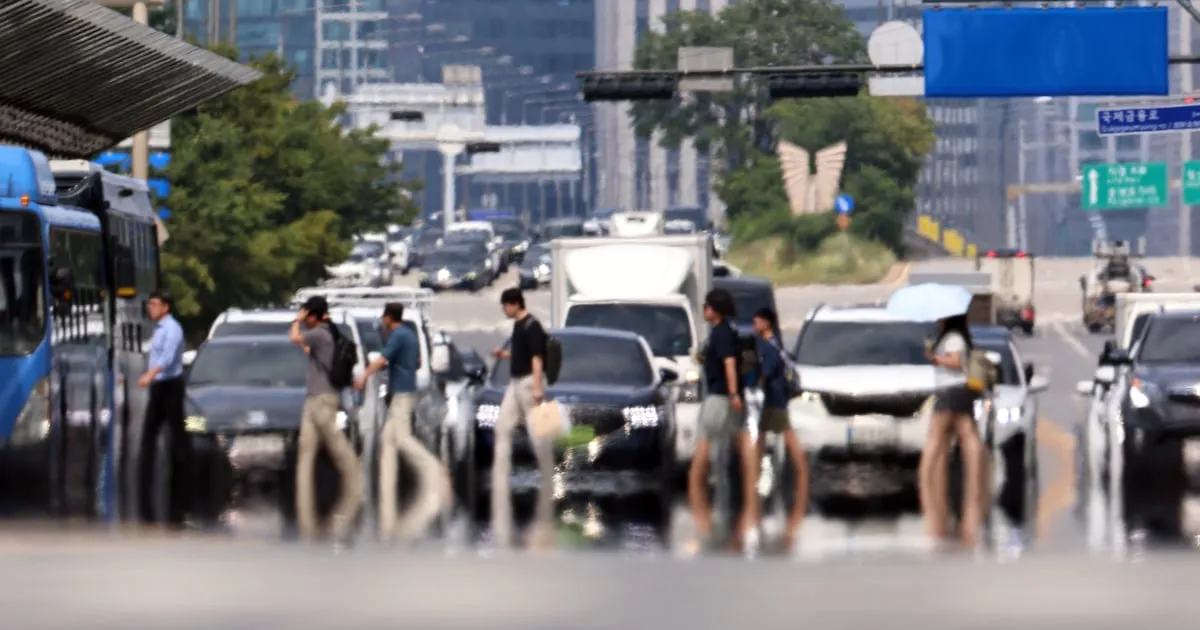
South Korea is set to experience another day of intense heat on Tuesday, August 4th, with temperatures predicted to soar to 38°C (100.4°F) in Seoul and Gwangju. The Korea Meteorological Administration (KMA) has issued its highest level of heatwave advisory, ‘Extreme Heat,’ for the first time in the Seoul metropolitan area, signaling a severe and prolonged period of high temperatures.
Record-Breaking Heat Grips the Nation
The KMA forecasts morning lows across the country to range between 23°C and 27°C, with daytime highs reaching between 30°C and a scorching 38°C. Major cities are expected to see the following peak temperatures: Seoul at 38°C, Gwangju at 38°C, Incheon at 37°C, Daejeon at 37°C, Daegu at 36°C, and Busan and Ulsan at 34°C.
The ‘Extreme Heat’ advisory, a newly implemented highest tier in the heatwave warning system, will be effective from 11 AM on August 4th for the Seoul metropolitan area and parts of Jeollanam-do province. This designation is applied when the perceived temperature is expected to remain above 35°C for more than two consecutive days, with a forecast of either more than 38°C for one day or more than 39°C for a single day. The issuance of this advisory for the capital region marks an unprecedented event.
Understanding the ‘Extreme Heat’ Advisory
The ‘Extreme Heat’ advisory is the most severe warning issued by the KMA. It signifies conditions where the perceived temperature is expected to exceed 35°C for at least two consecutive days. Specifically, it is triggered if, within that period, the perceived temperature is forecast to reach 38°C or higher for at least one day, or 39°C or higher for a single day. The KMA’s decision to apply this highest alert level to the Seoul metropolitan area underscores the severity of the current heatwave.
Factors Contributing to the Intense Heat
Forecasters attribute the persistent and extreme heat to a combination of factors, including a prevailing high-pressure system and a shift in wind patterns. The KMA anticipates that the intense heat will continue for some time, particularly affecting the western slopes of the Baekdudaegan mountain range, including the capital region.
