

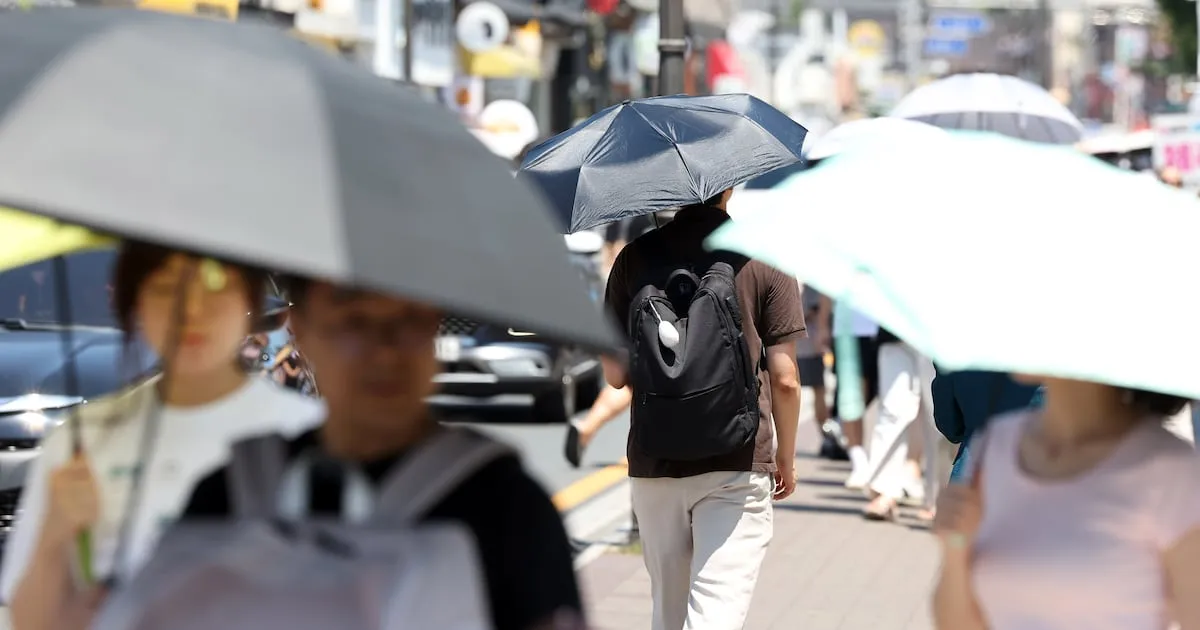
South Korea is bracing for another day of intense heat on Monday, August 3rd, as heatwave advisories remain in effect across most of the nation. Meteorologists predict daytime high temperatures will reach up to 39 degrees Celsius (102.2 degrees Fahrenheit), with the majority of the country experiencing temperatures above 35 degrees Celsius (95 degrees Fahrenheit). This oppressive heat is compounded by high humidity, creating uncomfortable conditions and increasing the risk of heat-related illnesses.
Nationwide Heatwave Continues
The Korea Meteorological Administration (KMA) has issued heatwave advisories for extensive areas, warning of the potential for dangerous temperatures. While some regions, particularly in the central parts of the country, may see intermittent cloud cover, southern areas and Jeju Island are expected to remain largely clear. Despite the possibility of brief temperature drops in areas experiencing showers, the humidity is forecast to remain high, leading to a resurgence of heat once the rain subsides.
Overnight temperatures are also expected to remain elevated, with many areas likely to experience tropical nights. A tropical night occurs when the minimum temperature remains above 25 degrees Celsius (77 degrees Fahrenheit). The KMA has urged residents in areas under tropical night advisories to maintain cool indoor temperatures and adjust outdoor activities to prevent heatstroke and heat exhaustion.
Regional Temperature Forecasts
On Monday, minimum temperatures are expected to range from 23 to 27 degrees Celsius (73.4 to 80.6 degrees Fahrenheit), while maximum temperatures will fluctuate between 32 and 39 degrees Celsius (89.6 to 102.2 degrees Fahrenheit).
- Morning Lows: Seoul and Incheon are forecast to have morning lows of 26 degrees Celsius (78.8 F). Chuncheon and Daejeon will see lows around 25 degrees Celsius (77 F). Gangneung, Cheongju, Daegu, Jeonju, Ulleungdo, and Dokdo are also expected to have morning lows of 26 degrees Celsius (78.8 F). Gwangju, Busan, and Jeju will experience slightly warmer mornings with lows around 27 degrees Celsius (80.6 F).
- Afternoon Highs: The mercury is predicted to climb to 37 degrees Celsius (98.6 F) in Seoul, Daejeon, and Cheongju. Incheon, Gangneung, and Jeju will reach highs of 34 degrees Celsius (93.2 F). Chuncheon and Busan are expected to hit 35 degrees Celsius (95 F). Jeonju will likely see a high of 36 degrees Celsius (96.8 F). Daegu and Gwangju are forecast to be the hottest cities, with highs reaching a scorching 39 degrees Celsius (102.2 F). Ulleungdo and Dokdo will experience relatively cooler highs of 31 degrees Celsius (87.8 F).
Potential for Showers and Fog
Light showers are anticipated in the southern parts of Gangwon Province and northern areas of Chungbuk Province between 3 PM and 9 PM on Monday. The expected rainfall is minimal, ranging from 5 to 10 millimeters. These showers may offer temporary relief from the heat in localized areas, but the high humidity is expected to persist.
Dense fog is also a concern, particularly in the early morning hours. Coastal areas of the West Sea and inland regions are likely to experience fog, reducing visibility. The southern coast of Jeonnam Province may see visibility drop to less than 200 meters due to thick fog. Other areas, including the western coasts of Incheon and Gyeonggi Province, inland and mountainous regions of Gangwon Province, parts of the Chungcheong and Jeolla regions, could also experience fog with visibility below 1 kilometer.
Sea fog is possible along the western and southern coasts of the mainland until the morning. Mariners and those operating vessels are advised to exercise extreme caution and check navigational information before setting sail to prevent accidents. Some island regions might also experience drizzle along with fog, with visibility potentially falling below 200 meters.
Air Quality Concerns
Fine dust levels are expected to remain at ‘normal’ levels across the country for most of the day. However, there is a possibility of temporary increases in fine dust concentration in some central and southeastern regions during the morning and evening. This is due to the accumulation of fine dust from the previous day and domestically generated pollutants, which may become stagnant. Air circulation is expected to improve in the afternoon, leading to a decrease in fine dust levels.
Health and Safety Recommendations
With the persistent heatwave and high humidity, public health officials are reiterating advice on staying safe. Key recommendations include:
- Stay Hydrated: Drink plenty of water throughout the day, even if you don’t feel thirsty.
- Avoid Strenuous Activity: Limit outdoor activities, especially during the hottest parts of the day (typically between 12 PM and 5 PM).
- Seek Cool Environments: Spend time in air-conditioned or shaded areas whenever possible.
- Check on Vulnerable Individuals: Ensure the elderly, young children, and those with chronic illnesses are staying cool and hydrated.
- Recognize Heat Illness Symptoms: Be aware of the signs of heat exhaustion and heatstroke, such as dizziness, nausea, headache, and rapid pulse, and seek medical attention if necessary.
The prolonged period of extreme heat underscores the importance of taking precautions to protect personal health and well-being. Residents are advised to stay informed about weather updates and follow safety guidelines issued by authorities.
