

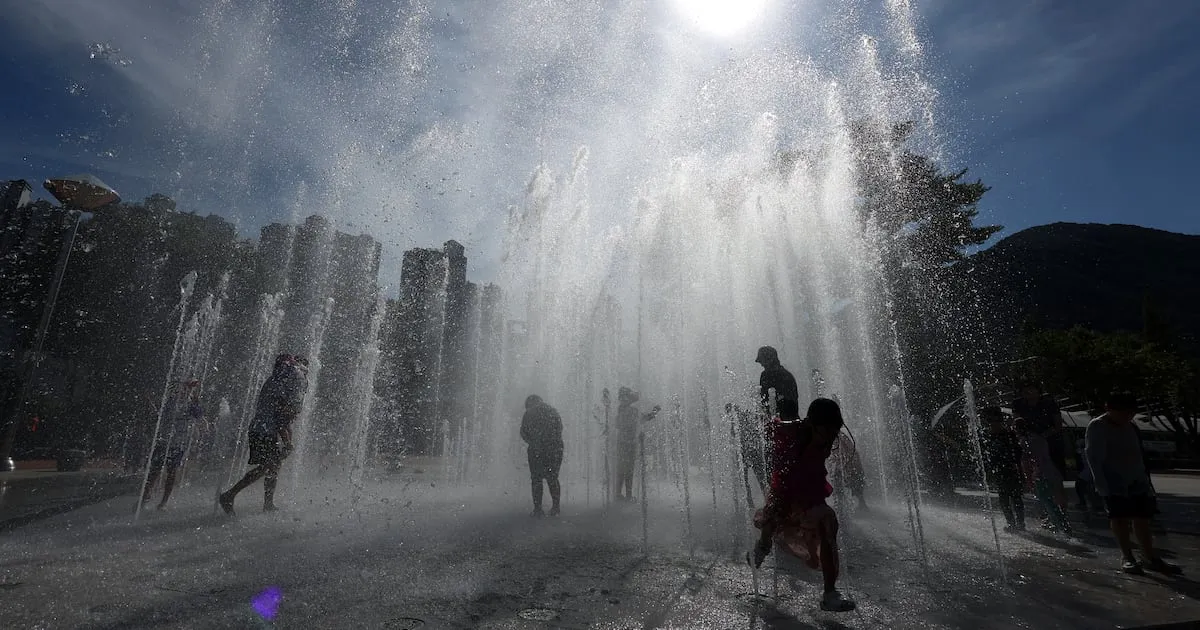
The first day of August is set to bring intense heat and tropical nights across most of South Korea, with forecasters predicting record-breaking temperatures. The national weather agency has issued a severe heatwave warning, urging residents to take precautions against the extreme conditions.
Nationwide Heatwave Alert Issued
On August 1st, the perceived temperature is expected to soar to around 35 degrees Celsius in many regions nationwide, making for a sweltering day. The Gyeongnam region is particularly vulnerable, with perceived temperatures anticipated to exceed 38 degrees Celsius. This level of heat necessitates extreme caution, especially for those planning outdoor activities.
Early morning temperatures are forecast to range from 25 to 31 degrees Celsius, while the daytime high will reach between 32 and 38 degrees Celsius. The phenomenon of a ‘tropical night,’ where nighttime temperatures fail to drop below 25 degrees Celsius, is also expected to persist across most of the country.
Key City Temperatures on August 1st (as of 5 AM)
- Seoul: 27.5°C
- Incheon: 27.0°C
- Chuncheon: 26.3°C
- Gangneung: 30.7°C
- Daejeon: 25.9°C
- Gwangju: 26.9°C
- Daegu: 27.8°C
- Busan: 29.7°C
- Jeju: 28.3°C
Health and Safety Recommendations Amidst Extreme Heat
In response to the ongoing heatwave, the meteorological administration strongly advises the public to stay hydrated by consuming ample fluids. It is also crucial to avoid prolonged outdoor activities and strenuous work during the hottest parts of the day to prevent heat-related illnesses such as heatstroke and heat exhaustion.
The intensity of the sun’s ultraviolet (UV) rays will also be a significant concern during the peak daylight hours. The weather agency forecasts that the UV index will reach the ‘very high’ level in most parts of the country from noon onwards. This means that exposure to direct sunlight can cause sunburn and skin damage relatively quickly, even with short periods of exposure.
Residents are advised to wear protective clothing, hats, and sunglasses when venturing outdoors and to seek shade whenever possible. Limiting outdoor activities, especially between 10 AM and 4 PM, is highly recommended.
Sea Conditions and Coastal Warnings
The sea conditions are also expected to be affected by the prevailing weather patterns. Waves along the East Sea coast are predicted to be between 0.5 to 1.5 meters, while the West Sea and South Sea coasts will experience waves ranging from 0.5 meters to 1.0 meter.
For offshore areas, wave heights are anticipated to be similar: 0.5 to 1.5 meters in the East Sea, and 0.5 to 1.0 meter in the West and South Seas. While these conditions may not seem extreme, swimmers and boaters should remain aware of potential hazards and follow safety guidelines issued by local authorities.
Looking Ahead: Continued Heat Expected
The current forecast indicates that this intense heatwave is not a short-term event. Meteorologists expect the high temperatures and tropical nights to continue for the foreseeable future, underscoring the importance of sustained vigilance and adherence to safety measures. Residents are encouraged to monitor weather updates closely and adjust their daily routines accordingly to cope with the prolonged period of extreme heat.
The prolonged period of high temperatures poses risks not only to human health but also to agriculture and infrastructure. Farmers may need to implement measures to protect crops from heat stress and water shortages. Public services may also be strained due to increased demand for electricity for cooling and potential impacts on transportation and other essential services.
As the nation braces for continued high temperatures, community support and awareness are vital. Checking on vulnerable populations, such as the elderly and those with pre-existing health conditions, is a shared responsibility. Public health campaigns are likely to be intensified to disseminate information on heatstroke prevention and emergency response.
The meteorological agency will continue to provide updated forecasts and warnings as the situation evolves. Citizens are urged to stay informed and prioritize their well-being during this challenging period of extreme summer weather.
