

An analysis of police personnel data has revealed that approximately 17,000 police officers have served in the same station for over a decade. These long-serving officers, referred to as ‘Hyangchal’ (鄕察), predominantly hold mid-level ranks such as Sergeant, Corporal, and Constable. The issue of Hyangchal’s deep-rooted presence in specific regions has come under scrutiny following a recent incident where a senior officer allegedly allowed the destruction of key evidence in a high-profile case. This situation has highlighted concerns about the potential for undue influence and compromised investigations when officers remain in one location for extended periods.
The Phenomenon of ‘Hyangchal’ in Law Enforcement
The term ‘Hyangchal’ describes police officers who have been stationed at the same police precinct for ten years or more. Data obtained by a parliamentary member’s office from the National Police Agency indicates that as of the current year, there are 5,209 officers at the rank of Senior Constable (경감) or higher who have served over a decade in one location. This figure is complemented by 8,609 Corporals (경위), 3,211 Sergeants (경사), and 13 Station Chiefs (경장), totaling 17,130 individuals.
When focusing specifically on the ranks of Senior Constable and Corporal, those who have served over ten years in a single precinct constitute roughly 20% of all officers in those ranks. For Senior Constables, this long-term tenure applies to 18% of the total 28,914 officers. In the Corporal rank, 24.2% of the 35,959 officers have remained at the same post for over a decade. Officers in lower ranks do not appear to have the same prevalence of prolonged service in a single station.
Standard Rotation Policies and Their Limitations
Typically, the police force implements rotation policies to prevent such long-term assignments. High-ranking officers (Chief Superintendent and above) are usually rotated nationwide on an annual basis. For lower ranks, including Superintendents and below, inter-precinct transfers are generally conducted every two years. Officers who serve for four years or more in a position are eligible for accelerated promotion to Station Chief.
However, the data suggests that these rotation policies are less strictly applied or perhaps less effective in certain regions, particularly outside the capital. While less than 10% of Senior Constables and below in Seoul have served over a decade at the same precinct, the figures jump significantly in provincial areas. For instance, provinces like Jeonbuk, Chungbuk, Chungnam, Gyeongbuk, and Gyeongnam report between 19% and 24% of their officers in these ranks having long-term assignments.
The Guangsan precinct in Gwangju, the site of a recent controversial investigation, reported only 2.6% of its officers serving over ten years. However, this low percentage is partly attributed to the precinct having only five substations, limiting the scope for meaningful rotation within the district.
Case Study: The Guangsan Incident and Long-Term Assignments
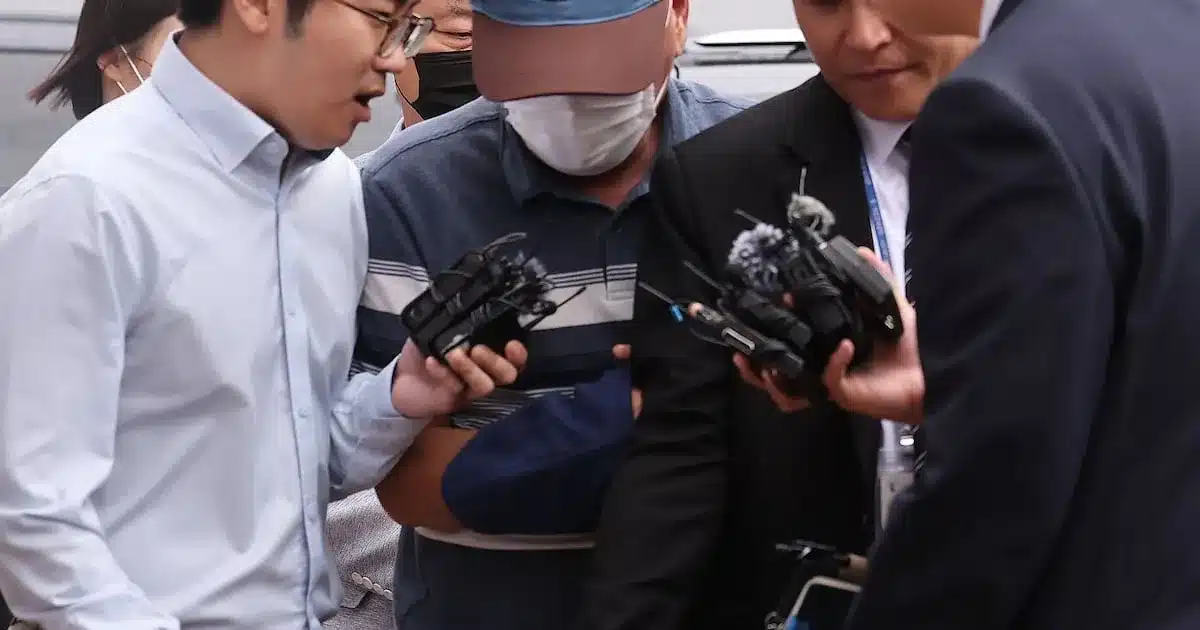
The recent case that brought the issue of Hyangchal to the forefront involved allegations against Senior Constable Park, the leader of the Gwangju-Gwangsan investigation team. He was accused of improperly handing over crucial evidence to Senior Constable Jang, the father of a suspect in a high-profile case involving a missing female student. Both officers were found to have served for over a decade at the Guangsan precinct.
Senior Constable Park’s career history shows a total of 18 years at the Guangsan precinct, constituting nearly half his police service. He served nine years and three months at the Jangseong precinct in Jeonnam before moving to Guangsan from 2000 to 2014. After an eight-year stint at the Gwangju Bukbu precinct from 2014 to 2022, where he was promoted to Senior Constable, he returned to Guangsan in 2022 and has been working there for the past four years and five months.
Senior Constable Jang’s record indicates he served at the Gwangju Bukbu precinct from 1999 to 2009. After two years in a mobile unit, he returned to Bukbu precinct until 2015. Subsequently, he served at the Guangsan precinct for over ten years until March of the previous year.
Their service periods overlapped significantly. Both were at the Bukbu precinct in 2014, and both were at the Guangsan precinct between 2022 and 2025. While police officials state they did not work in the same substation, a member of the investigation team, Constable Kim, who worked under Senior Constable Park, confirmed that he had previously worked with Senior Constable Jang at the same unit within the Guangsan precinct. Following the incident’s revelation, Constable Kim reportedly communicated with Senior Constable Jang multiple times to relay case information.
Arguments for and Against Long-Term Assignments
Police authorities often justify long-term assignments by citing practical necessities. They argue that officers need stability to establish a life and family, especially in regions where the distance between police stations within the same province can exceed 100 kilometers. Furthermore, officers who develop deep familiarity with local conditions and communities can contribute more effectively to maintaining public order and safety.
However, critics point to the potential downsides, as exemplified by the Jang Yun-gi case. When officers are deeply entrenched in a community for extended periods, there is an increased risk of forming overly close relationships with residents, influential local figures, or even suspects. This proximity can lead to compromised investigations, such as ‘looking the other way’ or the leaking of sensitive information, potentially undermining the integrity of the justice system.
The debate over Hyangchal underscores the complex balance between operational efficiency, community relations, and the imperative of maintaining an impartial and effective law enforcement system. Addressing this issue may require a re-evaluation of current rotation policies and stricter enforcement to ensure accountability and public trust.
