

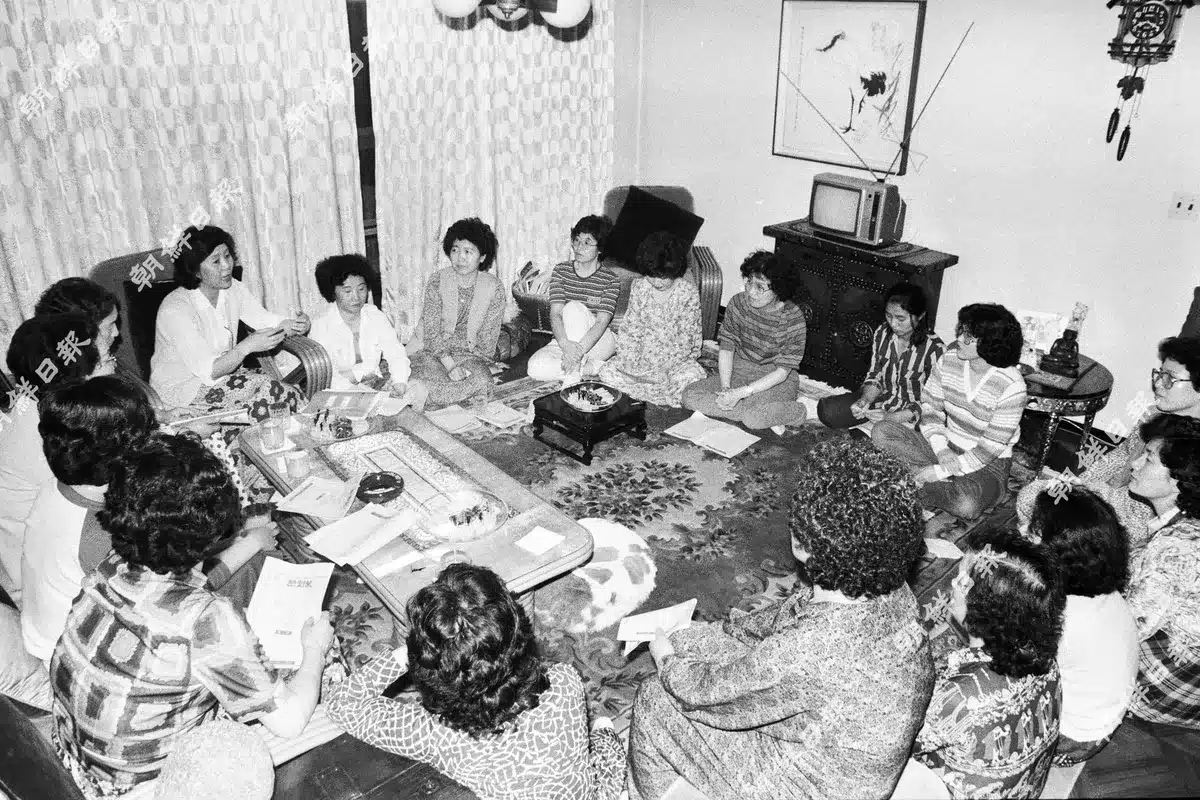
In the late 1970s, a unique form of community meeting, known as ‘Bansanghoe,’ began to take root across South Korea, offering residents a direct channel to voice their concerns and suggestions to local authorities. These gatherings, initially mandated by the government, evolved from simple administrative updates to lively forums where everyday citizens could discuss issues ranging from public sanitation to infrastructure development. The practice, which started in May 1976, became a regular fixture in many neighborhoods, with meetings typically held on the 25th of each month, a shift from the original end-of-month schedule.
The Origins and Evolution of Bansanghoe
The concept of neighborhood gatherings for discussion predates the formal establishment of the Bansanghoe. While similar meetings existed during the Japanese colonial era and the Syngman Rhee administration, the systematic, regularized Bansanghoe as a government initiative truly began in 1976. The first official meeting, reported on May 31, 1976, saw participation from neighborhood leaders and district officials. Initially, these meetings could be tedious, filled with administrative announcements that left attendees feeling disengaged. However, the atmosphere often transformed when residents were given the floor to present their grievances and suggestions.
This direct engagement proved to be a significant factor in boosting attendance and participation. The sheer volume of issues raised was substantial; a report from the first meeting indicated over 9,000 suggestions were submitted nationwide. Common topics included:
- Urgent processing of garbage collection.
- Measures for improving water supply.
- Bus route extensions and additions.
- Installation of safety lighting in alleyways.
- Pest control measures during summer.
- Postponement of demolition for dilapidated buildings.
- Road paving.
- Expediting development projects.
- Reconstruction of stream banks.
- Construction of underpasses.
Challenges in Organizing Bansanghoe
Despite the noble intentions, organizing these meetings presented several logistical hurdles. A primary challenge was finding suitable venues. Government directives suggested meetings be held at the homes of neighborhood chiefs or honorary chiefs. However, in urban settings, finding a single residence large enough to accommodate all participants proved difficult. Wealthier neighborhoods with spacious homes could often host the required 20 or fewer attendees. In contrast, working-class areas or apartment complexes, where subdivisions often had 20-30 or even 40-60 households per block, lacked adequate space. This led to some Bansanghoe being held in public spaces like community centers or local parks.
Another issue was the reluctance of some households to offer their homes for meetings. The reasoning often cited was the invasion of privacy, as opening one’s home for a community gathering was seen as a significant intrusion into private life. Furthermore, there was the unstated expectation of providing refreshments like beverages for attendees. While this was manageable in affluent areas, many households, particularly those outside wealthy districts, found it financially burdensome to consistently offer such hospitality.
Bansanghoe as a Platform for Civic Engagement and National Discourse
The significance of Bansanghoe extended beyond local issues. High-ranking government officials, including cabinet ministers, sometimes attended these neighborhood meetings, underscoring their perceived importance. In August 1976, Kim Yeol, the Minister of Home Affairs, addressed a Bansanghoe, stating that the meetings were a valuable platform for discussing and resolving daily inconveniences, and for collectively identifying and expelling ‘infiltrators or impure elements’ through shared information. This highlighted a dual purpose: addressing civic needs and maintaining social order.
The meetings also served as a response mechanism during national crises or political events. Following the ‘Namminjeon’ incident in 1979, anti-communist Bansanghoe were reportedly held in apartment complexes where residents lived. In one instance, a neighborhood chief named Kim Jeong-ja expressed regret for not being able to detect the ‘living patterns’ of suspicious individuals residing in the building. During the ‘August 18th Dokki Manhaeng’ incident in August 1976, which involved North Korean provocations, Bansanghoe transformed into anti-communist rallies. These events saw substantial donations, totaling 190 million won, and the burning of 149 effigies of Kim Il-sung. In July 1977, a special ‘Flood Damage Relief Bansanghoe’ was organized to collect donations and relief goods for flood victims.
Shifting Dynamics and Evolving Concerns
Over time, the nature of discussions within Bansanghoe began to shift, reflecting changing societal priorities and technological advancements. A letter from a reader, Jeong Yeong-seon, published in July 1990, offered a fascinating glimpse into a later iteration of these meetings. Jeong recounted a discussion about the installation of communal antennas for receiving Japanese NHK broadcasts. While installing individual antennas was prohibitively expensive (around 700,000 won), a shared antenna system could be set up for approximately 25,000 won per household. This proposal generated mixed reactions, with some opposing it and others supporting it.
The most striking part of Jeong’s account was the assertion that installing a communal antenna could potentially increase apartment values by 2 to 3 million won. This observation led to a critical reflection on the evolving purpose of Bansanghoe, with Jeong questioning whether such discussions, focusing on property value rather than fundamental community needs, represented a problematic transformation of the original intent.
Conclusion
The Bansanghoe, originating as a government-led initiative to foster community engagement and address local grievances, evolved significantly over its operational years. From tackling basic infrastructure needs to becoming a platform for nationalistic sentiment and even discussions on property value, these meetings mirrored the broader social and economic transformations occurring in South Korea. While the formal practice of Bansanghoe may have waned, its legacy highlights the enduring importance of community dialogue and resident participation in shaping local environments.
