

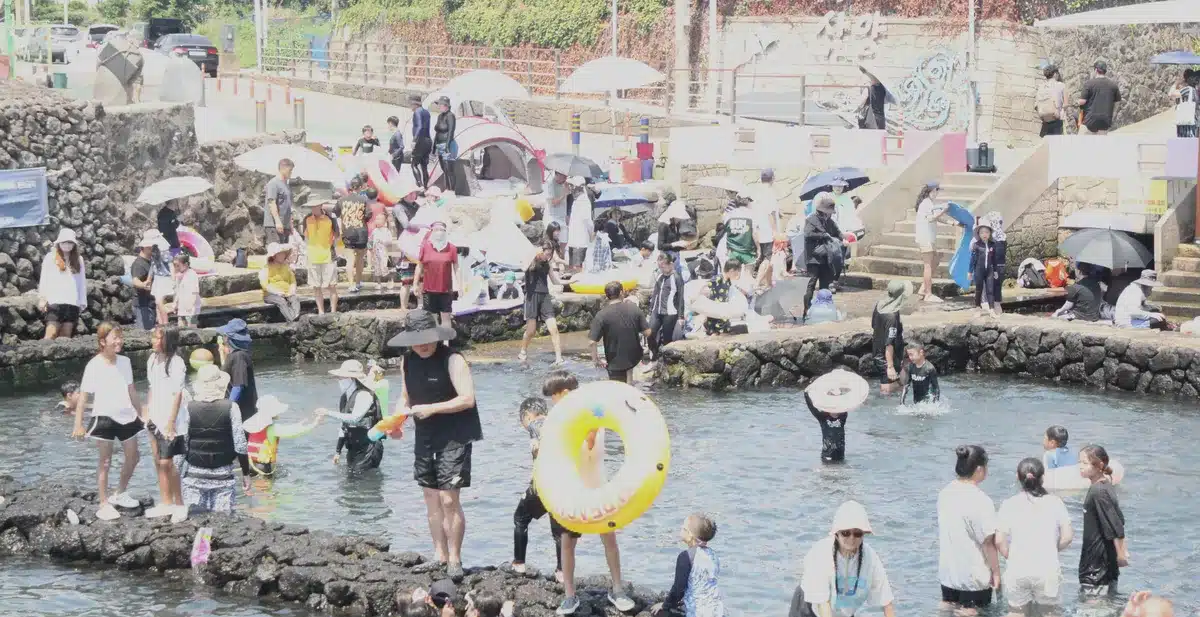
Following the conclusion of the monsoon season, the island of Jeju is experiencing a significant heatwave, leading to reports of heatstroke incidents. The Korea Meteorological Administration (KMA) has issued heatwave advisories across various parts of the island, indicating a sharp rise in temperatures and humidity.
Heatwave Grips Jeju Island
As of July 25th, heatwave advisories have been declared for several key areas, including Jeju City (Seobu, Bukbu, and Dongbu districts) and Seogwipo City (Dongbu district). These advisories cover most of Jeju Island, with the exception of mountainous regions and outlying islands like Chuja-do. Concurrently, a tropical night warning has been issued for coastal areas, signifying that nighttime temperatures are expected to remain high, offering little respite from the daytime heat.
The KMA has reported that the highest perceived temperatures in some areas are exceeding 33 degrees Celsius (91.4 degrees Fahrenheit). In regions under the official heatwave advisory, temperatures are climbing above 35 degrees Celsius (95 degrees Fahrenheit). This intense heat poses a significant risk to public health, prompting officials to urge residents and visitors to take precautions.
Rising Heatstroke Incidents Amidst High Temperatures
The oppressive weather conditions have coincided with an increase in heat-related illnesses, most notably heatstroke. Emergency services have responded to several calls reporting individuals suffering from heat-related symptoms across the island.
Case 1: Jeju City Incident
On July 24th, around 9:37 AM, the Jeju Provincial Fire Department received a report concerning a man in his 30s experiencing dizziness on a coastal road in Jocheon-eup, Jeju City. Emergency responders were dispatched to the scene.
Case 2: Seogwipo City Dehydration
Earlier that same day, around 8:00 AM, an individual in their 70s exhibited symptoms of severe dehydration in a field in Namwon-eup, Seogwipo City. Medical assistance was provided to the elderly individual.
Case 3: Seogwipo City Heatstroke
Later in the afternoon of July 24th, around 1:05 PM, a young person in their 20s working in 조경 (landscaping/gardening) in Andeok-myeon, Seogwipo City, began showing signs of heatstroke. The individual was promptly transported to a hospital for medical treatment.
Expert Advice on Heat Safety
A representative from the KMA emphasized the severity of the current weather situation. “There are places where the highest perceived temperature will exceed 33 degrees Celsius, and in areas under a heatwave advisory, it will exceed 35 degrees Celsius,” the official stated. “It is very hot, so you must pay close attention to your health.”
This advice underscores the critical need for public awareness and preventative measures during this period of extreme heat. Staying hydrated, avoiding strenuous outdoor activities during peak heat hours, and seeking cool environments are crucial steps to mitigate the risks associated with high temperatures.
Understanding Heatwave and Tropical Night Advisories
Heatwave Advisory (폭염경보 – Pokyeom Gyeongbo): This is issued when the highest perceived temperature is expected to exceed 35 degrees Celsius for more than two consecutive days, or when a significant increase in temperature is anticipated, posing a serious threat to life and property.
Tropical Night Warning (열대야 주의보 – Yeoldae-ya Juui-bo): This is issued when the nighttime minimum temperature is expected to remain above 25 degrees Celsius (77 degrees Fahrenheit) for more than two consecutive days. Tropical nights make it difficult for the body to cool down, increasing the risk of heat-related illnesses.
Preventative Measures for Extreme Heat
Public health officials recommend the following measures to stay safe during a heatwave:
- Stay Hydrated: Drink plenty of water, even if you do not feel thirsty. Avoid sugary drinks and alcohol, which can lead to dehydration.
- Seek Cool Environments: Spend time in air-conditioned places. If you do not have air conditioning, visit public cooling centers, libraries, or shopping malls.
- Limit Outdoor Activities: Schedule outdoor activities for cooler parts of the day, such as early morning or late evening.
- Wear Appropriate Clothing: Choose lightweight, light-colored, and loose-fitting clothing. Wear a wide-brimmed hat and sunglasses when outdoors.
- Check on Vulnerable Individuals: Pay special attention to infants, young children, the elderly, and individuals with chronic health conditions, as they are more susceptible to heat-related illnesses.
- Recognize Symptoms: Be aware of the signs of heat exhaustion and heatstroke, including dizziness, nausea, headache, rapid pulse, and confusion. Seek immediate medical attention if these symptoms occur.
Conclusion
The emergence of heatstroke cases in Jeju following the monsoon season highlights the immediate impact of rising temperatures on public health. With heatwave and tropical night advisories in effect, adherence to safety guidelines is paramount. Residents and tourists are urged to take proactive steps to protect themselves and vulnerable individuals from the dangers of extreme heat, ensuring a safe and healthy experience on the island.
