

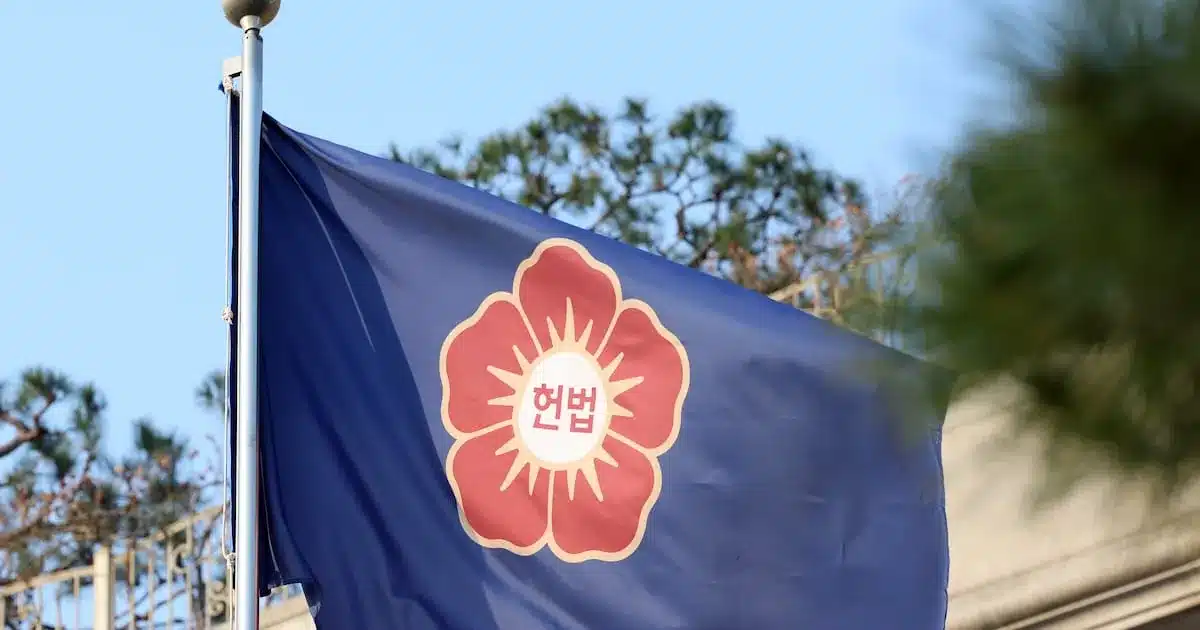
A documentary director, Jung Yoon-seok, who was convicted of trespassing while filming at the Seoul Western District Court during a disturbance, has appealed his sentence. The case is now undergoing a retrial at the Supreme Court.
Background of the Incident
The incident occurred when a group protesting the issuance of an arrest warrant for former President Yoon Suk-yeol breached the court’s premises. The protesters reportedly broke a glass window and entered the facility. Director Jung Yoon-seok was among those who entered the court.
Jung claimed he entered the court with his camera for the purpose of public record, intending to document the events unfolding. However, the court did not accept this defense.
Initial Conviction and Appeal
The Seoul Western District Court initially fined Jung Yoon-seok 2 million won. This ruling was upheld by the High Court on April 30th. The courts reasoned that while Jung may not have actively participated in the physical breach, court officials at the time could not distinguish him from the other intruders. This inability to differentiate was cited as a key reason for the conviction.
The Supreme Court convened a panel of three judges on the 21st to hear Jung’s appeal. The appeal challenges the High Court’s confirmation of his conviction.
Director Jung’s Arguments
In his appeal, Jung Yoon-seok’s legal team argued that courts must differentiate between the exercise of fundamental rights, such as artistic freedom, and criminal behavior. They contended that the lower courts failed to recognize his actions as potentially ‘justifiable conduct,’ a defense against illegality, simply because he was not affiliated with a formal news organization or media outlet.
Jung’s team further asserted that the retrial is necessary because the original ruling infringes upon fundamental rights, including freedom of art, expression, speech, and the press, as well as the right to equality. They believe the case sets a dangerous precedent for artistic and journalistic endeavors.
Legal and Societal Implications
A representative associated with Jung’s case explained that his actions were twofold: they were an act of artistic expression and a form of public documentation concerning matters of public interest and societal importance. The core issue, they stated, is whether Jung’s conduct falls under the constitutional protections afforded to artistic freedom, freedom of speech and press, or journalism, and what the boundaries and limitations of these rights are.
The appeal raises significant questions about the intersection of artistic freedom, journalistic rights, and the legal boundaries of public spaces, particularly during times of civil unrest or protest. The outcome of the Supreme Court’s review could have far-reaching implications for documentary filmmakers and journalists covering sensitive events.
The Role of Public Interest and Artistic Freedom
The defense emphasizes that Jung’s intent was not to cause disruption but to capture an event of significant public interest. They argue that restricting such documentation based on the filmmaker’s affiliation could stifle critical reporting and artistic commentary on societal issues. The legal battle highlights the tension between maintaining order within judicial premises and upholding the public’s right to information and artistic expression.
The courts, in their initial rulings, focused on the act of trespassing itself and the difficulty in distinguishing individuals during a chaotic event. Jung’s appeal seeks to shift the focus to the intent and the nature of his actions as a form of protected expression. The Supreme Court’s deliberation will likely involve weighing these competing interests.
Conclusion
The Supreme Court’s decision on Jung Yoon-seok’s appeal will be crucial in defining the scope of artistic and journalistic freedoms when documenting public events, especially those that involve protests or disturbances. The case underscores the ongoing debate about where the lines are drawn between legitimate public interest documentation and unlawful entry, and how fundamental rights are protected in practice.
