

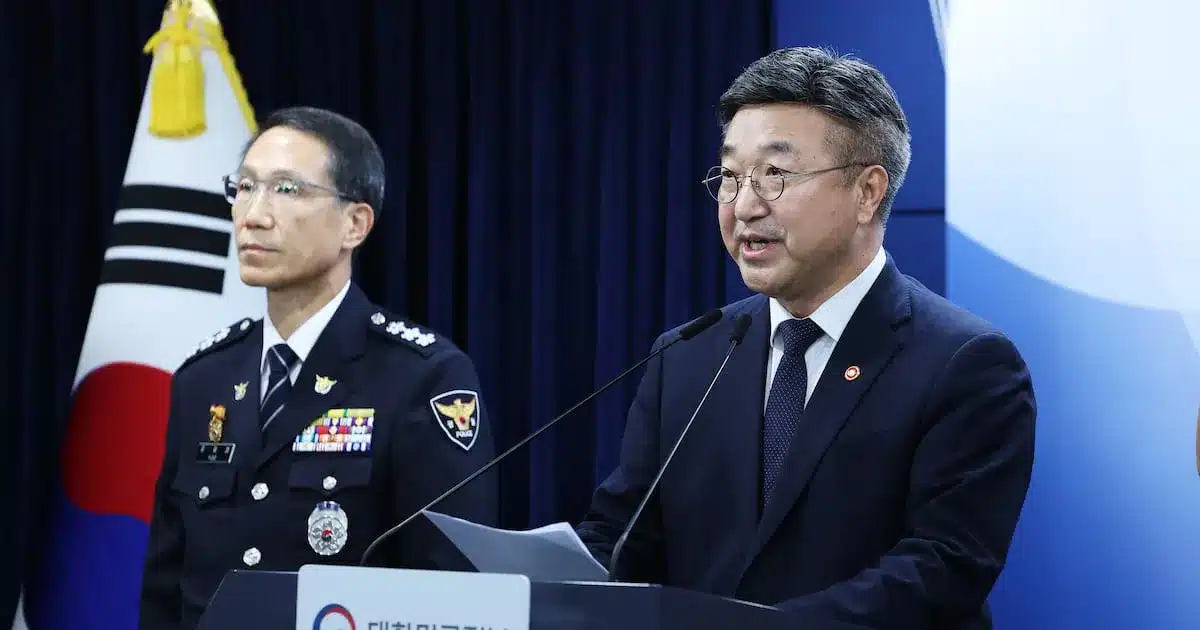
A growing internal debate is emerging within the South Korean police force regarding the expansion of its rotation assignment system. This discussion has been amplified following a high-profile case involving the murder of a female student in Jeonnam and Gwangju, which prompted the government to announce measures aimed at preventing internal corruption within police investigations. The National Police Staff Union (NPSU), representing police officers, is now calling for the abolition of the rotation system for all ranks, including those below the superintendent general level, which is currently being considered for expansion.
Background: The Jang Yoon-gi Case and Proposed Reforms
The impetus for these discussions stems from the tragic case of Jang Yoon-gi, whose murder highlighted perceived issues with the police’s investigative practices and the close ties between investigative teams. In response, the government has put forth a plan to strengthen internal police discipline and prevent corruption. A key component of this plan, and a central point of contention, is the proposed expansion of the rotation assignment policy.
Currently, officers at the superintendent general level are subject to rotation assignments, preventing them from serving in the same city or provincial police agency for more than three years. The proposed expansion would extend this rotation requirement to lower ranks, including the경정 (Gyeongjeong – senior superintendent) and 경감 (Gyeonggam – superintendent) levels. The government’s stated goal is to enhance public safety and trust by ensuring a fresh perspective and preventing the entrenchment of potentially problematic practices within local police units.
Police Union’s Opposition to Rotation System Expansion
The National Police Staff Union has voiced strong opposition to the expansion, arguing that mandatory rotations are not a fundamental solution to internal police corruption. Instead, the union contends that such a system could impose significant economic burdens on officers due to the necessity of frequent relocations and could also lead to a decline in investigative expertise. Officers often face considerable costs associated with moving their families and establishing new residences, which can be exacerbated by frequent rotations.
Furthermore, the union argues that prolonged assignments in a specific area allow officers to develop a deeper understanding of local issues and build stronger relationships with the community, which can be crucial for effective policing. Frequent rotations, they believe, could disrupt this continuity and hinder the development of specialized investigative skills that require long-term focus and experience.
The NPSU plans to formally convey these concerns from field officers to the National Police Agency. Their position is that while the intention behind the reforms is understandable, the proposed solution of expanding the rotation system is misguided and could create more problems than it solves.
National Police Agency’s Response and Ongoing Discussions
In response to the escalating internal dissent, the National Police Agency has sought to temper the situation, stating that no definitive decisions have been made. Acting Police Commissioner Yoo Jae-seong addressed the issue during a press briefing on the 20th, acknowledging that extending rotations to all ranks might present challenges. He emphasized the agency’s commitment to developing a rational plan that garners consensus among internal stakeholders.
“There may be issues with implementing rotations for all ranks,” Yoo stated, adding, “We will prepare a reasonable plan that can be agreed upon by the internal members.”
The agency’s personnel division also posted a message on the internal police network on the 21st, addressing the rumors surrounding the rotation system. The message urged officers not to be swayed by unsubstantiated information and to await the official announcement of the agency’s plan.
“We ask that you do not sympathize with or feel anxious due to rumors, but patiently await the official plan from the National Police Agency,” the personnel division stated. They further elaborated that the agency intends to maintain the fundamental framework of the current rotation system while conducting a detailed review of its existing regulations. The goal is to formulate a rational plan that satisfies the public, the organization, and its members.
Potential Future Directions
The discussions highlight a critical juncture for the South Korean police force. The Jang Yoon-gi case has undeniably spurred a necessary conversation about accountability and effectiveness. However, the proposed solutions, particularly the expansion of the rotation system, are meeting significant internal resistance.
The National Police Agency is now tasked with finding a middle ground. This may involve exploring alternative or supplementary measures to address corruption and improve investigative practices without unduly burdening officers or compromising operational effectiveness. Potential solutions could include enhanced internal oversight mechanisms, specialized training programs, or revised performance evaluation systems that focus on outcomes rather than tenure in a specific location.
The coming weeks are likely to see continued dialogue between the police leadership and the staff union. The outcome of these discussions will shape the future of police personnel management and the public’s perception of the force’s commitment to integrity and professionalism.
