

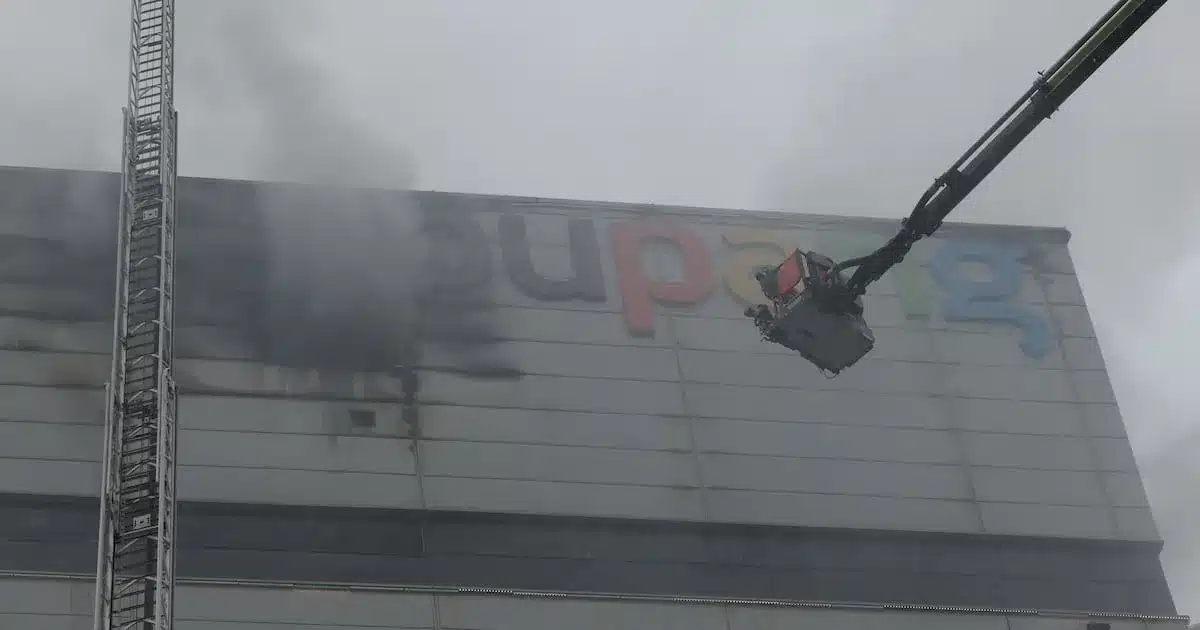
Incheon, South Korea – Authorities are reviewing the potential lifting of an evacuation order for residents near the Coupang logistics center in Seo-gu, Incheon, following the containment of a major fire that raged for 61 hours. The blaze, which broke out on the evening of October 18th, prompted immediate safety concerns and the issuance of an evacuation directive for areas within 116 meters of the facility’s ramp area.
Fire Containment and Structural Assessment
The fire was officially brought under control around 8 PM on October 21st, significantly reducing the immediate risk of building collapse. Firefighting efforts were extensive, with the National Fire Agency maintaining a national firefighting mobilization order throughout the incident. This allowed for a sustained response to combat the large-scale fire.
Following the fire’s containment, the Korea Institute of Structural Engineers conducted an assessment of the building’s integrity. Utilizing drone footage from the National Fire Agency, they evaluated the internal structure. Their findings indicated that Building B, the origin of the fire, posed a minimal risk of further collapse. While Building A also experienced fire spread and was initially considered at risk, the structural assessment suggests that the collapse risk has been substantially mitigated.
Evacuation Order Details and Resident Displacement
The evacuation order, issued on the evening of October 19th, targeted commercial facilities and the Coupang logistics center itself, specifically south of the main complex. Crucially, the order did not include police or firefighters actively engaged in the response efforts. The primary concern driving the evacuation was the potential for structural failure of the warehouse buildings due to the intense fire.
As a precautionary measure, temporary shelters were established at Shinhyun Elementary School and Shinhyun Book Middle School. Approximately 20 residents, while not directly within the evacuation zone, chose to self-evacuate to these shelters due to concerns about smoke and potential structural instability. These residents are being provided with temporary accommodation.
Decision on Evacuation Order Lift
A situation assessment meeting was convened on October 21st, presided over by the head of the Seo-gu District Office, who also serves as the Deputy Minister for Disaster and Safety Management. The purpose of this meeting was to deliberate on the necessity and timing of lifting the evacuation order.
A spokesperson for the Seo-gu district stated, “A situation assessment meeting is scheduled to decide on the lifting of the evacuation order and its timing. Considering safety, we are reviewing various possibilities, including lifting the order by tomorrow morning, after observing the situation until then.” This indicates a cautious approach, balancing the reduced risk with the need for absolute certainty before allowing residents to return to their homes.
Background of the Coupang Logistics Center Fire
The fire originated at the Coupang logistics center located in Seoknam-dong, Seo-gu, Incheon, on the evening of October 18th at approximately 6:54 PM. The facility is comprised of Buildings A and B, along with a ramp area serving as an entry and exit point for fire trucks and materials.
The rapid response from the fire department, bolstered by the national mobilization order, was critical in preventing the fire from spreading further and causing more extensive damage. The successful containment after 61 hours marks a significant milestone in the ongoing recovery and assessment process.
Future Steps and Community Impact
The decision to lift the evacuation order will be based on continued monitoring of the building’s structural stability and air quality in the surrounding areas. Local authorities are committed to ensuring the safety of the community before any return-to-normalcy measures are implemented.
The incident highlights the critical importance of robust safety protocols at large-scale logistics facilities and the swift, coordinated response required in major industrial fires. The focus now shifts to a thorough investigation into the cause of the fire and the implementation of measures to prevent similar incidents in the future.
