

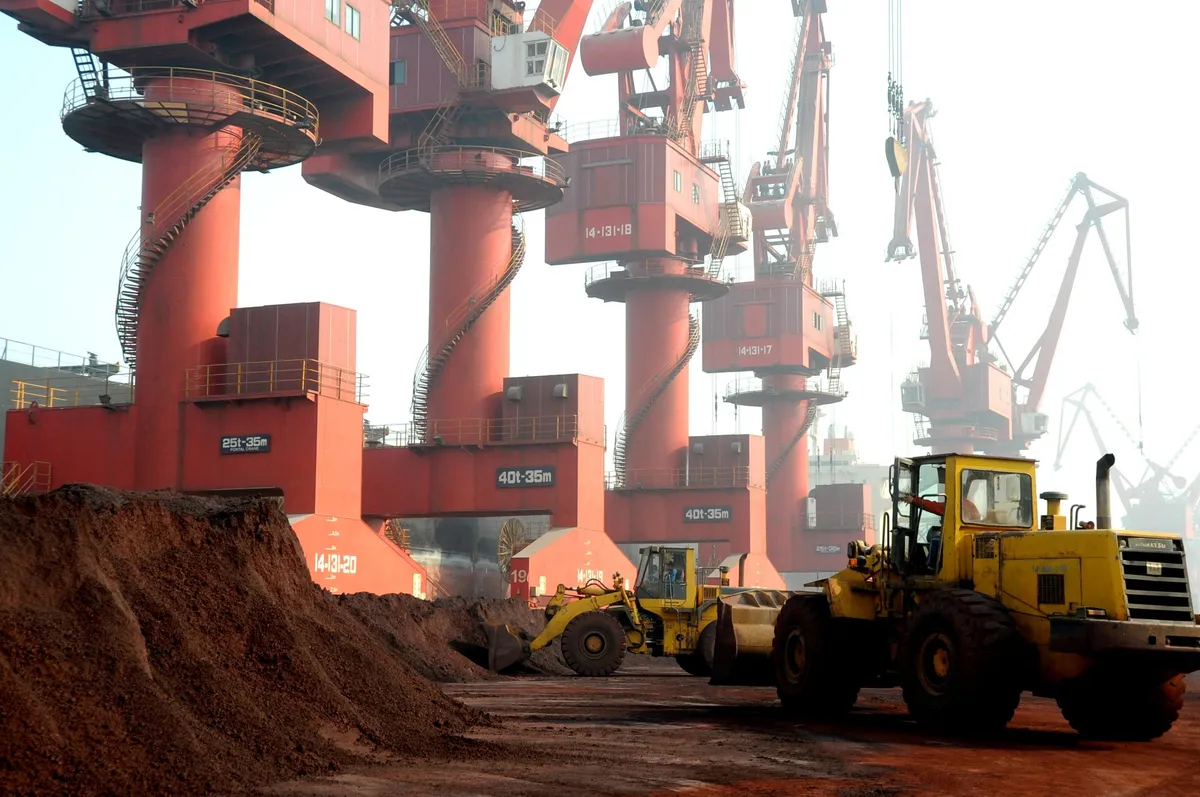
China’s stringent export controls on rare earth minerals are significantly benefiting domestic companies, leading to record profits and solidifying their dominance in the global supply chain. The government’s consolidation of the sector and subsequent export restrictions have driven up prices and improved profitability for Chinese rare earth enterprises.
Record Profits for Chinese Rare Earth Companies
One of the leading beneficiaries is China Rare Earth Group, a state-owned enterprise formed in 2021 by consolidating several national players. Its subsidiary, Sino Rare Earth (中稀有色), reported a substantial surge in net profit for the first half of the year. Projections indicate a net profit ranging from 370 million to 430 million yuan (approximately $81.1 million to $94.3 million USD), marking an increase of 410% to 493% compared to the same period last year. This figure already surpasses three times the entire annual net profit of 128 million yuan (about $28.1 million USD) recorded for the previous year.
Quarterly performance further illustrates this trend. The first quarter of the year saw a 262% rise in net profit year-on-year. The second quarter is estimated to have experienced an even more significant jump, potentially reaching up to a 50% increase over the first quarter’s already elevated figures.
Factors Driving Profitability
Sino Rare Earth attributes its remarkable financial performance to a combination of factors. These include the rising prices of rare earth products, structural adjustments within the company, and improved operational results from its subsidiary, the Dabaoshan (大宝山) copper mine, which holds significant mineral reserves. The company also revealed plans to expand production capacity by developing additional mines and enhancing its facilities for smelting and separation. This strategy aims to increase the supply of raw materials and bolster overall output.
Government Policy and Global Impact
The surge in profits for Chinese rare earth firms is directly linked to the government’s policy of strengthening export controls. In the previous year, China designated rare earths as strategic national resources, gradually intensifying export licensing and product-specific controls. Currently, the central government exercises strict oversight over the entire rare earth value chain, from mining to processing. This includes managing production quotas and cracking down on illegal mining activities.
Consequently, international companies are now required to obtain explicit approval from the Chinese government to procure related products. This regulatory environment, coupled with China’s de facto monopoly over the rare earth market, has inevitably led to price increases for these critical minerals.
Rising Prices of Key Rare Earth Minerals
Data from Trading Economics highlights the escalating costs. The price of neodymium, a vital component for electric vehicle magnets, has surged by over 80% in the past year alone. Other critical rare earth elements, such as dysprosium and terbium, have also seen significant price hikes.
China’s Expanding Global Market Share
Amidst these price increases and supply chain shifts, Chinese rare earth companies are expanding their influence in the global market. Even in sectors like rare earth magnets and high-purity materials, where international companies, particularly from Japan, previously held strong positions, Chinese firms are rapidly gaining ground. This shift is attributed to the instability in raw material sourcing for overseas companies resulting from China’s export controls. As a result, global customers are increasingly turning to Chinese suppliers.
Challenges for Decoupling
Analysts suggest that China’s dominance over the rare earth supply chain will be difficult to challenge in the short term. A report by the Financial Times estimates that the United States, the European Union, and the United Kingdom would need to invest approximately $23.6 billion USD (around $3.51 trillion JPY) to reduce their reliance on China’s rare earth industry. The primary challenge, the report notes, is not merely the cost of decoupling but China’s capacity to obstruct or impede such efforts.
Strategic Importance of Rare Earths
Rare earth elements are indispensable for a wide array of modern technologies, including electric vehicles, wind turbines, smartphones, and advanced defense systems. Their unique magnetic, catalytic, and luminescent properties make them critical components in high-tech manufacturing. China’s control over the majority of the world’s rare earth reserves and its processing capacity gives it significant leverage in global trade and technological development.
The Chinese government’s strategic approach to managing its rare earth resources reflects a long-term vision to secure its position as a global leader in critical materials. While this strategy boosts domestic industries, it also raises concerns among nations reliant on these materials for their own technological and economic advancement, prompting ongoing discussions about supply chain diversification and resource security.
Future Outlook
The current trajectory suggests that Chinese rare earth companies will continue to benefit from the existing policy framework. The increasing global demand for technologies reliant on rare earths, coupled with China’s control over supply, points towards sustained profitability and market influence. However, the international community’s efforts to develop alternative supply chains and reduce dependency on China remain a critical factor to watch in the evolving landscape of critical mineral resources.
The consolidation and state-backed support for China’s rare earth sector have created a formidable industrial base. As global demand for green technologies and advanced electronics grows, China’s strategic management of its rare earth exports is set to play a pivotal role in shaping international markets and technological competition for the foreseeable future.
