

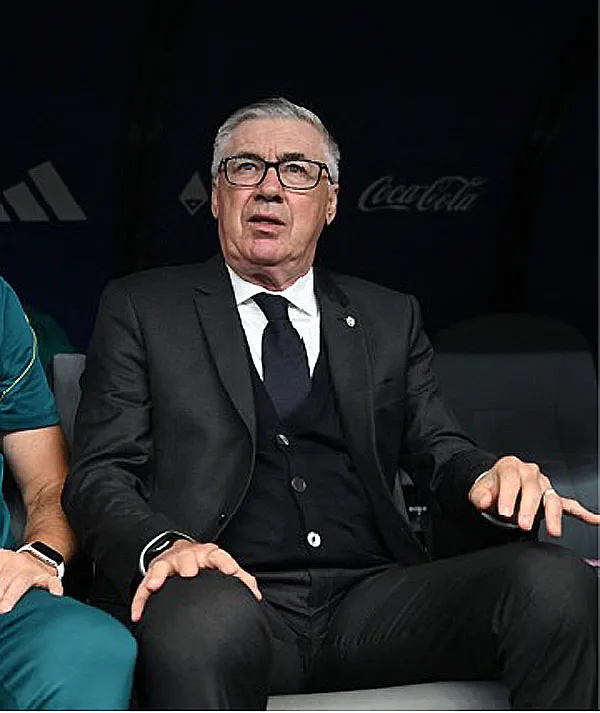
The recent elimination of Brazil from the 2026 FIFA World Cup has ignited a firestorm of criticism, with Brazilian football legend Romário launching a scathing attack on coach Carlo Ancelotti, demanding the termination of his contract. Brazil’s hopes of securing a record sixth World Cup title were dashed in the Round of 16, marking a significant disappointment for the historically dominant nation.
Disappointing World Cup Campaign
Brazil’s journey in the 2026 World Cup concluded with a 2-1 defeat to Norway in the Round of 16, a match where Manchester City star Erling Haaland scored a decisive brace. This loss ended Brazil’s aspirations of lifting the trophy for the first time since their triumph in the 2002 Korea-Japan World Cup. The defeat was particularly stinging, as it represented Brazil’s earliest exit from the tournament in 36 years, dating back to the 1990 Italy World Cup, where they also fell in the Round of 16.
The road to the 2026 tournament had already been fraught with challenges for the Seleção. During the South American qualifiers, Brazil suffered a shocking 4-1 home defeat to fierce rivals Argentina, raising concerns about their form and stability. In a bid to overcome these struggles and secure qualification, Brazil made a bold move by appointing Carlo Ancelotti, the renowned Italian manager, as their head coach. This appointment marked a significant shift, as it was the first time since 1965 that Brazil had entrusted their national team to a foreign coach, following the tenure of Filipo Núñez of Argentina.
Ancelotti’s Tenure and Expectations
Carlo Ancelotti, a manager with an unparalleled record of success in European club football, brought immense pedigree to the Brazilian national team. His trophy cabinet boasts league titles in England, Spain, Germany, Italy, and France, alongside a record-equalling four UEFA Champions League titles. Ancelotti quickly integrated into the Brazilian setup, guiding the team through the qualifiers and into the World Cup finals. The expectation under his leadership was clear: to win the World Cup.
However, the team’s performances throughout the tournament failed to inspire confidence. Despite being considered one of the favorites, Brazil struggled to consistently assert dominance, ultimately falling short of their ultimate goal. The disappointing outcome has led to widespread debate and introspection within Brazil, with criticism directed at various aspects of the team’s performance, including the form of star player Neymar and the team’s tactical approach.
Romário’s Fierce Criticism
Among the most vocal critics is Romário, a legendary figure in Brazilian football and a key member of the 1994 World Cup-winning squad. Romário, who currently holds a position as a senator, did not hold back in his assessment of the team’s World Cup failure, describing it as a “complete disaster” on his personal YouTube channel.
“If I were the president of the Brazilian Football Confederation (CBF), I would tear up Carlo Ancelotti’s contract immediately,” Romário declared. “There is no reason for him to continue as coach.” He further suggested that Ancelotti might be receiving preferential treatment due to his foreign status. “If Ancelotti were Brazilian, he would have been fired already. He is being protected because he is a foreigner,” Romário asserted.
Romário emphasized that while players also bear responsibility, significant changes must begin at the top. “Players cannot be exempt from responsibility, but a new beginning must start with the coach,” he stated. “We need to prepare for the next World Cup with a new coaching staff.”
CBF Reaffirms Confidence in Ancelotti
Despite Romário’s strong sentiments and the public outcry, the Brazilian Football Confederation (CBF) has publicly reaffirmed its trust in Carlo Ancelotti. In a surprising move following the World Cup exit, the CBF announced that they have reached an agreement with Ancelotti for a contract renewal.
The CBF stated their full confidence in Ancelotti’s project, particularly highlighting their focus on the 2030 World Cup. This decision signals the federation’s commitment to continuity and their belief in Ancelotti’s long-term vision for Brazilian football, even in the face of immediate disappointment and vocal opposition from prominent figures within the sport.
Looking Ahead: The 2030 World Cup Ambitions
The CBF’s decision to extend Ancelotti’s contract underscores their strategic planning, with the 2030 World Cup, which Brazil is co-hosting, as a primary objective. This long-term perspective suggests that the federation is willing to weather the storm of recent criticism to build a project they believe will ultimately lead to success on the global stage. The coming years will be crucial in determining whether Ancelotti can indeed deliver on the immense expectations placed upon him and the Brazilian national team.
