

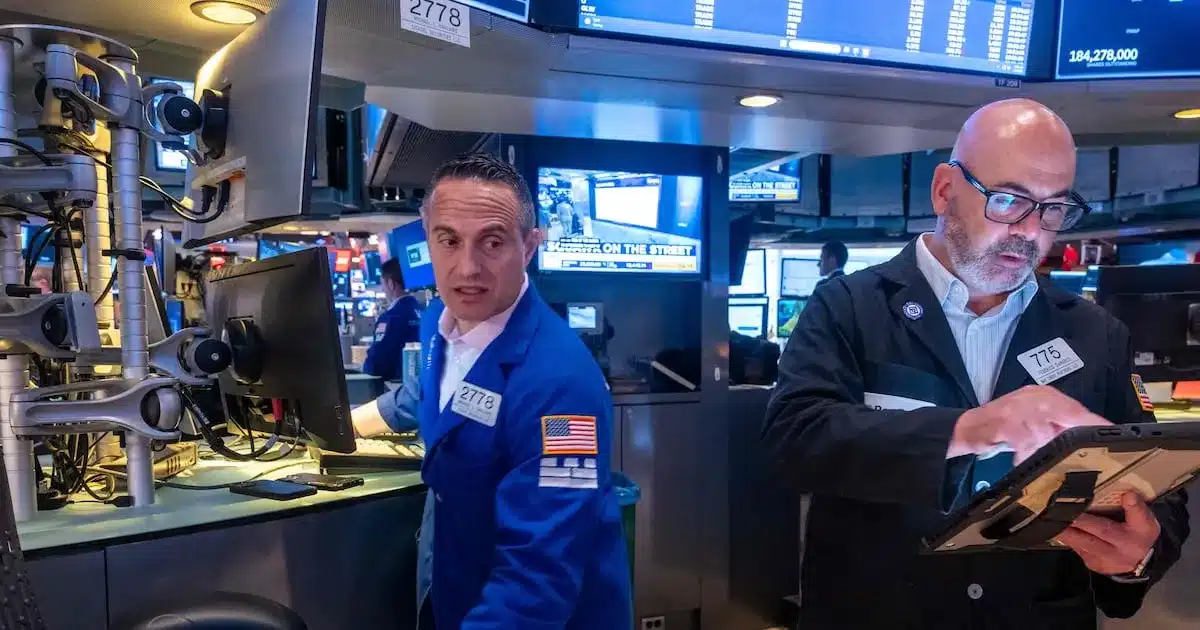
Major U.S. stock indices concluded trading on an upward trajectory on September 9th, buoyed by a surge in semiconductor stocks fueled by artificial intelligence optimism and a calming of geopolitical tensions in the Middle East. The Dow Jones Industrial Average gained 139.02 points, or 0.27%, to close at 52,487.41. The broader S&P 500 index climbed 0.81%, reaching 7,543.64, while the tech-heavy Nasdaq Composite saw a more significant increase of 1.30%, ending the session at 26,206.89.
Semiconductor Stocks Lead the Charge
The primary driver behind the market’s ascent was the robust performance of companies involved in the semiconductor industry. The VanEck Semiconductor ETF, a key indicator for the sector, advanced by 2.5%. Micron Technology, a major memory chip manufacturer, was a standout performer, surging 4.5%. This notable gain was largely attributed to news that Micron plans to invest up to $250 billion in new U.S. manufacturing facilities to bolster the domestic chip supply chain. Another semiconductor firm, SanDisk, also experienced a significant jump, with its stock price increasing by 7.6%. Positive sentiment extended to South Korean chipmaker SK Hynix, as reports indicated strong demand for its shares in its U.S. listing, with subscription demand exceeding seven times the offered amount. This news positively impacted the broader semiconductor sector.
Geopolitical Concerns Subside
While investors initially showed concern over escalating military actions in the Middle East, the market demonstrated resilience. Typically, increased interstate conflict can trigger a sell-off in riskier assets like stocks, with investors seeking refuge in safer investments. However, a statement from then-President Donald Trump indicating that he had received a communication from Iran expressing a desire for negotiations helped to de-escalate the situation. This development contributed to the market’s strength and put downward pressure on oil prices. West Texas Intermediate crude for August delivery, while closing up 1.06% at $74.29 per barrel, experienced intraday selling pressure. Analysts assessed that investors perceived the current level of Middle East risk as manageable for the U.S. economy, suggesting the economy could absorb such shocks.
Focus Shifts to Corporate Earnings and AI Profitability
Market strategists observed that investors are increasingly prioritizing upcoming corporate earnings reports over geopolitical risks. Matt Malley, chief investment strategist at Miller Tabak, noted, “Investors are focusing more on upcoming earnings reports than on geopolitical risks.” Looking ahead, market watchers identified corporate earnings as the critical factor that will shape market direction over the next month. Anthony Salimbene, an analyst at Ameriprise, stated, “Companies are expected to deliver earnings that beat market expectations as a baseline, and they need to prove they can do more than that.” This suggests a need for companies, particularly in the technology sector, to not only maintain high profitability but also demonstrate sustained earnings growth and upward revisions to future guidance to support overall market valuations.
AI Investment Returns Under Scrutiny
Ed Yardeni, chief investment strategist at Yardeni Research, projected that AI-driven earnings growth would continue into the latter half of the year. However, he cautioned that “signals that companies are meaningfully reducing their spending on artificial intelligence are still limited.” Concurrently, a growing chorus of caution is emerging regarding the actual return on investment from AI initiatives. Jeff Buchbinder, chief equity strategist at LPL Financial, predicted, “AI will remain a major catalyst in the second half of this year, but the market environment will become much more selective.” He emphasized that investors should concentrate on the demonstrable profitability generated from AI investments rather than solely on the sheer volume of spending.
Tensions surrounding the sustainability of AI investment returns are also mounting. Torsten Sløk, chief economist at Apollo Global Management, warned, “If the returns on AI investments are delayed, it will become a problem for the entire market.” Apollo Global Management further elaborated that expectations for the earnings of large technology companies might be excessively optimistic. They warned of a risk that if these companies’ performance falls short of expectations, leading to stock price declines, it could drag down the broader market.
Economic Data Shows Mixed Signals
Recent economic indicators presented a mixed picture. The U.S. Department of Labor reported that initial jobless claims for the week totaled 215,000, a decrease of 4,000 from the previous week and below the market consensus of 218,000. This figure underscored the continued strength of the labor market. Megan Horneman, chief investment officer at Verdence Capital Advisors, analyzed, “Strong economic growth, persistent consumption, and massive investment in artificial intelligence are factors contributing to short-term inflation.”
Individual stock performances varied. Shares of business software company Salesforce fell 4.5% following a downgrade by KeyBanc. PepsiCo, the snack and beverage giant, saw its stock dip by approximately 1% despite reporting second-quarter revenue that exceeded expectations, as its earnings per share fell short of projections. Levi Strauss & Co., the denim brand, experienced a decline of over 4% even after surpassing quarterly earnings expectations, due to its annual forecast failing to meet market projections.
Outlook for the Market
Looking ahead, market participants will closely monitor corporate earnings reports for further insights into company performance and future outlooks. The interplay between technological innovation, particularly in AI, and its translation into tangible profits will be a key theme. While geopolitical risks appear to have receded for the moment, their potential to resurface remains a factor. The resilience of the U.S. economy and the labor market, as indicated by recent data, provides a supportive backdrop, but the market’s trajectory will likely be heavily influenced by the ability of companies to meet and exceed earnings expectations in the coming quarters.
