

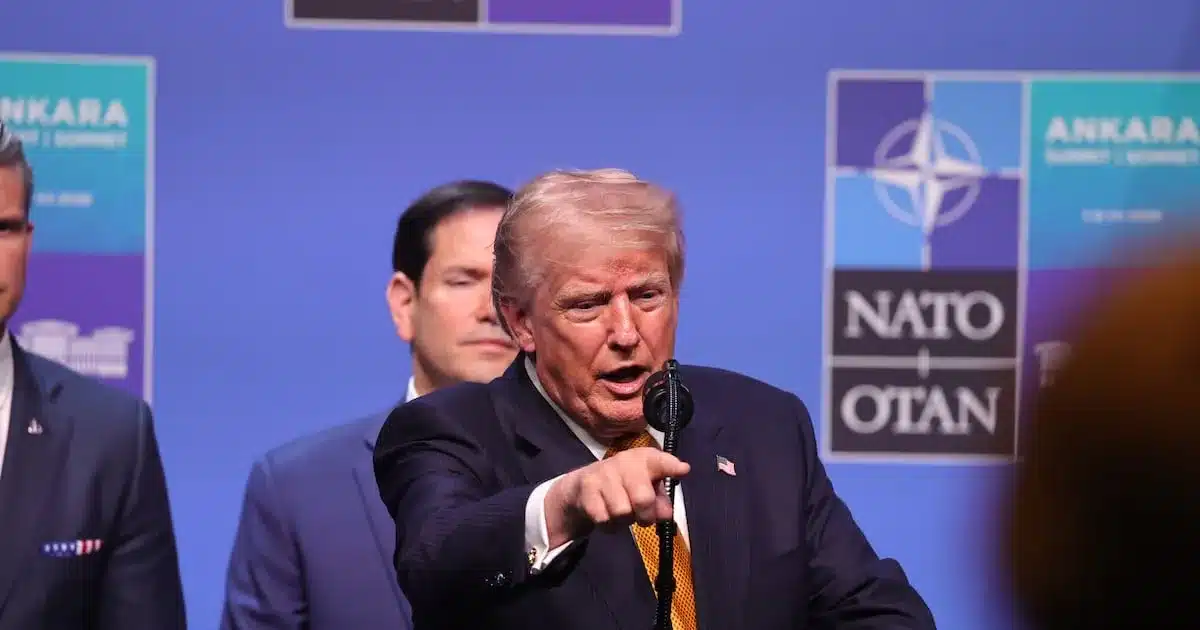
During a press conference in Ankara, Turkey, on July 8, 2026, U.S. President Donald Trump mistakenly referred to Iran as the “Islamic Republic of Japan” instead of its official name, the “Islamic Republic of Iran.” The incident occurred while Trump was discussing missile launches, stating, “Missiles were launched from the Islamic Republic of Japan.” This remark has sparked debate about whether it was a simple slip of the tongue or indicative of cognitive decline.
Questions Raised About President’s Cognitive State
The misstatement has led to speculation regarding President Trump’s cognitive abilities, particularly given his age. He turned 80 on June 14, 2026. During his second term, he became the oldest U.S. president upon taking office at age 78. This is not the first time President Trump has been noted for misnaming places or people. In January 2026, while speaking in Davos, Switzerland, he referred to Greenland, a self-governing territory of Denmark, as “Iceland” on multiple occasions.
Pattern of Japan-Related Verbal Errors
Critics have pointed to a pattern of verbal errors involving Japan. In the previous year, Trump referred to a former Japanese Prime Minister by the informal title “Mr. Japan” instead of using his name, Shinzo Abe, raising concerns that he might have forgotten it.
Further instances include a diplomatic incident in March 2026. During a meeting with Japanese Prime Minister Fumio Kishida at the White House, a Japanese journalist questioned whether Iran’s oil supply had been disclosed to allies in advance. Trump responded, “Isn’t Japan the country that knows best about its own [oil] reserves? Why didn’t you tell me about the pearls?” This response was interpreted by some as a diplomatic gaffe.
Official Health Assessments
Despite these verbal slips, President Trump’s physical and cognitive health has been officially assessed as robust. The White House released the results of his regular physical examination in May 2026, stating that he maintained “excellent health.” Reports indicated that he scored a perfect 30 out of 30 on cognitive function tests during that examination.
However, concerns about his health are likely to persist, fueled by such public misstatements. The recent incident involving Iran and Japan adds another data point to the ongoing discussion about the President’s verbal accuracy and its potential implications.
Context of International Relations
The remarks were made during a press conference following a NATO summit in Ankara, Turkey. The U.S. has been engaged in heightened tensions with Iran, including military actions and diplomatic maneuvering. The specific context of discussing Iran during an international summit might have added pressure, potentially contributing to the verbal slip.
The relationship between the U.S. and Japan remains a cornerstone of regional security in Asia. Japan is a key U.S. ally, and any perceived misstep in referring to its leadership or country can draw attention. The combination of a high-stakes international meeting and a complex geopolitical situation involving Iran likely contributed to the circumstances surrounding President Trump’s remark.
Conclusion
While President Trump’s “Islamic Republic of Japan” comment has drawn significant attention and raised questions about his cognitive state, it is important to consider the full context. The incident occurred during a press conference at a NATO summit amidst ongoing international tensions. While official health assessments indicate he is in excellent condition, such verbal errors continue to fuel public and media scrutiny. Whether this was a minor slip or a sign of deeper issues remains a subject of ongoing discussion.
