

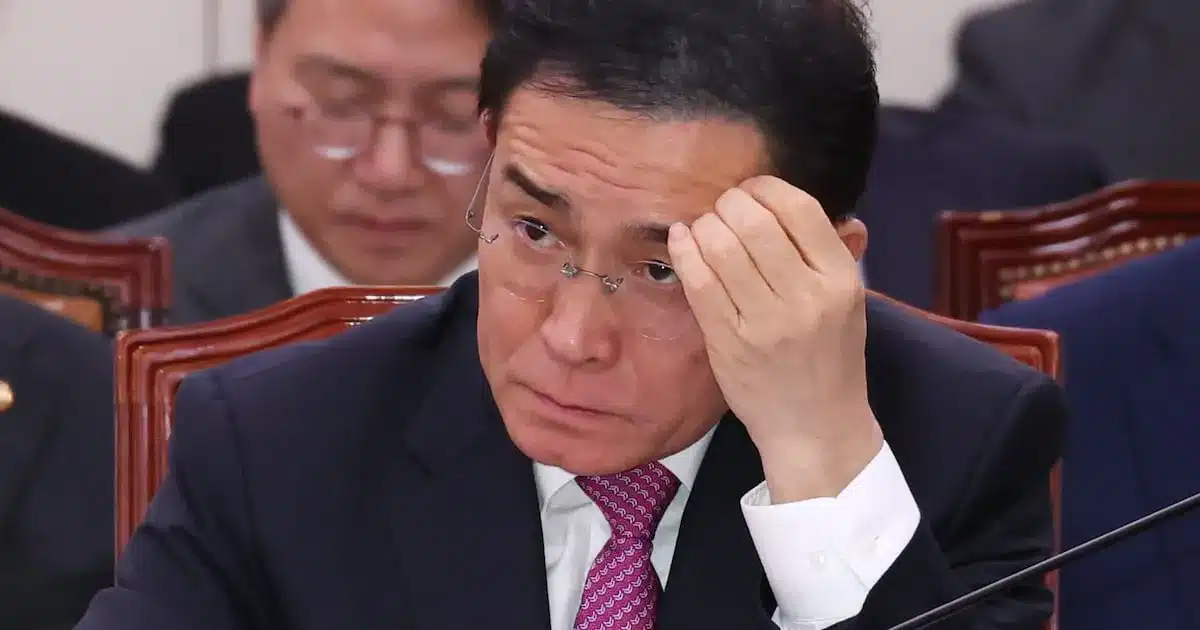
A civil court has ordered Tae Young-ho, a former member of the National Assembly, to pay approximately 867 million South Korean won (about $630,000 USD) to a victim in a fraud case. The ruling stems from allegations that Tae misappropriated investment funds by leveraging his father’s former position as a National Assembly member and his own connections. The court’s decision, finalized on May 24th after Tae chose not to appeal, mandates the payment of the principal amount plus interest.
Background of the Investment Scheme
The plaintiff, identified as Mr. A, reportedly invested over 1.1 billion won (approximately $800,000 USD) in cash and virtual assets to Tae Young-ho in May 2024. This investment was made under the premise of a “Stablecoin Full Business Proposal” presented by Tae. It was not until September 2024, when Tae began facing a police investigation, that Mr. A discovered his funds had allegedly been diverted rather than invested as promised. Following this revelation, Mr. A initiated the civil lawsuit seeking damages.
Court’s Reasoning for the Ruling
The Seoul Central District Court’s Civil Division 30, presided over by Presiding Judge Kim Seok-beom, found Tae Young-ho liable for damages. The court’s judgment highlighted Tae’s alleged exploitation of his background. Specifically, the court noted that Tae emphasized his status as the son of a former National Assembly member and his relationships with law enforcement officials to gain Mr. A’s trust. The court concluded that these connections were instrumental in facilitating the alleged fraudulent activities and thus upheld Tae’s responsibility for the financial losses incurred by the victim.
Tae Young-ho’s father, Tae Cheol-gon, served as a member of the National Assembly. Tae Young-ho himself returned to South Korea in 2016 after residing in the United Kingdom, where his father was stationed at the North Korean Embassy in London due to his diplomatic post.
Criminal Proceedings and Allegations
In parallel to the civil case, Tae Young-ho was arrested and detained in May 2024. He faces criminal charges including fraud, under the Act on the Aggravated Punishment, etc. of Specific Economic Crimes. Prosecutors allege that Tae solicited investments from acquaintances by promising substantial returns, claiming he would invest the funds in virtual assets. The investigation suggests that Tae did not invest the collected funds as stated but instead misappropriated them. The prosecution’s theory is that Tae specifically used his father’s former parliamentary status to lure investors and then pocketed the money.
Details of the Alleged Fraud
The total amount of funds allegedly misappropriated by Tae Young-ho from his acquaintances is reported to be around 1.4 billion won (approximately $1 million USD). The core of the criminal accusation is that Tae promised to generate profits by investing these funds into virtual assets, but instead, he allegedly used the money for his own purposes. The prosecution views his actions as a deliberate scheme to defraud investors by exploiting his family’s political connections and his own perceived influence.
Implications and Future Steps
The civil court’s decision holding Tae Young-ho liable for damages underscores the severity of the allegations. The substantial amount ordered for repayment, coupled with the ongoing criminal investigation, indicates a significant legal battle ahead for the former lawmaker. The case highlights the importance of due diligence for investors and the potential consequences of leveraging personal or familial status in business dealings, especially when financial trust is involved.
The ruling serves as a reminder that individuals in public life, or those with connections to prominent figures, are held to a high standard of conduct. The court’s emphasis on Tae’s use of his father’s former position and his own relationships suggests that such factors were deemed critical in establishing the basis for the fraud. As the criminal proceedings continue, further details regarding the flow of funds and Tae’s defense are expected to emerge.
Conclusion
The civil court’s order for Tae Young-ho to pay 867 million won to the victim in the fraud case marks a significant development. This ruling, which has become final, is based on the court’s finding that Tae exploited his connections and misrepresented investment opportunities. The case is ongoing with criminal charges also pending, painting a picture of serious financial misconduct. The outcome of both the civil and criminal proceedings will likely have lasting implications for Tae Young-ho and serve as a cautionary tale regarding investment fraud and the misuse of influence.
