

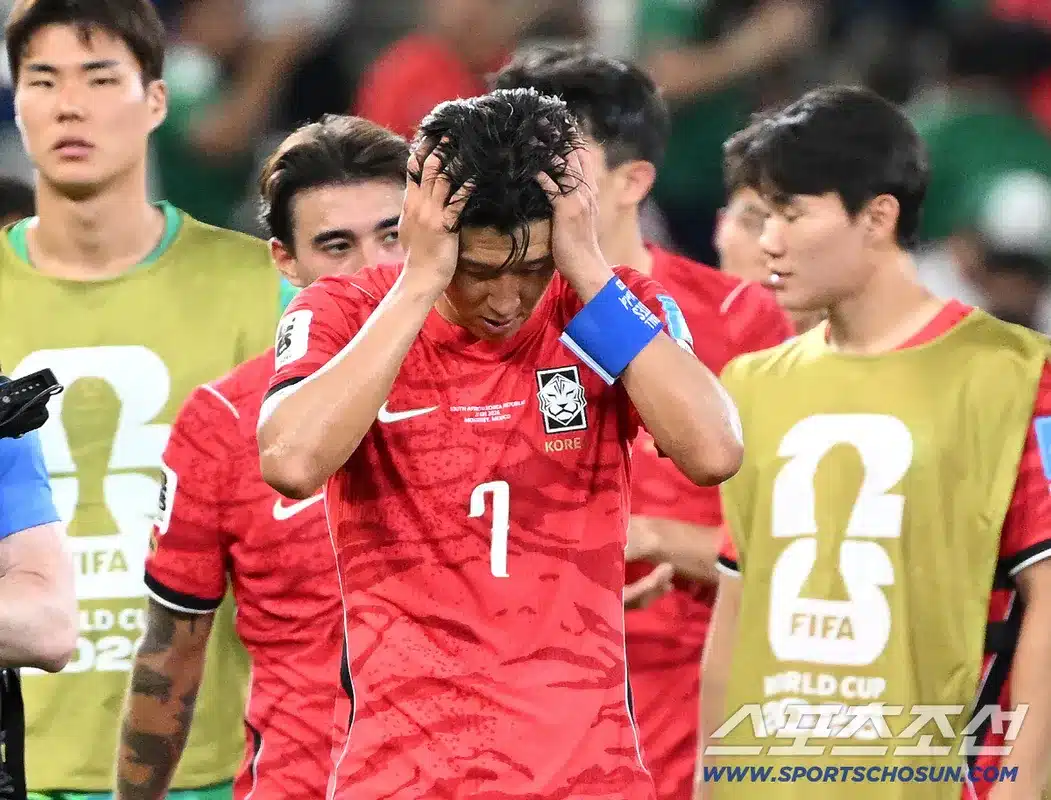
Shocking Performance Leads to Early World Cup Exit for South Korea
The South Korean national football team’s unexpected defeat has sent ripples of surprise through the international sports community. Notably, the absence of star player Son Heung-min from the starting lineup has drawn significant attention and questioning.
Global Media Highlights Tactical Decisions and Surprising Outcome
International sports outlets have extensively covered the match, with one prominent global sports publication stating, “South Africa secured a dramatic victory against South Korea, confirming their place in the World Cup tournament for the first time ever. South Korea, by benching Son Heung-min for the entire first half, opened the door for South Africa to face Canada in a decisive 32nd-round match.” This result has relegated South Korea to third place in Group A, leaving their tournament advancement uncertain depending on group results.
The same publication analyzed the potential consequences for South Korea, suggesting an 89% probability of facing the top team from Group G if they advance. Group G’s leadership is currently held by Egypt.
Questions Arise Over Son Heung-min’s Bench Role
The decision to keep Son Heung-min on the bench has been described as “shocking” by some analyses. Reports indicate that the decision was surprising even before the match began. “Son Heung-min is always a player with a significant presence for the South Korean national team. It appeared to be a mistake in the starting lineup,” a sports analyst commented.
Tactical Shifts and Their Impact
It is believed that the coaching staff implemented tactical changes following the team’s decisive loss to Mexico. Son Heung-min and Lee Jae-sung were notably absent from the forward line, with Oh Hyun-gyu and Hwang Hee-chan forming the attacking unit. While this was a bold strategic move, the outcome proved unsuccessful.
Analysis suggests that Head Coach Hong Myung-bo may have intended to introduce changes after the hard-fought victory against Chile and the subsequent defeat to Mexico. “Regardless, that choice ultimately increased South Korea’s burden,” the analysis concluded.
Match Dynamics and Efficiency Concerns
Despite possessing a seemingly superior strategy compared to South Africa, the South Korean team was outplayed in terms of initiative. While Kim Seung-gyu’s goalkeeping kept the team in contention initially, a second-half slump meant they couldn’t even keep pace with a one-goal deficit. South Korea dominated possession with 69% but managed only three shots on target. In contrast, South Africa recorded four shots on target from fewer opportunities, converting one into a goal, demonstrating a more efficient offensive approach.
Home Advantage and Final Performance
The atmosphere in the stadium was akin to a home game for South Africa, with a significant number of Mexican spectators supporting their cause. In a situation where advancing to the Round of 32 seemed a near certainty, the national team concluded their final match with their worst performance.
The prevailing sentiment is that securing second place and advancing to the Round of 32 was an expected outcome for South Korea. “South Africa had a plan, and they executed it to the end, defeating South Korea,” reports indicate.
