

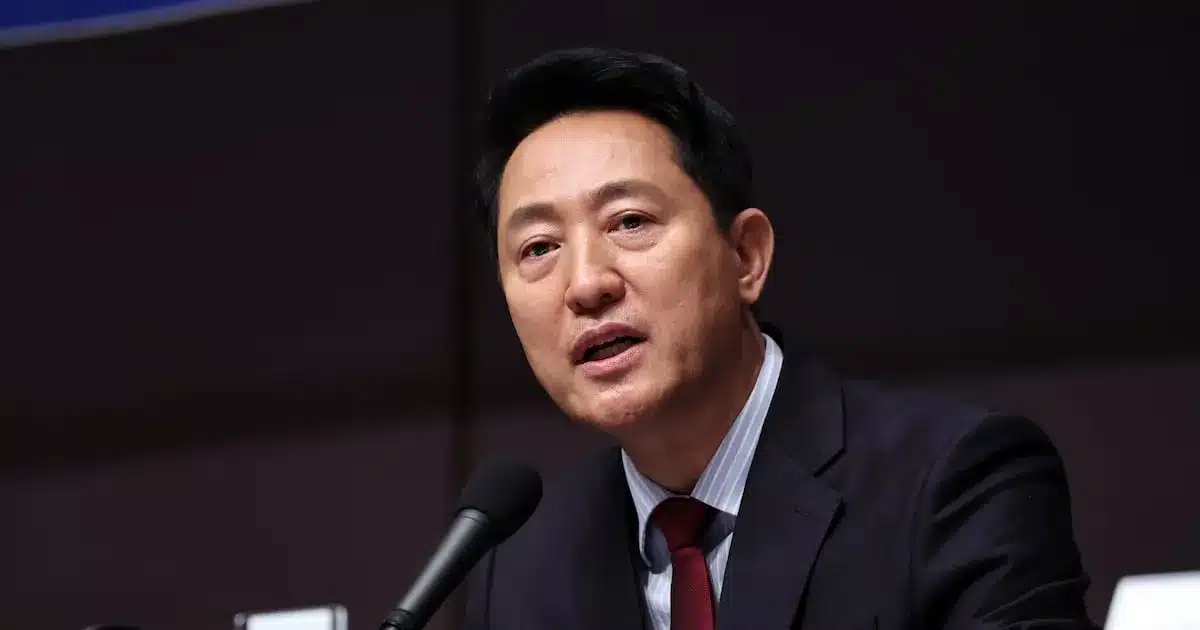
Seoul Mayor Urges Dialogue on Proposed Property Tax Reforms
Seoul Mayor Oh Se-hoon has formally requested a meeting with President Lee Jae-myung to discuss the potential repercussions of proposed changes to property taxation. This move comes as government officials have increasingly spoken about the necessity of strengthening property taxes, with a comprehensive tax reform plan anticipated for release in July.
Concerns Over “Last Resort” Tax Measures
In a social media post titled “Not a Last Resort, but a Measure That Shouldn’t Be Used,” Mayor Oh expressed his apprehension, stating, “Immediately after the local elections concluded, the government has, in the end, brought out the cards for strengthening the comprehensive real estate holding tax and capital gains tax.”
Mayor Oh criticized the timing of these discussions, noting, “While the President referred to property tax increases as a ‘last resort,’ they have been hastily brought up within just one year of taking office.” He added, “While blocking new supply, the government is attempting to control housing prices solely through taxes, treading a path that has historically proven to be unsuccessful.”
Root Causes of Property Market Dynamics
The mayor elaborated on his perspective, citing points raised by policy advisors within the presidential office. “The policy team at the presidential office argues that taxes must be strengthened to prevent liquidity from flowing into real estate due to the semiconductor industry boom,” Mayor Oh stated. “However, they have fundamentally misidentified the root cause.”
He emphasized that capital flows are dictated by market conditions. “If capital is moving into real estate, it is not because taxes are too low, but due to anxieties over insufficient supply, concentrated housing demand in specific areas, and expectations for future value appreciation,” Mayor Oh explained. “Therefore, what the government should be doing now is not imposing a tax 폭탄 (bomb), but responding with robust supply measures that meet demand and normalizing reconstruction and redevelopment.”
Impact on Rental Market and Existing Housing Stock
Mayor Oh also addressed the administration’s proposal to adjust tax benefits for registered rental property owners, including a reduction in capital gains tax and special exemptions for long-term holdings. He countered the argument that these changes would lead to approximately 68,000 additional housing units in Seoul, stating, “This is also a misjudgment stemming from a lack of understanding of the market situation. This would not result in new supply, but merely a change in ownership of existing homes, without increasing the overall housing stock.”
He warned of potential negative consequences, particularly for the rental market. “If rental properties are converted to owner-occupied homes, only the jeonse (lump-sum security deposit) market will disappear from the market,” Mayor Oh stated. “Jeonse deposits in Seoul have already decreased by over 30% compared to last year. If tax burdens are added to this, homeowners will likely lock up their properties and pass on the tax costs to tenants, accelerating a ‘monthly rent crisis’ that preys on the meager incomes of young people and ordinary citizens.”
Lessons from Past Policies
Mayor Oh stressed that real estate policies should be evaluated by their outcomes, not their intentions. “We vividly remember the tragic failure during the previous Moon Jae-in administration, when housing prices were not controlled, and tenants were driven into hellish jeonse situations,” he remarked.
The Seoul Mayor reiterated his request for a meeting with President Lee, stating, “I earnestly request that the Seoul Metropolitan Government’s opinions be heard. I have absolutely no intention of engaging in political debates.” He added, “I will thoroughly explain the precise on-site data and the reality of decreasing jeonse supply that Seoul has accumulated, and in detail, present the repercussions that this tax reform could bring.”
It was previously reported that Mayor Oh had submitted a request to the presidential office for a meeting with President Lee on the evening of the 20th to convey his views on real estate issues.
