

Global Football’s Elite Tournament Expansion Stalls Amidst Opposition
Plans to expand the FIFA World Cup to 64 participating nations appear to be losing momentum, casting doubt on the feasibility of such a significant increase in the near future. While the concept has been under discussion within FIFA for several months, recent analyses suggest a low probability of implementation.
The push for expansion was notably championed by CONMEBOL, the South American football confederation, with a primary objective of increasing the number of matches for South American nations in the 2030 World Cup. CONMEBOL President Alejandro Domínguez has consistently advocated for a larger tournament format.
2030 World Cup Logistics Complicate Expansion
The 2030 World Cup is already set to be a unique event, jointly hosted by Spain, Morocco, and Portugal. To commemorate the tournament’s centenary, matches will also be held in Argentina, Uruguay, and Paraguay. The proposal to expand to 64 teams was seen as a way to allocate more games to these centenary host nations. However, FIFA’s stance on this expansion appears to be non-committal.
Reports indicate that the 64-team proposal is facing significant headwinds. FIFA President Gianni Infantino has yet to issue a clear statement on the matter. Within the organization, his silence is being interpreted more as a lack of interest rather than tacit approval. Despite several meetings dedicated to the topic, no concrete decisions or official positions have been announced.
Continental Bodies Express Reservations
Furthermore, the joint organizing committee for the 2030 World Cup, representing Spain, Portugal, and Morocco, has not shown enthusiasm for the expansion. This lack of support from the host nations presents another obstacle.
A major challenge lies in the potential opposition from UEFA, the European football governing body. Even if FIFA were to lean towards the South American proposal, overcoming UEFA’s strong objections to an expanded tournament would be a considerable hurdle. Sources suggest a strained relationship between FIFA President Infantino and UEFA President Aleksander Čeferin, which could further complicate negotiations.
Infantino is seeking re-election at the FIFA Congress in Morocco in 2027 and is aware of the critical need for support from European football associations to secure his success. This reliance on UEFA’s backing makes it unlikely he would pursue the expansion against their strong opposition.
China’s Missed Opportunity Amidst Expansion Debate
China, with its massive population of 1.4 billion, was widely expected to be a significant beneficiary of a 64-team World Cup, and even the 48-team format. Such an expansion would have presented opportunities for increased revenue for FIFA through sponsorships from Chinese companies and expanded media rights in the region.
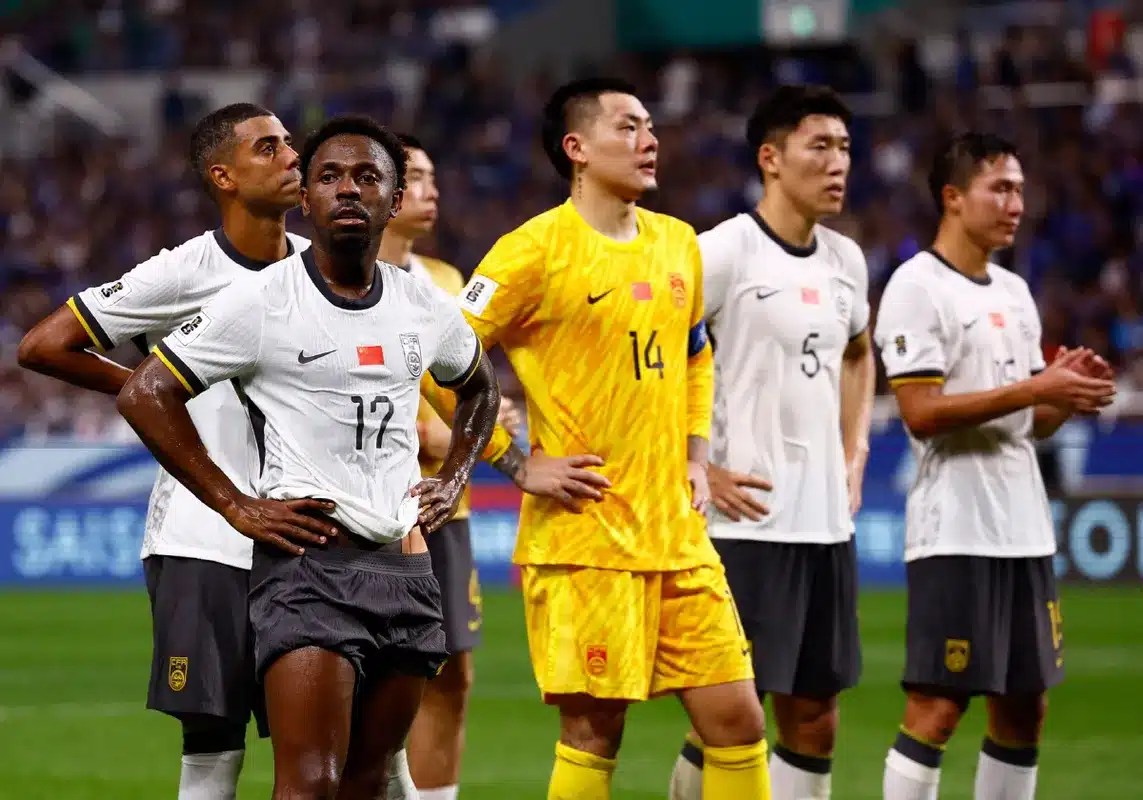
However, despite the prospect of an easier path to qualification, China has struggled to secure a place in the World Cup. The team was eliminated in the third round of Asian qualifiers for the current World Cup cycle, falling short of the final round of qualification. The Asian Football Confederation (AFC) also reportedly holds a non-committal stance on the expansion of the World Cup participating nations.
