

Global Leaders and Tech CEOs Forge Alliance on Advanced AI Governance
Leaders from the Group of Seven (G7) nations and top executives from global artificial intelligence (AI) companies have reached a consensus to jointly regulate the most advanced AI models. This significant agreement aims to prevent the unchecked proliferation of AI technology, particularly in response to concerns over China’s growing AI capabilities.
Understanding Frontier AI and its Implications
Frontier AI models, representing the cutting edge of human-developed artificial intelligence, possess immense power. Their capabilities are so advanced that they could potentially be leveraged for cyberattacks or even the development of weaponry. Prominent examples of such models include Anthropic’s ‘Payble’ and ‘Mythos,’ access to which the United States recently restricted citing national security reasons. This move signifies an expansion of export control strategies, previously focused on advanced military and strategic materials, into the critical domain of AI.
High-Level Summit Addresses AI Competition
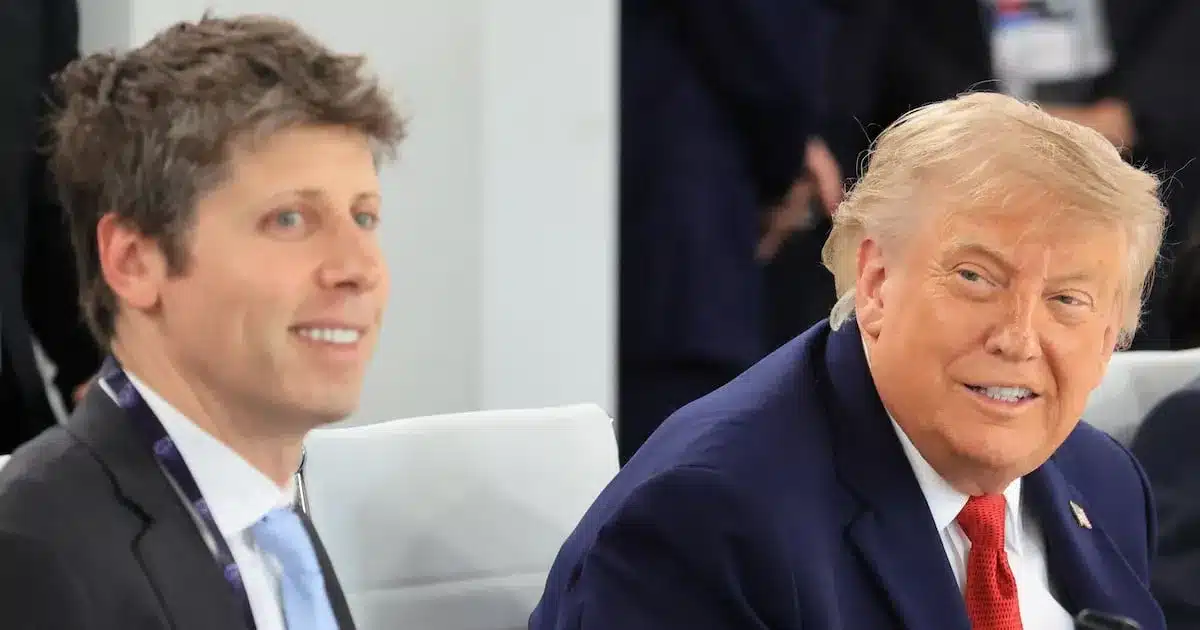
Following an extensive meeting lasting over two hours on September 17th (local time), key G7 leaders, including U.S. President Donald Trump and French President Emmanuel Macron, convened with eleven AI company CEOs. The summit concluded with an agreement to establish standards for regulating these leading-edge AI models.
Victor Riparbelli, CEO of Synthesia, a leading global AI video generation platform, commented after the meeting. “There was a unanimous agreement between the G7 and allied nations that it is crucial to win the AI race and prevent any single country from gaining an insurmountable advantage,” Riparbelli stated.
Key Industry Figures in Attendance
The AI industry was well-represented at the meeting. Attendees included Sam Altman, CEO of OpenAI; Dario Amodei, CEO of Anthropic; Demis Hassabis, CEO of DeepMind; and Mustapha Mokrane, CEO of Mistral AI, a prominent French AI company.
China as a Central Focus of Discussion
Throughout the discussions, China emerged as a significant topic of concern. According to internal meeting notes, participants acknowledged the United States’ leading position in AI development. However, China was identified as a formidable competitor, with particular attention paid to its apparent acquisition of substantial energy resources necessary to operate the most powerful AI models.
Call for Enhanced Regulation and International Cooperation
Following the summit, President Macron addressed reporters, emphasizing the need for robust regulation to prevent frontier models from falling into the hands of authoritarian regimes. “More effective regulation is needed to ensure frontier models do not fall into the hands of authoritarian regimes,” Macron stated. He further indicated plans to establish a platform for a small group of democratic nations to collaborate and define standards.
Ursula von der Leyen, President of the European Commission, echoed this sentiment, affirming the belief that Europe and the United States must cooperate in the AI sector. “Both sides have a responsibility to share security interests and take the lead together,” she remarked.
Proposals for an International AI Governance Body
Sam Altman, CEO of OpenAI, proposed the creation of an international body dedicated to evaluating and testing AI models. Chris Lattner, who leads OpenAI’s global efforts, confirmed that there was widespread consensus between leaders and CEOs regarding the establishment of such an organization.
The G7 is expected to formalize regulatory standards for frontier AI models at a ministerial meeting scheduled for September. Concerns have been raised that the U.S., given the concentration of leading AI research institutions within its borders, might unilaterally set these standards. Experts worry that U.S.-led regulations could lead to a technological dependency for allied nations.
To mitigate this reliance, the European Union is actively seeking broader technical cooperation on AI with countries like South Korea and Brazil. There is a growing call, particularly within Europe, for accelerated development of independent, cutting-edge AI models.
Mustapha Mokrane, CEO of Mistral AI, commented on the perceived U.S. approach: “It is a fact that the U.S. approach is often ‘Trust us, we will set the standards here and then export them to you.'”
This recent agreement follows closely on the heels of the U.S. government’s directive on September 13th, which mandated Anthropic to restrict access to its latest models, Payble 5 and Mythos 5, citing national security. This action meant that, outside of the United States, other G7 nations were prevented from using these advanced U.S. AI models due to an executive decision. While this move drew strong opposition from allied nations, sources present at the meeting indicated a unifying sentiment among leaders and CEOs, who saw China as a common adversary, irrespective of the Anthropic situation.
President Trump, concluding the lunch session, described the meeting as “excellent” and noted that discussions with Anthropic are progressing positively.
