

US Accused of Conceding Key Terms in Iran Ceasefire Agreement
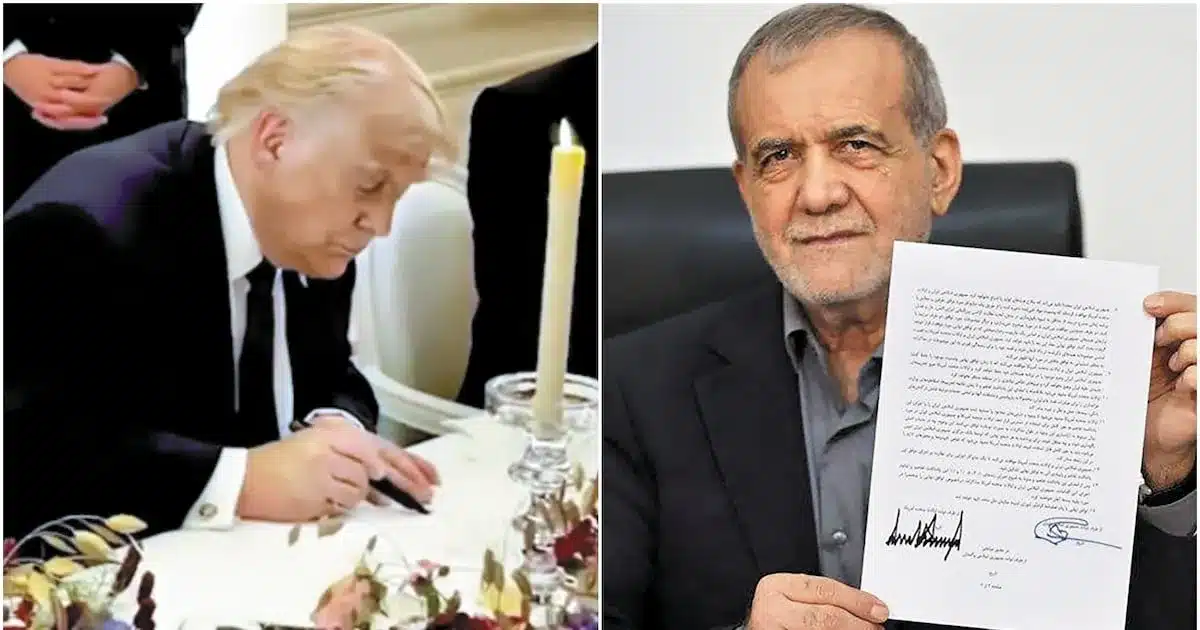
A recently finalized ceasefire agreement between the United States and Iran has drawn sharp criticism, with analysts suggesting that Iran has secured significant economic and strategic advantages while offering only limited concessions in return. The accord, which officially opened the path for Iran’s denuclearization and the reopening of the Strait of Hormuz, has been met with skepticism from within Washington’s political circles.
Key Terms and Criticisms
Reports indicate that the United States has already lifted key sanctions on Iran, including those related to its oil exports and frozen assets. This move, according to analysts, could inject billions of dollars into Iran’s economy, potentially exceeding $60 billion annually in oil sales alone. The agreement also reportedly includes provisions for up to $457 million in Iranian reconstruction and economic development projects.
In contrast, Iran’s commitments are primarily focused on a declaration to halt nuclear weapons development. However, critics point out that this clause is largely a reiteration of existing commitments under previous international agreements. Furthermore, a significant point of contention is the provision for the Strait of Hormuz. While the US administration has claimed the strait will be fully open and free of tolls, the agreement specifies that Iran will be compensated for services related to passage, a detail that appears to contradict earlier statements.
Strait of Hormuz Dispute
Specifically, Article 5 of the memorandum of understanding (MOU) guarantees Iran’s safe passage through the Strait of Hormuz. Crucially, it states this will be for an initial 60-day period without any fees. This has led to confusion, as President Trump had previously asserted that passage would be entirely free. Nevertheless, Iran’s chief negotiator, Mohammad Bagher Ghalibaf, stated in a televised interview that the Strait of Hormuz would not revert to its pre-war status and that Iran would indeed receive payment for services rendered. This implies that after the initial 60-day period, transit fees will be levied.
Economic Relief for Iran
The energy sector also appears to heavily favor Iran. Article 10 of the MOU immediately suspends sanctions on Iranian crude oil, petroleum products, and petrochemicals. The Wall Street Journal estimates that a full lifting of these sanctions could boost Iran’s annual oil revenue to over $60 billion. When combined with the economic development project clause, the financial benefits for Iran are substantial, drawing comparisons to the $2.5 billion in frozen assets the Obama administration had returned, which was heavily criticized at the time as a “gift.””
Nuclear Program Oversight
Regarding the nuclear program, Article 8 of the agreement sees Iran reaffirming its commitment not to develop nuclear weapons. This is a provision that was also included in the 2015 nuclear deal under the Obama administration. However, critics note that under the previous agreement, Iran was required to export 97% of its enriched uranium to Russia. The current MOU only specifies the processing of enriched uranium within Iran to low-grade levels. President Trump had previously referred to Iran’s enriched uranium as “nuclear dust” that would be brought to the United States. However, Iran’s Foreign Ministry spokesperson, Esmaeil Baghaei, has reportedly stated that Iran’s nuclear material will not be exported.
Sanctions Relief and Concerns
The sanctions relief provisions are also a subject of debate. Article 7 of the MOU aims to end all forms of sanctions, including those imposed by the UN Security Council, the IAEA, and the United States. However, the text does not explicitly address Iran’s support for terrorism, its ballistic missile development, drone programs, alleged assassination plots against Americans, or its support for proxy forces in the Middle East – issues that have been central to US sanctions policy. Furthermore, the clause allowing for the lifting of sanctions on frozen assets reportedly does not prevent funds from flowing to entities like terrorist organizations, sanctioned bodies, or the Islamic Revolutionary Guard Corps (IRGC).
Non-Interference Clause
Article 2 of the MOU stipulates that the United States and Iran will not interfere in each other’s internal affairs. This has led to concerns from some in Washington that the US may have inadvertently limited its ability to address future human rights abuses, crackdowns on protests, or the suppression of dissent within Iran.
Calls for Scrutiny
The agreement’s terms have prompted calls for greater scrutiny. Senator Tim Kaine of the Democratic Party described the deal as “giving Iran much more than we received from the Obama nuclear deal, and getting much less in return.” Senator Bill Cassidy of the Republican Party stated, “Iran’s nuclear ambitions have not been curbed, the threat to the Strait of Hormuz has not been averted, and under this deal, they will be able to build entirely new infrastructure.” House Majority Whip John Thune also expressed reservations, noting that “lawmakers have numerous questions about the agreement.””
In response to these criticisms, President Trump stated that if Iran fails to adhere to the agreement, the United States would respond with “very severe” actions until compliance is achieved. However, given concerns about rising oil prices and economic stagnation in the US, some analysts believe that a swift return to conflict with Iran may not be a straightforward option for the administration.
