

An Enigmatic Fish Thrives Without Males, Challenging Evolutionary Theory
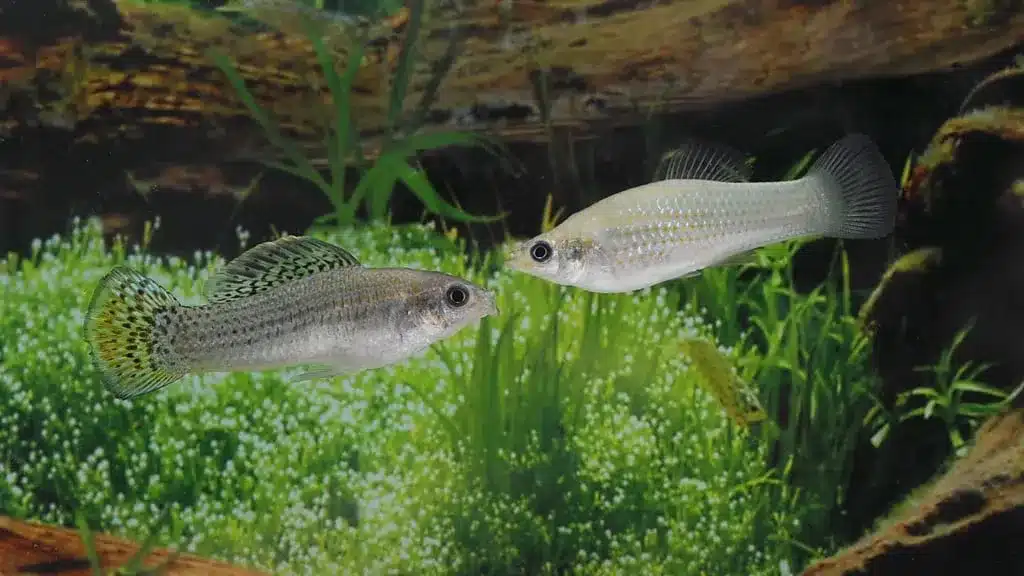
In the rivers of Mexico and the southern United States, a remarkable fish swims, defying conventional evolutionary understanding. These are the Amazon mollies, and every single individual in the species is female. Measuring between 4 to 7 centimeters, they reproduce without the need for male fertilization, a phenomenon that has long puzzled scientists.
A Unique Reproductive Strategy
While these mollies do engage in mating behavior with males of closely related species, the male’s genetic contribution is effectively discarded. Instead, the female’s eggs are stimulated by the male’s sperm to initiate development, a process known as gynogenesis. This allows the female to produce offspring that are essentially clones of herself. The fish is aptly named after the Amazon warriors of Greek mythology.
Challenging the ‘Ratchet’ of Evolution
For nearly a century, the Amazon molly has presented a significant challenge to established evolutionary theory. According to evolutionary principles, asexually reproducing species, over time, accumulate deleterious mutations that should lead to their eventual extinction. This concept is often referred to as the ‘Muller’s Ratchet,’ which posits that in asexual reproduction, harmful mutations build up irreversibly, like a one-way ratchet, without the shuffling and potential correction offered by sexual reproduction.
Under this theoretical model, the Amazon molly should have disappeared after a relatively short period, perhaps around 10,000 years. However, this species has persisted for an astonishing 100,000 years, demonstrating a resilience that contradicts expectations.
Unraveling the Secret: Gene Conversion
Recent research, published in the scientific journal Nature, offers a groundbreaking explanation for the Amazon molly’s extraordinary longevity. An international team of scientists from Germany and the United States has discovered that these fish possess a unique mechanism for maintaining their genetic integrity.
The study, led by Professor Edouard Laishmeyer of the Ruprecht Karl University of Heidelberg, revealed that the Amazon molly originated from a hybridization event between two ancestral species: the Atlantic molly (female) and the Sailfin molly (male). While this hybridization created a new lineage capable of asexual reproduction, it also endowed the Amazon molly with the genetic material from both parent species.
Crucially, the research indicates that the Amazon molly employs a process called ‘gene conversion.’ This mechanism, also found in sexually reproducing organisms, involves the repair of damaged DNA. In the case of the Amazon molly, the presence of two similar, yet distinct, sets of ancestral genes from its parent species allows for a form of genetic ‘refreshing.’ When mutations occur, the organism can use segments from the other ancestral gene set as a template for repair, effectively overwriting or correcting the detrimental changes.
Professor Laishmeyer explained, “What is particularly surprising is that gene conversion occurs most actively in precisely those regions where the most harmful mutations are expected.” This suggests that the Amazon molly has evolved a sophisticated system to counteract genetic degradation, a feat previously thought impossible for an asexually reproducing species over such a vast timescale.
A New Perspective on Reproduction
The findings challenge the long-held assumption that sexual reproduction is the only viable path for long-term evolutionary success. The Amazon molly demonstrates that alternative strategies, like a highly efficient gene conversion mechanism, can also ensure the persistence and health of a species’ genome.
“We thought that sexual reproduction was the only way to maintain a healthy genome, but we have found that there are other paths to achieve the same result,” Professor Laishmeyer stated. This discovery opens new avenues for understanding the diverse evolutionary strategies employed by life on Earth.
