

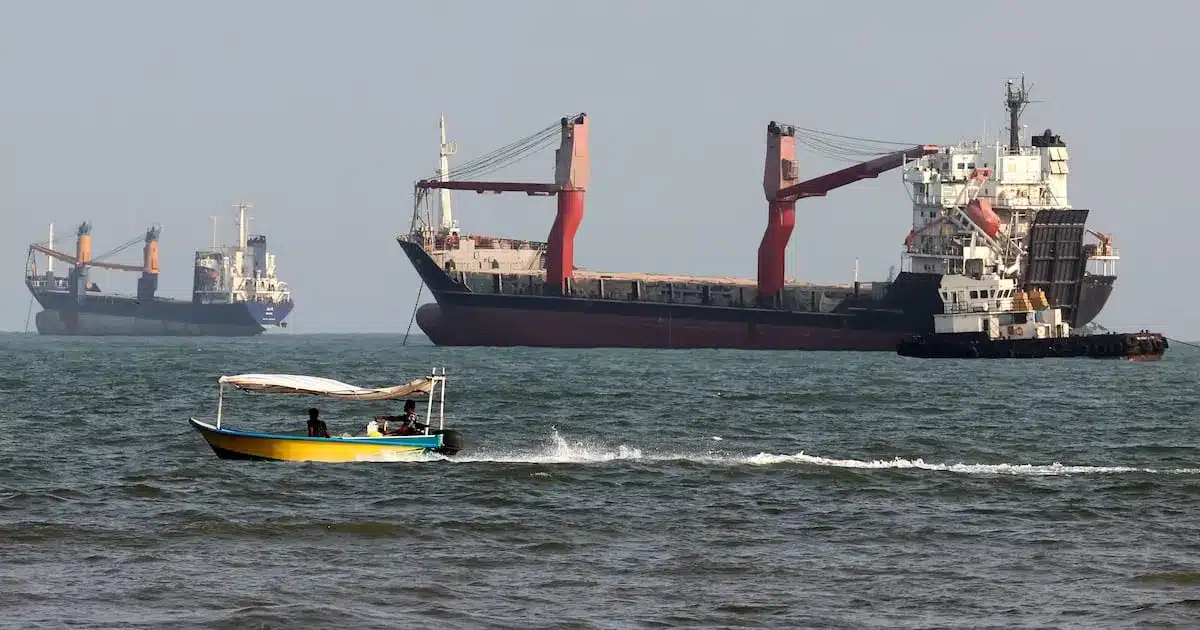
The United States military announced on Friday that it has successfully concluded retaliatory strikes against Iranian military facilities. The operations targeted various sites, including anti-aircraft facilities, radar systems, naval infrastructure, and associated assets, as well as equipment and communication facilities. These strikes were explicitly stated as a response to Iran’s actions, which involved attacking commercial shipping in a vital strait and targeting U.S. personnel.
Background to the Escalation
The recent military engagement follows a confrontation in the Strait of Hormuz on Thursday. U.S. forces conducted a strike against an Iranian facility on Larak Island, citing intelligence suggesting Iran was preparing to deploy mines. The New York Times reported that the U.S. likely targeted two Iranian mobile rocket launchers capable of firing small rockets into the sea, a capability described as unusual for Iran and potentially destabilizing for the Strait of Hormuz.
In response to the U.S. strike, Iran reportedly targeted U.S. military assets, including a U.S. naval vessel, with artillery fire. The U.S. military command stated that its forces are operating under the direction of the highest leadership, maintaining a state of readiness and preparedness for continued operations in the region. Over 50,000 U.S. military personnel are currently deployed in the Middle East theater.
Impact and International Reaction
Following the U.S. announcement of the strikes, explosions were reportedly heard in several Iranian regions, including Qeshm Island, Bandar Abbas, Sirik, and Konarak. Iranian state television indicated that an airport in the southeastern part of the country was the target of the U.S. military operation.
The exchange of hostilities has raised concerns about the stability of the critical Strait of Hormuz, a vital waterway for global oil transport. The U.S. has framed its actions as a necessary response to Iran’s aggressive posture and direct attacks on international shipping and U.S. interests. The U.S. Central Command emphasized its commitment to maintaining security and deterring further aggression in the region.
Previous Incidents and U.S. Posture
The incident on Thursday involved two oil tankers sustaining damage after a collision. One of these vessels was identified as a South Korean-flagged tanker, the ‘Shinui’ (SINOCO), according to reports. This event further heightened tensions in the already volatile maritime environment.
The U.S. military’s stated objective in conducting these strikes was to degrade Iran’s ability to project power and threaten maritime traffic. The deployment of advanced weaponry by Iran, such as the mobile rocket launchers, has been a point of concern for regional security analysts and U.S. military planners. The U.S. has consistently maintained a strong military presence in the Middle East to counter threats and ensure freedom of navigation.
Domestic Considerations
The ongoing military operations in the Middle East and the sustained deployment of U.S. troops have also drawn criticism within the United States. Some voices have raised concerns about the long-term commitment of resources and personnel to the region, questioning the strategic objectives and potential outcomes of prolonged military engagement.
Future Outlook
The U.S. military’s successful execution of retaliatory strikes signals a firm stance against Iranian aggression. However, the situation remains fluid, with the potential for further escalation. The U.S. has reiterated its readiness to respond decisively to any threats to its forces or allies, as well as to international maritime security. The coming days will be crucial in determining whether this exchange leads to a de-escalation or further intensification of conflict in the region.
The strategic importance of the Strait of Hormuz cannot be overstated, making any disruption to shipping traffic a matter of global concern. The U.S. military’s actions are intended to deter future attacks and maintain the free flow of commerce through this critical chokepoint. The international community will be closely monitoring developments as both nations navigate this period of heightened tension.
