

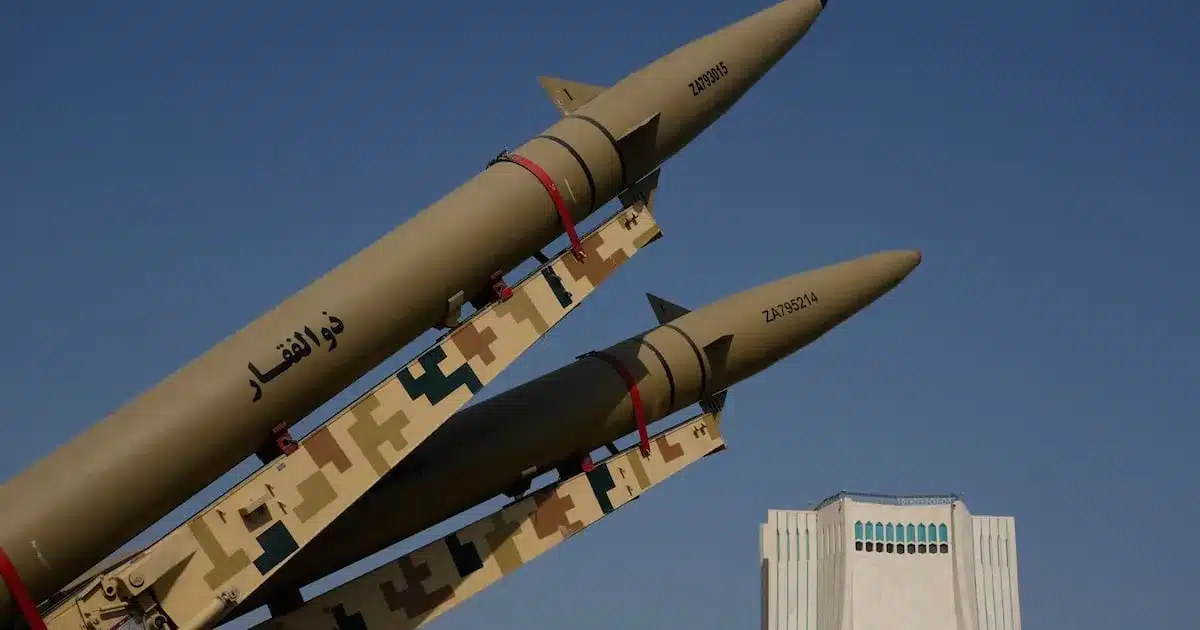
The United States military has resumed large-scale operations targeting Iran’s territory, marking a significant escalation after a brief pause intended to allow for diplomatic engagement. This renewed military action follows President Donald Trump’s strong declaration that the U.S. would retaliate forcefully against Iran.
US Military Resumes Offensive Operations Against Iran
On September 29th (local time), the U.S. military initiated substantial strikes against key military targets within Iran. This marks the first direct offensive action in six days, following President Trump’s order on September 24th to temporarily suspend the campaign of “maximum pressure” against Iran, which had been in place to encourage diplomatic talks.
Prior to this pause, the U.S. had conducted 13 consecutive days of airstrikes against Iran’s nuclear facilities and strategic strongholds, significantly intensifying the pressure campaign. The renewed strikes come shortly after Iran’s Islamic Revolutionary Guard Corps (IRGC) launched multiple missiles at a U.S. base located in the Jordanian city of Zarqa.
Trump Issues Stern Warning to Iran
Following the missile attack on the U.S. base, an angered President Trump addressed reporters in the Oval Office on the afternoon of September 29th. He stated, “It is now our turn,” and issued a stern warning that the United States would strike Iran with “great force” at a late hour. This statement was interpreted as a reaffirmation of the principle that military aggression would be met with a decisive response.
President Trump further emphasized Iran’s apparent attempt to de-escalate, claiming, “Iran requested not to be retaliated against after firing missiles at the U.S., and asked us not to retaliate.” He asserted that Iran had acknowledged the missile launch as a mistake and pleaded for the U.S. not to respond with force. However, Trump indicated that he rejected Iran’s plea for leniency and instead ordered an immediate and devastating military response.
According to Axios, President Trump directed a swift and destructive military counter-attack rather than accepting a compromise. This decision clearly signaled an intent to neutralize Iran’s war-fighting capabilities through overwhelming military might, rather than through negotiation.
Implications for Regional Stability
Foreign policy and national security experts are closely watching the repercussions of this renewed offensive, anticipating a significant impact on the broader Middle East geopolitical landscape. The scale of the U.S. retaliatory strike suggests that Iran may face internal pressure from hardliners to engage in further escalatory actions to counter the perceived U.S. aggression.
While both nations’ leaderships may seek to avoid a full-scale war, analysts warn that repeated, sporadic military confrontations could lead to a prolonged conflict. The situation presents a challenging environment for international mediation efforts, with a clear path toward de-escalation appearing difficult to find in the immediate future.
Background of Escalating Tensions
The recent exchange highlights a period of heightened tensions between the U.S. and Iran. The U.S. has been engaged in a campaign to curb Iran’s nuclear program and its regional influence, while Iran has viewed these actions as direct provocations. The missile attack on the U.S. base in Jordan appears to be the latest incident in this ongoing cycle of actions and reactions.
Diplomatic Channels and Military Options
President Trump’s initial decision to pause military operations was seen by some as an opening for diplomacy. However, the subsequent Iranian action appears to have closed that window, pushing the situation back towards a military-centric approach. The U.S. strategy, as articulated by President Trump, emphasizes a strong military response to deter further aggression.
The effectiveness of this strategy in achieving long-term stability remains a subject of debate among foreign policy analysts. While overwhelming force might deter immediate attacks, it could also inflame regional dynamics and lead to unintended consequences.
Conclusion: A Precarious Standoff
The resumption of U.S. military strikes against Iran, coupled with President Trump’s firm stance on retaliation, signals a critical juncture in the U.S.-Iran relationship. The coming days and weeks will be crucial in determining whether this escalation leads to a wider conflict or if diplomatic avenues can be re-established amidst the heightened military posturing. The international community remains watchful, hoping for a de-escalation that avoids further bloodshed and preserves regional stability.
