

[ad_1]
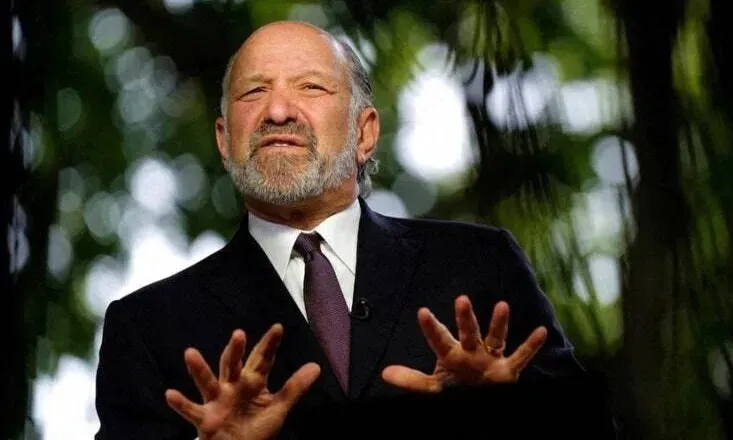
US Commerce Secretary Howard Lutnick speaks throughout an interview on the White Home on June 11, 2025. (Reuters/Yonhap) Caption 2-2: A semiconductor ship. (Reuters/Yonhap)
Uncertainty over tariffs is reemerging simply two months after Korea reached a commerce cope with the US. After reaching a tariff settlement with Taiwan, the Trump administration has repeatedly threatened to impose a 100% tariff on semiconductors coming into the US if chip corporations don’t construct crops in America.
The Korean authorities and home semiconductor trade are carefully monitoring the doable repercussions of this settlement and exploring responses.
For the third straight day on Friday, the US warned that it will slap tariffs on semiconductors, with US Commerce Secretary Howard Lutnick echoing his warning from Thursday that corporations exporting chips to the US would face a tariff of 100% except they constructed manufacturing services stateside.
Earlier, on Wednesday, President Donald Trump introduced 25% tariffs on sure chips, together with some made by California-based Nvidia, that stream to China by way of the US.
These threats have fueled hypothesis of the US making related calls for of Korea.
After reaching a commerce settlement in late October final yr, Seoul and Washington launched a joint truth sheet that November stating that Korea would face tariff charges “no much less favorable” on semiconductors than Taiwan. However the US announcement of a large funding package deal from Taiwan — and a waiver on sure tariffs in proportion to it — signifies that Korea may battle to fulfill the circumstances essential to obtain such “no much less favorable” tariff charges.
On Thursday, the US and Taiwan introduced a brand new commerce deal through which the previous will decrease the reciprocal tariff fee on the latter’s items from 20% to fifteen%, in return for Taiwanese corporations investing US$250 billion in America in semiconductors, vitality and synthetic intelligence. To assist this, the Taiwanese authorities will put up US$250 billion in credit score ensures.
The US Commerce Division will enable Taiwanese chipmakers to import 2.5 of their output capability whereas constructing crops within the US with none tariffs. The cap will fall to 1.5 of capability after the completion of such services.
This deal has prompted jitters in Korea and Japan, each of which reached commerce offers with the US after months of grueling negotiations final yr. Seoul pledged an funding of US$350 billion and Japan US$550 billion to decrease reciprocal tariffs on their exports to the US to fifteen%. The offers they reached additionally lowered tariffs on autos — the highest export merchandise to the US for each international locations — from 25% to fifteen%.
Now the US seems to be attempting to leverage its commerce cope with Taiwan, whose largest export to the US is semiconductors, to additional stress Korea and Japan, fueling issues in regards to the doable blow chip tariffs may deal to the international locations.
Pushed by components like rising reminiscence costs, Korean chip exports final yr rose 28.4% from 2024 to US$13.8 billion, making them the nation’s second-largest export to the US after autos (US$30.15 billion final yr).
Whereas it stays unclear whether or not Taiwan will make investments all its pledged US$250 billion in semiconductor manufacturing, Korean chipmakers Samsung Electronics and SK Hynix concern that the US may use the deal to demand extra investments from them. Samsung Electronics is at present pouring US$37 billion into constructing a foundry in Texas, whereas SK Hynix plans to speculate US$3.87 billion to arrange a packaging facility in Indiana.
In an interview with CNBC, Lutnick talked about experiences that Taiwanese chip big TSMC may probably double its funding within the US.
An official within the home semiconductor trade stated that the sector was “monitoring the scenario,” including that main uncertainty surrounds how ongoing investments can be mirrored in tariffs.
One other within the sector instructed that the 100% tariff coverage might be a negotiating tactic.
“By way of reminiscence, the one various the US has is Micron, which means that if the US imposes a tariff on reminiscence chips, it can solely harm American corporations like Nvidia and Google,” the insider stated.
By Lee Bon-young, senior employees author; Park Jong-o, employees reporter
Please direct questions or feedback to [english@hani.co.kr]
[ad_2]
