

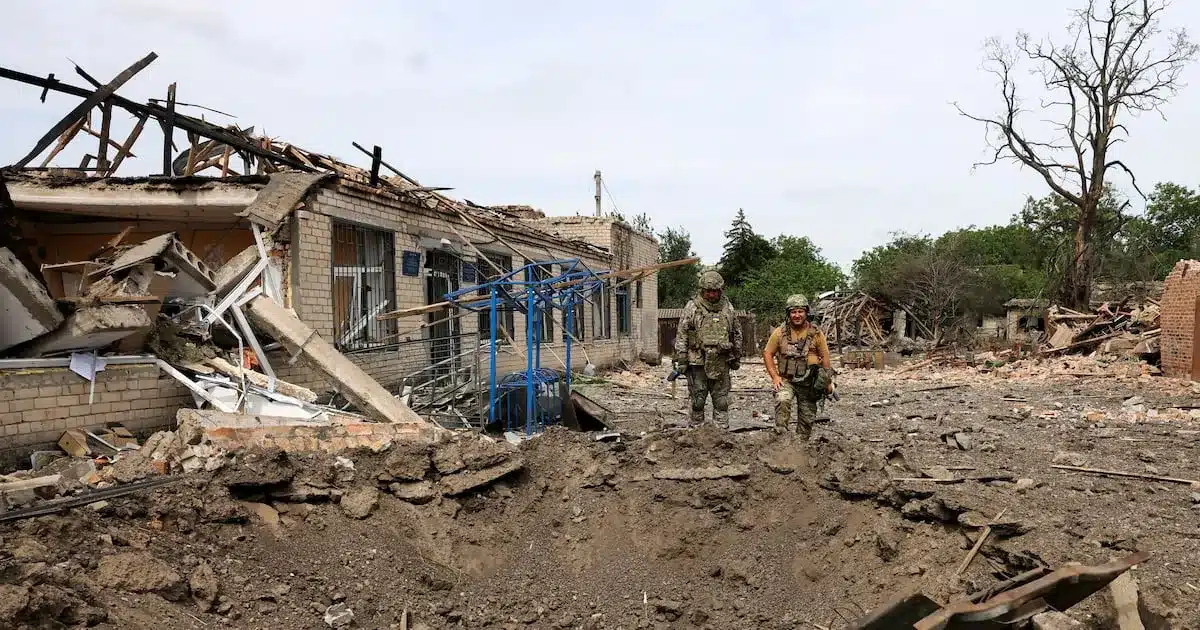
Ukraine and Russia engaged in a renewed exchange of strikes on March 25th, resulting in at least 20 civilian deaths across both nations. The intensified attacks saw Russian forces targeting Ukrainian cities and infrastructure, while Ukraine retaliated with drone strikes deep into Russian territory, including areas previously considered beyond the conflict’s immediate reach.
Russian Claims of Ukrainian Attacks and Casualties
Russian authorities reported that a Ukrainian strike hit a holiday facility in the coastal village of Uzhhorod, located in the occupied Zaporizhzhia region. According to the Russian-appointed governor of Zaporizhzhia, Yevhen Balytskyi, the attack killed 11 people, including four children. Balytskyi stated via Telegram that the incident was a “deliberate attack by Ukraine” on a civilian area.
Further casualties were reported by Russia in other occupied territories. Two civilians died in a village near the Russian border, and another individual was killed in the occupied Kherson region. These reports highlight the ongoing civilian toll of the conflict, even in areas under Russian control.
Ukrainian Drone Operations Deep Within Russia
Simultaneously, Ukraine has expanded its drone operations into Russian rear areas. In a notable incident, a Ukrainian drone crashed in the Tyumen region, over 1,600 kilometers east of Moscow, igniting a fire at a refinery. Ukrainian drones also targeted a Wildberries logistics warehouse in Yekaterinburg, a major city in Russia’s Ural Mountains region. Wildberries, a prominent online retailer, responded by evacuating its employees and temporarily halting warehouse operations. Fortunately, there were no reported injuries or significant damage to the facility itself.
This marks an escalation in Ukraine’s strategy, as it has recently conducted similar attacks on Wildberries logistics centers in Moscow, St. Petersburg, Crimea, and southern Russia. Ukraine asserts that Russia utilizes these facilities for drone and military equipment supply chains, justifying the strikes.
Ukrainian President’s Statements on Retaliation
Ukrainian President Volodymyr Zelenskyy addressed the ongoing conflict via his X (formerly Twitter) account, stating that Ukraine is continuing to target Russian rear areas in response to Moscow’s aggression. He claimed that Ukrainian forces had struck military-related facilities in the Kirov region, located approximately 1,200 kilometers from the border, for two consecutive days.
Zelenskyy also indicated that Ukraine was achieving results through strikes on the Caspian Sea region. While he mentioned targeting a convoy suspected of transporting military supplies linked to Iran, specific details were not disclosed. This suggests a broader Ukrainian effort to disrupt Russian military logistics and supply lines.
Civilian Impact in Ukraine from Russian Attacks
The conflict also continued to inflict civilian casualties within Ukraine. President Zelenskyy reported that Russian missile strikes on the Sloboda district the previous night destroyed over ten residential buildings and resulted in three deaths. Additionally, Russian Shahed drone attacks in Sumy killed three people, while residential high-rises were hit in Kharkiv, and a market in Zaporizhzhia was attacked.
These attacks come shortly after a Russian missile strike on March 24th targeted an arms exhibition near Kyiv, killing at least 10 people and injuring over 100. In response to Russian assaults on its energy infrastructure and military enterprises, Ukraine has continued to retaliate against Russian oil facilities and military companies, including those in the Kirov region.
Broader Context and Escalation
The recent exchanges underscore the protracted nature of the conflict and the increasing reach of both sides’ military capabilities. Russia’s continued bombardment of Ukrainian cities and infrastructure, coupled with Ukraine’s successful long-range drone strikes, indicates a widening battlefield. The targeting of civilian areas and infrastructure on both sides raises significant humanitarian concerns and highlights the devastating impact of the war on non-combatants.
International observers continue to monitor the situation closely, with concerns growing over the potential for further escalation and the long-term consequences for regional stability. The ongoing strikes serve as a grim reminder of the human cost of the conflict, with civilian populations bearing the brunt of the violence.
