

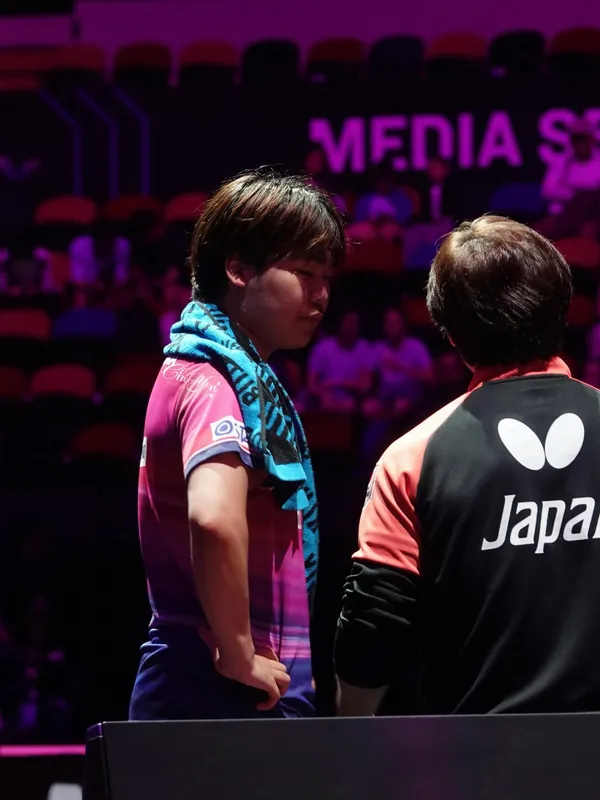
World No. 3 table tennis player Tomokazu Harimoto has voiced his frustration following an incident during a recent match where a spectator intentionally set off a flash, disrupting the game. The Japanese star, a prominent figure in international table tennis, believes stricter regulations are needed to prevent such occurrences, which can significantly impact player performance and the integrity of competitions. His concerns have resonated with media outlets, including those in China, highlighting a growing consensus on the issue.
Flash Incident Sparks Debate on Spectator Conduct
The controversy unfolded during a World Table Tennis (WTT) Champions Macao event, where Harimoto was competing. He described the moment a spectator deliberately triggered a flash, stating, “I could tell that some fan was intentionally setting off a flash. It causes discomfort when players engage in such behavior. WTT still needs more regulations.” This incident has brought renewed attention to the challenges faced by athletes and governing bodies in managing spectator behavior during high-stakes matches.
Harimoto’s experience underscores a broader concern within the sport: the potential for disruptive actions by spectators to unfairly influence match outcomes. The use of flashes, particularly during crucial points, can momentarily blind players, break their concentration, and disrupt the rhythm of play. This is especially problematic in a sport that demands split-second reactions and intense focus.
Harimoto’s Recent Performance and Reaction
The incident occurred shortly after Harimoto’s unexpected exit from the 2026 WTT Champions Macao men’s singles quarterfinals. He lost to Brazil’s Hugo Calderano, ranked world No. 7, with a score of 2-4 (9-11, 12-10, 5-11, 12-14, 11-3, 9-11). Following the match, Harimoto took to social media to express his disappointment, emphasizing that while his opponent was strong and luck was not on his side, the mid-game flash was unacceptable.
“In a situation where you play with strategy, a flash during the game cannot be tolerated. While it’s a person’s choice who to support, please refrain from actions that interfere with the game,” Harimoto stated. His public comments reflect a desire for a more controlled and respectful environment for athletes competing at the highest level.
International Support for Stricter Regulations
Reports indicate that Chinese media have also addressed the flash incident, siding with Harimoto’s stance. Chinese sports outlet ‘Sina Sports’ commented on Harimoto’s remarks, noting his continued displeasure even days after the tournament. The outlet reported that Harimoto had lodged a complaint with the WTT through the Japan Table Tennis Association.
Sina Sports emphasized the need for the WTT to handle such situations effectively. “Whether intentional or not, using a flash to disrupt the flow of the game is a mistake. Chinese players have also experienced similar problems in the past. Especially in important or crucial moments, these elements can easily break the rhythm. Besides mentally preparing the players, how the WTT handles the situation is even more important,” the report stated. This sentiment suggests that the issue is not isolated to Harimoto or Japan but is a concern shared across different table tennis nations.
The Rise of Tomokazu Harimoto
Tomokazu Harimoto, born in 2007, is considered one of Japan’s most promising table tennis talents. He has rapidly climbed the world rankings, reaching as high as third. His breakthrough performance came in November of the previous year when he won the WTT Champions Frankfurt tournament in Frankfurt, Germany. This victory was a significant milestone in his burgeoning career, showcasing his potential to challenge the sport’s established elite.
Harimoto’s success is a testament to his dedication and skill. However, incidents like the flash disruption highlight the external factors that can affect even the most talented athletes. The ongoing discussion surrounding spectator conduct and the need for robust regulations is crucial for the continued growth and fairness of international table tennis.
Looking Ahead: Asian Games and Future Competitions
As Japan prepares to host the Asian Games for the first time in 32 years, starting on September 19th, there is a collective hope that such disruptive incidents will be avoided. Harimoto himself is reportedly targeting a gold medal at the 2026 Aichi-Nagoya Asian Games, a goal that requires optimal conditions for training and competition.
The WTT’s response to Harimoto’s complaint and its future policies on spectator conduct will be closely watched. Ensuring a fair and respectful environment for all athletes is paramount as the sport continues to gain popularity worldwide. The consensus emerging from athletes and media alike points towards a need for clear guidelines and enforcement to protect the integrity of table tennis matches.
The debate also touches upon the broader responsibilities of sports organizations to anticipate and mitigate potential disruptions. By addressing these issues proactively, the WTT and other governing bodies can help safeguard the athlete experience and maintain the excitement and fairness of the sport for fans globally.
