

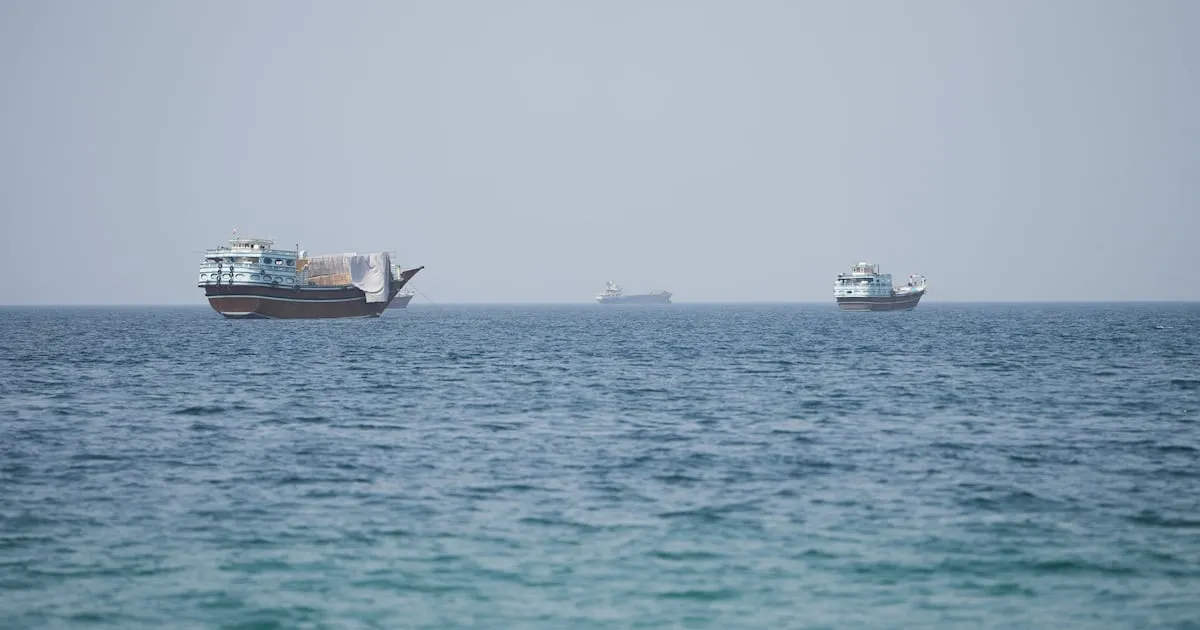
Shipping traffic through the Strait of Hormuz has effectively ground to a halt following a series of suspected attacks on vessels, leading to a dramatic decrease in maritime passage. Data compiled by ship-tracking firm Kpler indicates that only five oil tankers transited the crucial waterway on June 15. This figure plummeted to zero on June 16, a stark contrast to the 31 vessels that passed through the previous weekend.
The vessels that did transit on June 15 included very large crude carriers (VLCCs) equipped with Automatic Identification System (AIS) transponders, as well as Iranian-flagged very large gas carriers (VLGCs) utilizing routes closer to Iran. While the presence of AIS transponders suggests a higher degree of transparency for some of these ships, the overall volume represents a significant decline.
Dramatic Drop in Traffic Follows Attacks
The sharp reduction in shipping activity began after the United Arab Emirates (UAE) reported on June 13 that three vessels, operated by the UAE’s national oil company ADNOC, were targeted while en route. The UAE subsequently identified Iran as the entity responsible for these attacks. This incident sent shockwaves through the global shipping industry, highlighting the escalating tensions in the region.
Before the recent escalations, specifically before the conflict between the United States and Iran began in February, the Strait of Hormuz typically saw over 130 vessels passing through daily. The current traffic levels are a fraction of that historical volume, underscoring the severe impact of the recent events on maritime trade.
Geopolitical Tensions Impacting Trade Routes
The situation in the Strait of Hormuz is intricately linked to the broader geopolitical standoff between the U.S. and Iran. As diplomatic efforts to de-escalate tensions continue, the U.S. is reportedly pressing for the maintenance of maritime blockades against Iran. This pressure adds another layer of complexity to the already precarious situation.
Conversely, Iran has responded by asserting that for shipping traffic to resume safely, the U.S. must accept Iran’s demands, including the cessation of military actions and the repatriation of its citizens. This counter-demand from Iran suggests a willingness to engage but also sets conditions that could prolong the impasse.
The Strategic Importance of the Strait of Hormuz
The Strait of Hormuz is one of the world’s most vital maritime chokepoints. Prior to the current conflict, approximately one-fifth of the world’s oil and liquefied natural gas (LNG) supply was transported through this narrow waterway. Its strategic significance cannot be overstated, as any disruption to traffic here has immediate and far-reaching consequences for global energy markets and international trade.
The waterway, measuring just 21 nautical miles at its narrowest point, is a critical transit route for crude oil and LNG from the Persian Gulf to the open ocean. Its strategic location makes it a focal point for regional powers and a key concern for global economies reliant on energy imports. The recent attacks and the subsequent decline in shipping traffic underscore the vulnerability of this essential trade artery.
Economic Repercussions and Global Concerns
The sharp decline in shipping through the Strait of Hormuz raises significant concerns about potential economic repercussions. A sustained disruption could lead to increased energy prices, supply chain disruptions, and broader economic instability. Global markets are closely monitoring the situation, as a prolonged closure or severe restriction of this vital route could impact everything from manufacturing costs to consumer prices.
International bodies and major economies are calling for de-escalation and the restoration of safe passage for all vessels. The ability of regional and international actors to navigate these complex geopolitical currents will be crucial in determining the future of maritime trade through the Strait of Hormuz and its impact on the global economy.
Future Outlook and Diplomatic Efforts
The coming days and weeks will be critical in assessing whether diplomatic efforts can successfully de-escalate tensions and ensure the unimpeded flow of traffic through the Strait of Hormuz. The response from international powers, coupled with the actions of Iran and its neighbors, will shape the trajectory of this sensitive situation. The global community remains hopeful for a peaceful resolution that prioritizes maritime safety and economic stability.
