

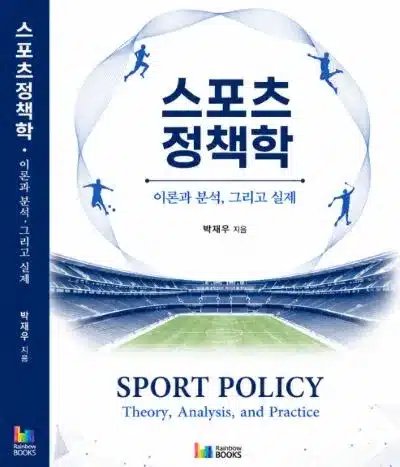
A comprehensive academic work that synthesizes the theoretical underpinnings of sports policy with practical analysis and real-world case studies has been published. Titled “Sports Policy Studies: Theory, Analysis, and Practice,” the book aims to serve as an essential resource for graduate students, researchers, and professionals engaged in sports administration and policy-making.
Bridging the Gap Between Sports Policy Theory and Application
Authored by Professor Jae-woo Park of Hanyang University’s Department of Sports Science, the textbook meticulously integrates established policy theories with their application in the sports sector. The core objective is to create a cohesive link between abstract concepts and their tangible implementation, offering readers a structured approach to understanding and developing effective sports policies. This approach is crucial for anyone seeking to navigate the complexities of sports governance and management.
The book’s structure is designed for clarity and comprehensive coverage. It is divided into five parts, encompassing thirteen chapters. These chapters delve into a wide array of critical topics, including:
- The fundamental concepts of sports policy.
- In-depth analysis of policy frameworks and methodologies.
- The intricate policy-making process within the sports domain.
- Methods and challenges of policy evaluation in sports.
- The role of governance and regulatory structures.
- Legal and institutional frameworks governing sports.
- A historical overview of sports policies implemented by past administrations.
By covering these diverse areas, the textbook provides a robust foundation for both academic study and practical application in educational settings and professional environments. It equips readers with the knowledge to critically assess existing policies and contribute to the formulation of future strategies.
The Importance of Integrated Sports Policy Education
Professor Park emphasized the significance of an integrated approach in sports policy education. He stated, “I hope this book serves as a guide for students and researchers studying sports policy, as well as for policy officials and practitioners, in connecting theory with practice.” This sentiment underscores the need for educational materials that not only explain theoretical models but also illustrate their relevance through concrete examples and experiences from the field. Such an approach ensures that aspiring and current professionals are well-prepared to address the dynamic challenges within the sports industry.
The development of effective sports policies is a multifaceted endeavor. It requires a deep understanding of political, economic, social, and cultural factors that influence sports at local, national, and international levels. Professor Park’s work addresses this by providing a holistic perspective, drawing from various disciplines to offer a comprehensive framework for analysis and action. The inclusion of historical context, for instance, allows readers to learn from past successes and failures, informing contemporary policy decisions.
Key Contributions to Sports Policy Studies
The textbook’s contribution lies in its ability to demystify complex policy concepts for a broad audience. For students, it offers a clear roadmap for understanding the academic discipline of sports policy. For researchers, it provides a solid theoretical base and analytical tools for conducting further investigations. For practitioners, it offers practical insights and case studies that can be directly applied to their work in sports organizations, government agencies, and non-profit sectors.
The book’s methodical organization ensures that readers can easily navigate through the different components of sports policy. It begins with foundational principles and gradually moves towards more complex analyses and applications. This pedagogical approach is vital for fostering a comprehensive understanding, moving beyond rote memorization to critical thinking and problem-solving.
Furthermore, the emphasis on the policy process—from agenda setting and formulation to implementation and evaluation—is particularly noteworthy. This cyclical view of policy-making highlights the interconnectedness of each stage and the importance of continuous monitoring and adaptation. In the ever-evolving landscape of sports, where trends, technologies, and societal expectations shift rapidly, such adaptive policy-making is indispensable.
Looking Ahead: The Future of Sports Policy
As the sports world continues to grow in complexity and influence, the demand for well-informed and effective sports policies will only increase. Issues such as athlete welfare, ethical conduct, financial sustainability, inclusivity, and the impact of technology on sports all require careful policy consideration. “Sports Policy Studies: Theory, Analysis, and Practice” provides a timely and essential resource for addressing these contemporary challenges.
Professor Park’s work is a significant addition to the literature on sports policy. By successfully bridging the gap between theoretical knowledge and practical application, the textbook empowers current and future leaders in the sports sector to make informed decisions that can shape the future of sports for the better. Its comprehensive scope and structured approach make it an invaluable tool for anyone committed to advancing sports through thoughtful and effective policy.
