

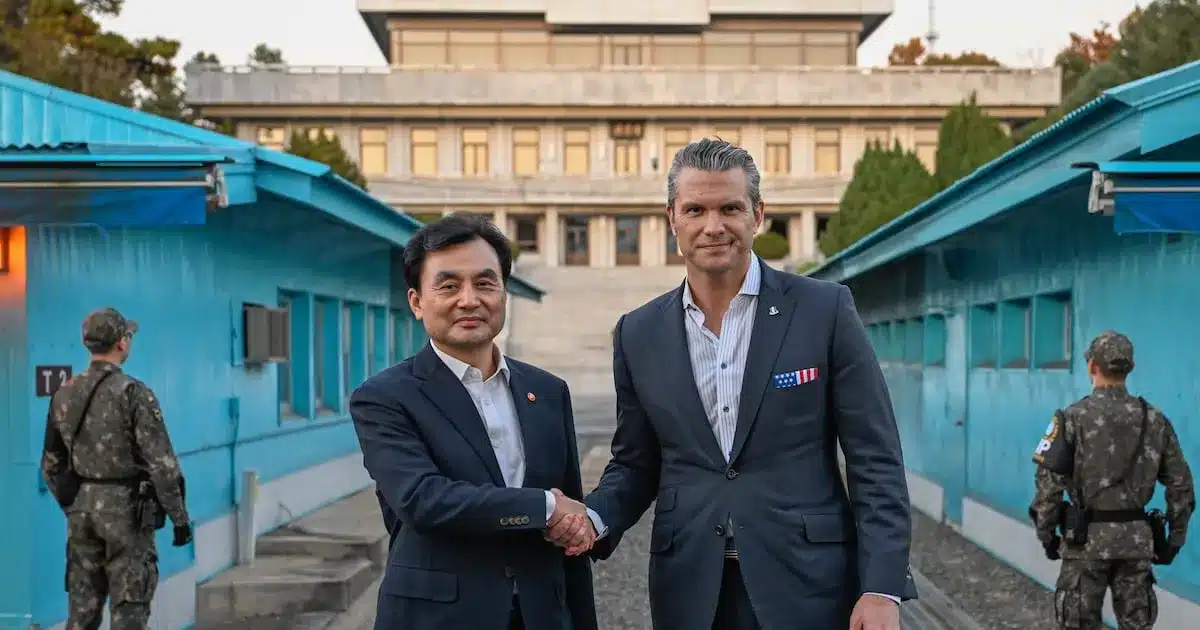
South Korea’s Defense Minister Ahn Gyu-baek embarks on a visit to the United States from May 10 to 14, amid heightened discussions on sensitive security matters.
Key Meetings and Agenda
The minister arrives in Washington D.C. on May 11 local time for talks with U.S. Defense Secretary Pete Hegseth. Additional meetings include U.S. State Department officials, National Security Council representatives, Indo-Pacific Command chief, and other senior figures.
Ministry officials describe the trip as covering follow-up from the Korea-U.S. presidential summit and Security Consultative Meeting (SCM). Discussions center on troop adjustments, cooperation enhancements, and pressing bilateral issues.
“This visit addresses Korea-U.S. presidential summit outcomes, SCM cooperation follow-ups, and key operational deployments,” a ministry spokesperson stated. “It also tackles essential present realities like wartime operational control transfer and nuclear consultations.”
Wartime Operational Control Transfer
Central to the agenda is the transfer of wartime operational control (OPCON) from the U.S. to South Korea, with government goals set for completion by 2028 under full-time presidential authority.
Recent SCM talks outlined a roadmap, proposing a three-year timeline, though U.S. counterparts favor acceleration to two years. Officials anticipate progress during this visit.
Challenges in Missile Cooperation
The U.S. seeks adjustments to hypersonic missile cooperation terms, aiming to cap South Korea’s missile range. This comes amid reliance on U.S. technology for advanced systems.
“The greatest condition for U.S. hypersonic cooperation involves range restrictions,” officials noted. “Maintaining cooperation requires navigating these trade-offs.”
Former President Trump previously highlighted U.S. Forces Korea (USFK) at 45,000 troops, underscoring alliance dynamics.
Bilateral Forums and Future Ties
Ahn will engage U.S. State Secretary and participate in the Korea-U.S. Defense Cooperation Forum (KIDD) chairs’ meeting on May 12-13 in Washington.
These platforms address OPCON, North Korea intelligence sharing, and alliance evolution. Recent instability among allies makes such high-level visits to Washington particularly significant.
Ministry sources emphasize the Defense Minister’s responses will shape the Korea-U.S. alliance trajectory amid North Korean threats and regional shifts.
