

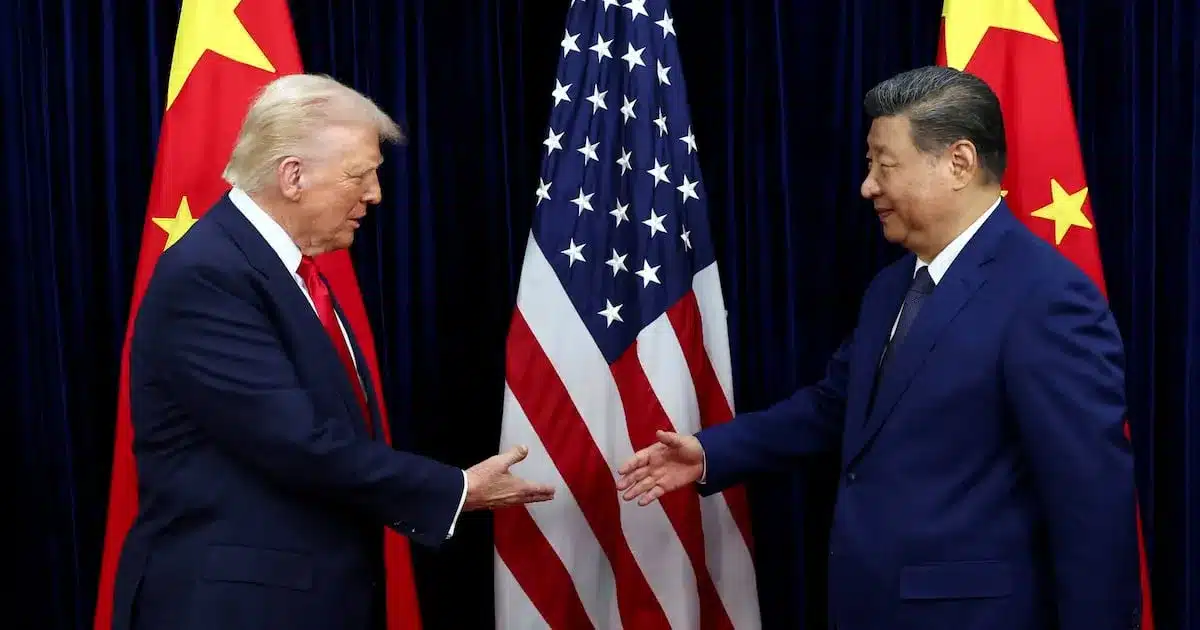
China’s top leaders prepare for a high-stakes summit with the incoming Trump administration on November 14 or 15, as longstanding tensions over trade and security intensify. Officials signal readiness to engage despite past frictions, with key discussions centering on artificial intelligence, semiconductors, Huawei, and Taiwan.
Recent Diplomatic Moves Signal Thaw
On November 8, China’s highest officials, including Premier Li Qiang and Zhao Leji, chairman of the National People’s Congress Standing Committee, met with prominent U.S. business representatives. These talks with executives from major firms aimed to foster cooperation amid Trump’s anticipated hardline stance on China.
Trump administration officials previously handled one round of U.S.-China trade negotiations. Chinese counterparts now pursue private-sector deals and non-governmental exchanges to build momentum ahead of the summit.
China’s leadership views the gathering as a platform to address core interests, even as Trump’s team eyes direct challenges. Beijing anticipates the visit despite Beijing’s full retaliation against prior Trump-era tariffs.
Agenda Shifts to Cutting-Edge Tech and Security
Analysts note significant changes since the last U.S.-China summit in October 2023, the first post-pandemic after a nine-year gap since 2017. Current priorities encompass AI, semiconductors, Huawei operations, and Taiwan across multiple fronts.
Trump addressed this in a recent interview, stating, “Yes, we will hold it. But if there is no cooperation on this, there will be no summit.”
AI and Semiconductors Take Center Stage
AI and semiconductor advancements dominate as focal points for startups and corporate strategies. The U.S. pressures China through export controls on AI technology, citing national security risks from semiconductor outflows.
Trump remarked at the White House, “We are catching China through AI,” adding, “This visit will become a major achievement.”
Huawei Expands Influence
China leverages Huawei’s corporate recruitment to counter U.S. sway. Huawei’s export volumes surpass U.S. figures in sectors like electric vehicles, semiconductors, and aircraft, bolstering national industries.
U.S. and Chinese firms compete fiercely in semiconductors and corporate management. Earlier this year, U.S. probes into Chinese AI and life sciences prompted heightened semiconductor restrictions, prompting China to reinforce corporate integrity and recruitment.
In response, China boosted overall corporate cohesion, targeting Huawei growth, talent pipelines, and platforms like YouTube to wage a comprehensive national effort.
Li Qiang emphasized policies to attract foreign enterprises, investments, talent, and government ties, declaring openness to global businesses while safeguarding national strength.
Taiwan Remains a Core Flashpoint
Taiwan issues represent China’s red line. During recent meetings, Li Qiang described Taiwan as “China’s core interest and a vital U.S.-China relations matter, with no room for third-party interference—it’s a red line.”
Zhao Leji, vice chairman, echoed, “Taiwan matters hold utmost importance and sensitivity in U.S.-China ties. The U.S. adheres to the one-China principle yet seeks to centralize Taiwan.”
China publicly shifts from non-support to outright opposition of Taiwan independence. Taiwan’s National Security Bureau director noted no U.S. policy shift, stating, “The U.S. maintains no alterations in cross-strait matters through public or private channels.”
Experts assess low odds for a breakthrough at this summit, unlike prior long-term pacts. Internal dynamics drive these shifts, marking a substantial evolution. One analyst observed, “Reviewing Trump-era U.S.-China tariff outcomes, no major reversal seems likely here.” Another added, “For true dialogue, U.S.-China cooperation must bridge gaps amid valid strategic concerns.”
