

Following similar incidents on intercity buses, a portion of Seoul’s city bus routes operating through the Namsan 1ho Tunnel have also been found to be overcharging passengers due to issues with fare payment systems. This problem, where passengers are charged twice for a single journey, has now extended to the capital’s local transit network.
Namsan Tunnel Fare Overcharge Affects Seoul City Buses
According to T-money, a major transportation card payment service provider, as of today, a total of four cases of fare overcharges and subsequent refunds have been recorded on Seoul city bus routes that pass through the Namsan 1ho Tunnel area. The issue stems from the electronic fare collection systems at the tunnel’s toll booths, which are believed to have interfered with the bus card readers, leading to the erroneous charges.
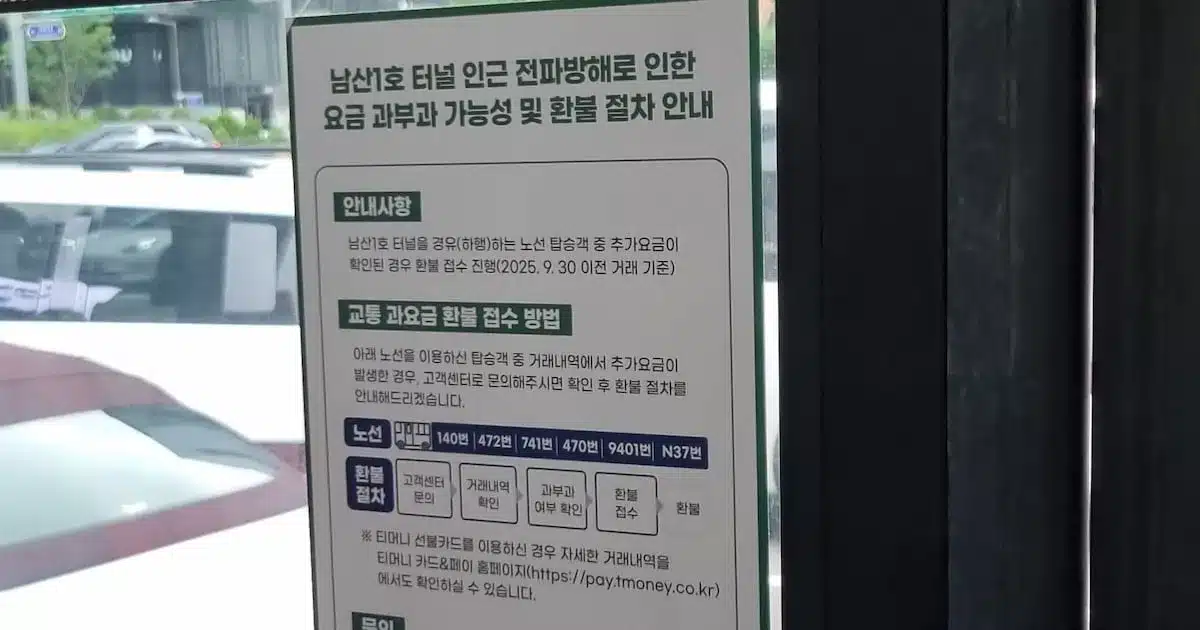
The specific city bus routes identified as potentially affected include routes 140, 472, 741, 470, 9401, and N37. These routes traverse the Namsan 1ho Tunnel, a critical artery for both local and regional transit.
The cause of the fare overcharge is attributed to the toll collection system at the Namsan 1ho Tunnel. It is understood that this system’s operation interfered with the bus fare readers, resulting in duplicate charges. Reports suggest that the toll system was related to security measures implemented after the former presidential office in Yongsan was relocated.
A representative from T-money stated that such issues have not occurred since a system upgrade was implemented in October of last year, implying a resolution for newer incidents. However, the recorded cases indicate a recurrence or a lag in the system’s full recovery.
Background: Similar Issues on Intercity Buses
This situation mirrors problems previously reported on some intercity bus routes connecting Gyeonggi Province to Seoul. These routes also pass through the Namsan 1ho Tunnel. In October of the previous year, Gyeonggi Province had announced that approximately 20 routes terminating at Soonchunhyang University Hospital in Seoul, which also use the tunnel, were identified as having the potential for fare overcharges.
The intercity buses affected were primarily those operating between cities in Gyeonggi Province, such as Yongin, Seongnam, Suwon, and Gwangju, and Seoul. Gyeonggi Province did not disclose the exact number of fare overcharge incidents that occurred on its intercity bus network.
There is a possibility that the actual number of passengers who experienced overcharges is higher than the officially reported figures. This could be because some passengers may not have realized they were overcharged and therefore did not request a refund.
Refund Process and Passenger Guidance
Seoul Metropolitan Government has provided guidance on the potential for fare overcharges and the refund process for the affected city bus routes. For city buses, refunds are applicable to passengers who used the six identified routes before September 30th of the previous year and were confirmed to have paid an additional fare due to the tunnel’s system.
Gyeonggi Province did not specify particular bus stops for its intercity routes but advised passengers to contact the respective customer centers directly to confirm if they are eligible for a refund. This direct inquiry is necessary because passengers who were unaware of the overcharge might have missed the opportunity to claim their money back.
Understanding the Technical Glitch
The core of the problem lies in the electromagnetic interference caused by the toll collection equipment at the Namsan 1ho Tunnel. When buses pass through, the fare payment devices on board can be affected, leading to a situation where the system registers a fare payment twice or fails to process it correctly. This can happen when the bus’s card reader is in close proximity to the toll system’s equipment, causing a disruption in communication or data transmission.
The security enhancements implemented after the relocation of the presidential office are believed to have altered the electromagnetic field or signal patterns around the tunnel, inadvertently impacting the sensitive fare collection technology used by the buses. While T-money has stated that system improvements have been made, the historical data suggests that the issue might have persisted or re-emerged under certain conditions.
Steps for Passengers
Passengers who suspect they may have been overcharged on the affected Seoul city bus routes should check their transaction history through the T-money system or contact T-money customer service. For intercity bus passengers, contacting the bus operator’s customer service is the recommended course of action. It is crucial for passengers to have their travel details, including the date, time, and route number, readily available to facilitate the refund process.
The authorities are working to ensure that such technical glitches are permanently resolved to prevent future inconveniences for commuters. The incident highlights the complexities of integrating various electronic systems in public transportation and the need for robust testing and ongoing maintenance to guarantee accurate fare collection.
Conclusion: Ensuring Fair Fares for All Commuters
The confirmed fare overcharges on Seoul city buses, following similar issues with intercity routes, underscore a persistent technical challenge related to the Namsan 1ho Tunnel’s electronic toll system. While T-money reports system improvements, the existence of recent cases necessitates continued vigilance from both transit authorities and passengers. The Seoul Metropolitan Government and Gyeonggi Province have initiated refund procedures, urging affected passengers to come forward. This situation serves as a reminder of the importance of reliable fare collection systems in public transportation and the need for swift resolution of technical faults to maintain passenger trust and ensure equitable service.
