

A spontaneous trip to Japan led to an unexpected culinary discovery: the exquisite ‘Seika Karei’ (城下かれい), a local delicacy from Hiji, Oita Prefecture. This journey, which included a ferry ride to Shimonoseki and a scenic drive through Kyushu’s diverse landscapes, was initially unplanned. However, as the itinerary solidified around Oita, the image of this renowned flatfish began to occupy the traveler’s thoughts. Hearing of its fame among Japanese gourmands, and being a seafood enthusiast, the allure was irresistible.
The Allure of Seika Karei
Hiji, a town situated on the coast of Beppu Bay, is famous for one thing: its exceptional flatfish, known locally as ‘Seika Karei’. This name has become almost synonymous with the region, elevating the fish to a unique regional brand. Seika Karei specifically refers to the *Mako-garei* (真子鰈), or spotted flounder, caught in the waters off the coast of Hiji Castle ruins. This area presents a unique environment where freshwater springs meet the sea, creating brackish water zones. These conditions foster abundant plankton, which in turn supports a rich ecosystem of small crustaceans and mollusks – the primary food source for the flounder.
The result of this diet is a *Mako-garei* with distinct characteristics. Unlike flatfish from other regions, those from Hiji are said to have a clean, delicate flavor, a firm texture, and a substantial flesh. Historically, this superior quality made it a prized catch. The fish itself is distinguishable by its smaller head relative to its body, a plump physique, and a broad tail fin, setting it apart from *Mako-garei* found elsewhere.
Historical Significance and Culinary Acclaim
The reputation of Seika Karei dates back centuries. During the Edo period, Hiji was a castle town, centered around Yokoku Castle. The coastal area below the castle was blessed with numerous clear freshwater springs, creating the unique brackish environment. This special habitat was recognized early on for producing exceptionally fine flatfish.
Its exquisite taste was so highly regarded that it was considered a delicacy reserved for the samurai class. Records indicate that during the *Sankin-kōtai* (alternate attendance system), live Seika Karei were transported to Edo (modern-day Tokyo) as a special tribute, often using fast horses to ensure freshness. This practice highlights its status, akin to an ‘Emperor’s food’ in Korean terms.
Literary and culinary figures have long praised the fish. Kenjiro Kinoshita, a prominent early 20th-century critic and politician, described it in his 1937 work ‘Zoku Mimikujin’ (續·美味求真) as one of Japan’s finest culinary treasures. He lauded its tender, white flesh, free from any unpleasant odor, and its elegant, superior fragrance when served as sashimi, deeming it a top-tier seafood offering. Similarly, the renowned Meiji and Taisho era novelist Kyoshi Takahama, after visiting Hiji, noted the pristine waters where the fish thrived, leaving behind a testament to its quality.
The fishing of Seika Karei was strictly regulated to preserve its quality. From April onwards, fishing was often restricted to ensure the fish were in peak condition. The peak season for Seika Karei is generally considered to be from April to September, with May to July being the most prized months. To celebrate this local treasure, Hiji hosts an annual ‘Seika Karei Festival’ every May.
An Unforgettable Dining Experience at Tekijyuso
The opportunity to taste Seika Karei arose during a visit to Hiji. A reservation was made at ‘Tekijyuso’ (茶寮)’ a restaurant renowned not only for its cuisine but also for its historical significance and stunning natural setting. The establishment is a designated Important Cultural Property of Japan, formerly the Hiji residence of the Naruse family, and boasts a beautiful garden, a National Registered Monument, overlooking Beppu Bay.
The journey to Tekijyuso on the day of the reservation was marked by a cool, rainy atmosphere. After visiting the Yume Otsuri Bridge in Kokoen, a drive through the rain led to the restaurant just in time for the reserved lunch. Fortunately, the rain had subsided by the time of arrival.
Tekijyuso’s entrance exuded an aura of historical grandeur, reminiscent of a high-ranking samurai residence from the Edo period. The meticulously maintained garden, leading to the main dining building, was impressive. Upon entering, staff dressed in traditional kimonos offered a formal and welcoming reception, guiding the guests to their prepared table. The dining space itself was adorned with works by famous Western-style painters, adding to the sophisticated ambiance.
The meal was a pre-arranged course, meticulously prepared and beautifully presented, reflecting the Japanese culinary philosophy of delighting both the eyes and the palate. The course included a variety of dishes:
- Zensai (Appetizer): Nanbanzuke (marinated fried fish) with fried sea bream, simmered conger eel, *gyoku* (a steamed dish made from fish paste), boiled shrimp, and steamed sweet potato.
- Shirumono (Soup): A clear soup made with sea bream broth.
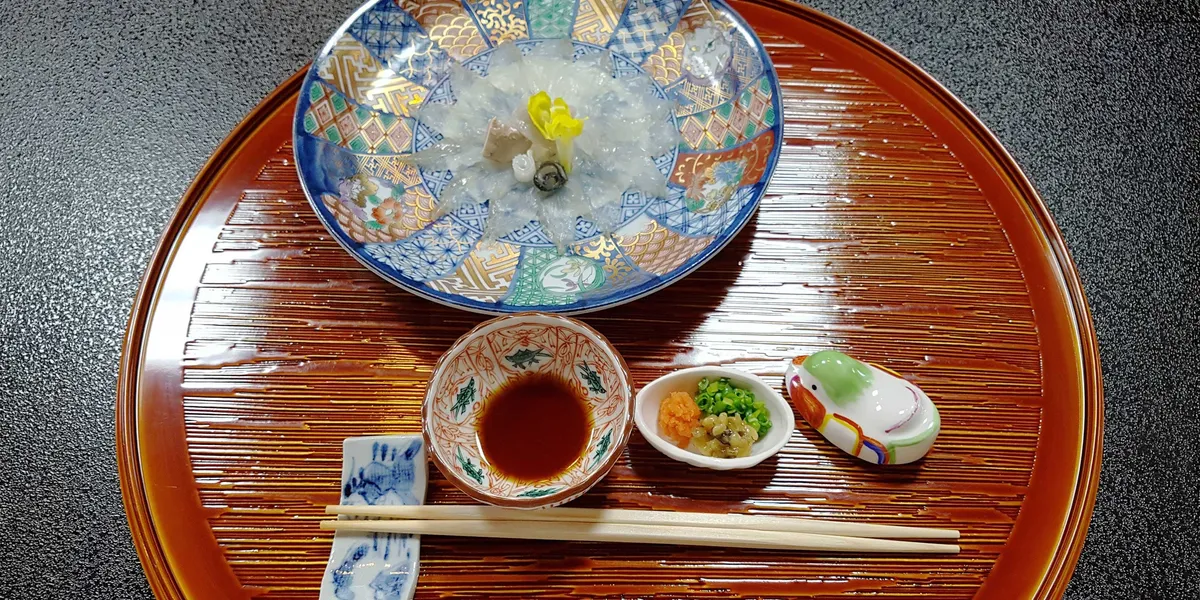
- Seika Karei Set: This was the highlight, featuring sashimi of Seika Karei (including the fatty belly and the firmer white meat), boiled skin (*dechi*), seasoned with vinegar and *ponzu*, garnished with finely chopped scallions and *momi-oroshi* (grated daikon radish with citrus). A side of *mugimeshi* (barley rice) miso soup and pickled cucumber (*tsukemono*) was also served.
- Chawanmushi: Savory steamed egg custard.
- Yakimono: Grilled steak, seared on the outside.
- Gohan & Shiru: Rice and miso soup.
- Dessert: Panna cotta.
Experiencing the Seika Karei Sashimi
The Seika Karei was served as sashimi, a portion per person, presented elegantly on a decorative plate. Thinly sliced, the fish displayed a vibrant color and a subtle sheen, indicating it was indeed fresh. Accompanying the sashimi were small, artfully arranged garnishes: a piece of liver simmered in sake, a slice of the boiled skin (*dechi*), and a single flower, all presented with a small dish containing *ponzu* sauce, finely chopped scallions, *momi-oroshi*, and *mugi-miso* (fermented barley paste).
The sashimi itself was sliced thicker than typical *bokashi* (layered) sashimi, yet its clear, translucent appearance confirmed its freshness. Seika Karei, being leaner than sea bream or other fatty fish, lacks the rich, melt-in-your-mouth quality. However, its defining characteristics are its firm, slightly chewy texture and its subtle, refined flavor. This delicate taste is best appreciated when lightly seasoned, rather than overwhelmed by strong sauces like soy sauce or heavy chili paste.
Dipping the sashimi into the *ponzu* sauce, mixed with scallions and *momi-oroshi*, brought out a clean, slightly tangy flavor that complemented the fish’s mild sweetness. The texture felt even more crisp and resilient, a testament to the quick and expert handling of the live fish. The pairing with the locally brewed sake, *Waka-botan*, was also excellent.
The boiled skin, or *dechi*, offered a pleasant, slightly chewy texture, best enjoyed with a touch of *ponzu*. Care had to be taken not to overcook it, as it could become too tough. The liver, seasoned with *mugi-miso*, provided a rich, oily, and savory taste, yet it was still lighter and cleaner than that of many other fish.
Beyond the Plate: A Cultural Immersion
While the taste of Seika Karei is undoubtedly special, the experience of savoring it in Hiji was more than just a culinary event. It was an immersion into a rich cultural heritage. The meticulous preparation, the presentation, and the deep-rooted history associated with the fish transformed it into a symbol of regional identity. The entire process, from sourcing to serving, demonstrated a deep respect for the ingredient and a commitment to preserving local traditions.
This dedication has solidified Seika Karei as a distinguished regional brand, woven into the fabric of Hiji’s culture. After the meal, guests were invited to admire the restaurant’s collection of pottery and stroll through the gardens, taking in the panoramic views of Beppu Bay – a perfect conclusion to an extraordinary gastronomic and cultural journey.
