

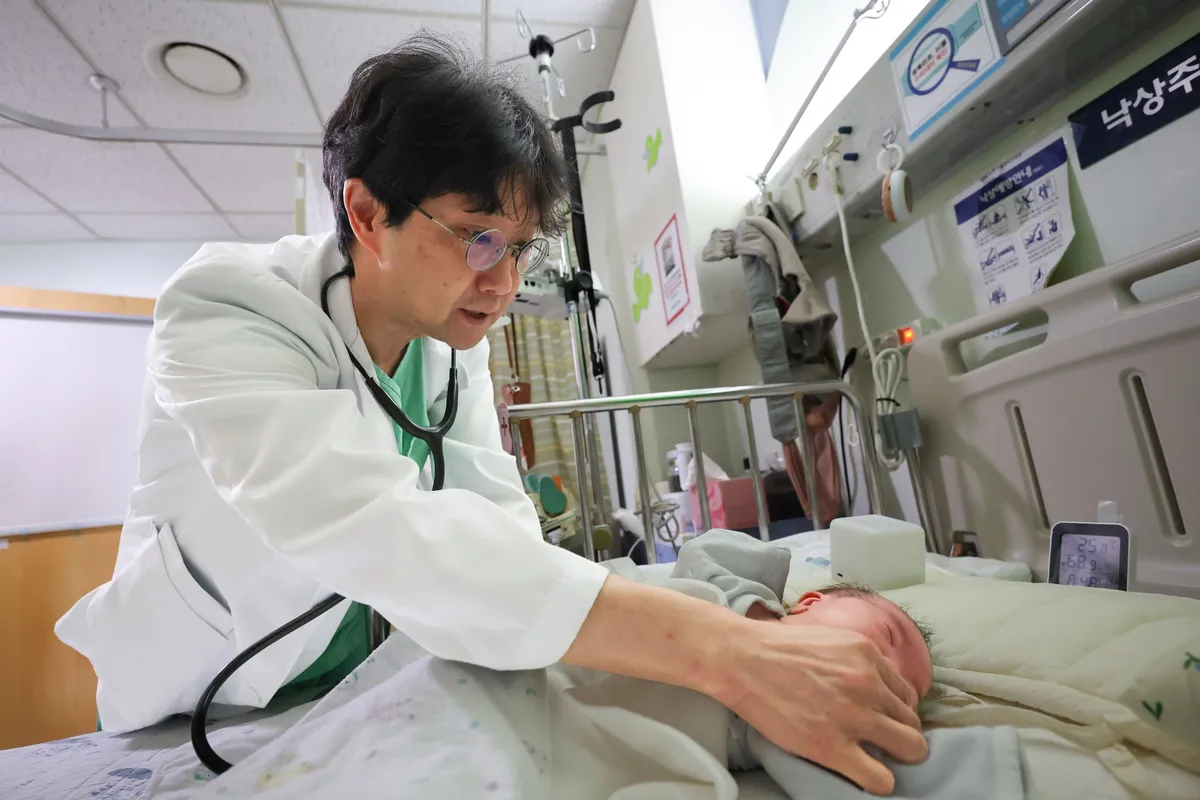
A critical shortage of pediatric cardiac surgeons is threatening the ability of Seoul National University Hospital (SNUH) to perform life-saving surgeries. The hospital, a leading center for complex congenital heart defect procedures in South Korea, is facing a severe decline in its specialized medical staff, raising concerns about patient care and the future of the field.
Surgeon’s Heavy Workload Highlights Staffing Crisis
Dr. Kwak Jae-geon, a renowned pediatric cardiac surgeon at SNUH, recently completed a five-hour surgery on a three-month-old infant born with a ventricular septal defect. This condition, where a hole exists between the heart’s lower chambers, allows oxygenated blood to mix with deoxygenated blood, severely impacting the baby’s health. The surgery, performed in the pediatric intensive care unit, was just one of many demanding procedures Dr. Kwak undertakes.
“We used to perform two to three surgeries a week,” Dr. Kwak explained. “But with colleagues leaving and me taking on their cases, I’m now operating almost daily. When emergencies arise, the system we had for sharing the load disappears. It’s become difficult to even leave the hospital after work.”
SNUH’s pediatric cardiac surgery department handles over 600 congenital heart defect surgeries annually. It serves as a last resort for patients with complex conditions that are difficult to treat at other hospitals. However, the department is now facing an unprecedented staffing crisis.
Shrinking Pool of Specialists
The situation is dire: one of the three lead surgeons capable of performing these complex operations at SNUH has already resigned and moved to the United States, while another is scheduled to retire in 18 months. If a replacement cannot be found, Dr. Kwak will be the sole surgeon left to handle all pediatric cardiac surgeries at the hospital. This would necessitate limiting the number of surgeries performed, directly impacting patients awaiting critical procedures.
The scarcity extends beyond SNUH. Nationally, there are only 27 active pediatric cardiac surgeons in South Korea. Of these, a mere 15 possess the expertise to perform high-risk surgeries independently. This severe deficit means that when SNUH seeks to recruit surgeons from other hospitals, those institutions also face staffing gaps, creating a systemic problem.
The Demands of Pediatric Cardiac Surgery
Pediatric cardiac surgery is an exceptionally demanding field requiring advanced specialization and extensive experience. Surgeons often operate on newborns weighing as little as 2-3 kilograms, and sometimes even premature infants weighing less than 1 kilogram. Each patient presents unique anatomical variations and varying degrees of disease severity, making the surgeon’s experience crucial.
According to Dr. Kwak, SNUH ideally needs at least three to four lead surgeons to maintain a normal surgical and treatment system. This allows for the division of labor in routine surgeries, post-operative care, and emergency responses, while also enabling the training of future surgeons. “If I end up being the only one, I will have to limit the number of surgeries, and in the worst-case scenario, I might even have to leave the hospital myself,” he stated.
The burden of reduced surgical capacity at SNUH would fall heavily on the patients. Ahn Sang-ho, president of the Korea Congenital Heart Disease Association, warned, “If the waiting time for surgery becomes excessively long, patients may not receive the necessary operations in time.”
A Long-Standing Problem
This crisis did not emerge overnight. It is the culmination of a two-decade trend of virtually no new doctors entering the field of pediatric cardiac surgery in South Korea. Data from the Korean Society of Pediatric Cardiology indicates that while 15 sub-specialists were trained in 2008, only 0-3 new specialists have been added annually since then. Last year, not a single new specialist was trained.
Furthermore, over half of the current pediatric cardiac surgeons in the country are in their 50s and nearing retirement within the next decade. “There are only about four to five doctors specializing in pediatric hearts in each generation,” Dr. Kwak observed. “Our seniors are approaching retirement, and there’s no one new willing to take up this work.”
Factors Contributing to the Shortage
Dr. Kwak identified several key issues contributing to the lack of new specialists. These include the inherent difficulty and immense responsibility of the surgeries, long on-call hours, and the significant legal risks associated with medical malpractice. In contrast, compensation is often inadequate, and the field is sometimes perceived within hospitals as a “loss-making department” due to low reimbursement rates.
While the government has made efforts to improve the compensation system since 2023, introducing a more detailed fee structure based on surgical complexity and increasing allowances for surgeries on premature and newborn infants, critics argue these changes are insufficient to reverse the long-standing shortage of personnel.
Lee Hyung-doo, a director at the Korean Society of Pediatric Cardiology, described the field as a complex structure where surgeons must endure not only difficult operations but also long duty hours, emergency responses, and the burden of potential medical litigation. “It’s a multifaceted challenge,” he said.
The Future of Pediatric Cardiac Surgery
Reflecting on the situation, Dr. Kwak shared a poignant observation: “It’s not uncommon to see interns in the operating room, their eyes lighting up as they directly touch a baby’s heart. But when it comes time to choose their career path, they realize they can’t ignore the realities of this profession.”
He elaborated on the demanding lifestyle: “Even in their late 40s, many senior surgeons work as hard as they did in their prime, logging up to 130 hours a week. Younger doctors see this and ask, ‘How can they live like that?’ It makes you wonder who would want to do this job.”
Dr. Kwak Jae-geon has been associated with SNUH since entering medical school in 1995, completing his residency and fellowship at the same institution. He is a specialist in pediatric cardiac surgery and previously headed the pediatric cardiac surgery department at Bucheon St. Mary’s Hospital, a government-designated specialized heart hospital, from 2008 to 2016 before returning to SNUH.
Conclusion
The dwindling number of pediatric cardiac surgeons poses a significant threat to the specialized care available for infants and children with complex heart conditions in South Korea. Without urgent intervention to address the demanding nature of the work, inadequate compensation, and the looming retirement of experienced specialists, the future of this critical medical field remains uncertain, potentially leaving vulnerable young patients without access to essential life-saving surgeries.
